
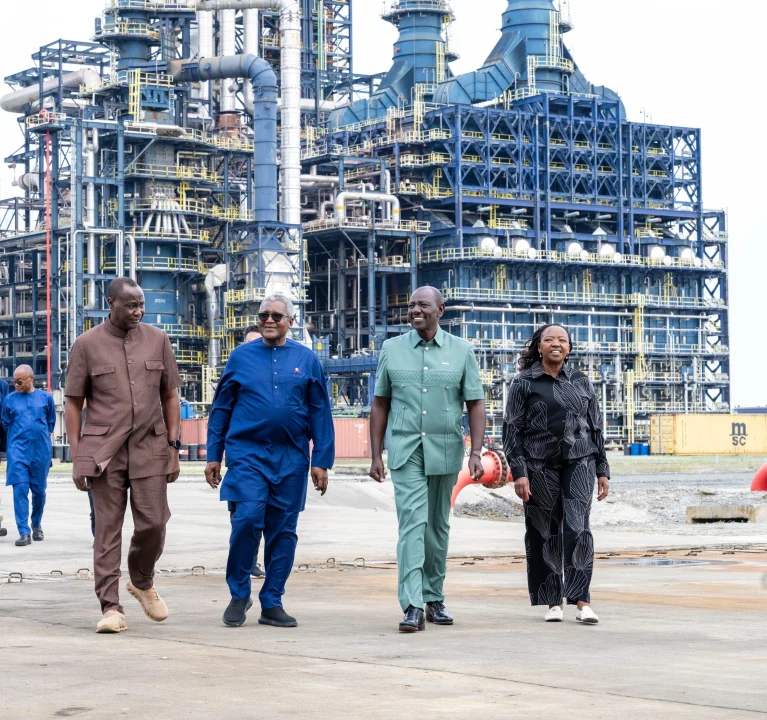








Dangote Petroleum Refinery has instituted a fresh suit challenging the fuel import licences granted to the Nigerian National Petroleum Company Limited and several fuel marketers, reviving the dispute over petrol importation despite improvements in local refining capacity.
According to court filings submitted at the Federal High Court in Lagos and cited by Reuters, the mega-refinery is seeking to nullify the approvals issued for fuel imports.
The development comes amid recent data from the Nigerian Midstream and Downstream Petroleum Regulatory Authority indicating that petrol imports declined significantly in the first quarter of 2026, as output from domestic refineries rose to about 3.18 billion litres.
The refinery is asking the Federal High Court in Lagos to void import permits issued or renewed by the NMDPRA, arguing that the approvals breach an earlier court directive ordering all parties to maintain the status quo pending the outcome of the case.
In its filing, Dangote Refinery contended that the continued issuance of fuel import licences runs contrary to Nigerian law, which it said allows imports only when domestic supply falls short of national demand.
The company further argued that the fresh permits pose a risk to its operations as it scales up production at its multi-billion-dollar facility.
Fuel marketers have previously defended the continued importation of petrol, maintaining that imports are still required to guarantee adequate nationwide supply and avert potential shortages.
Nigeria has historically relied heavily on imported petrol due to the longstanding underperformance of state-owned refineries.
However, the emergence of Dangote Refinery — widely regarded as Africa’s largest single-train refinery — has significantly reshaped the country’s fuel supply landscape.
Since the Lagos-based refinery began operating at full capacity, it has grown into a major supplier of petrol, diesel and other refined petroleum products in Nigeria. Its rising output has contributed to a marked reduction in the nation’s dependence on fuel imports.


