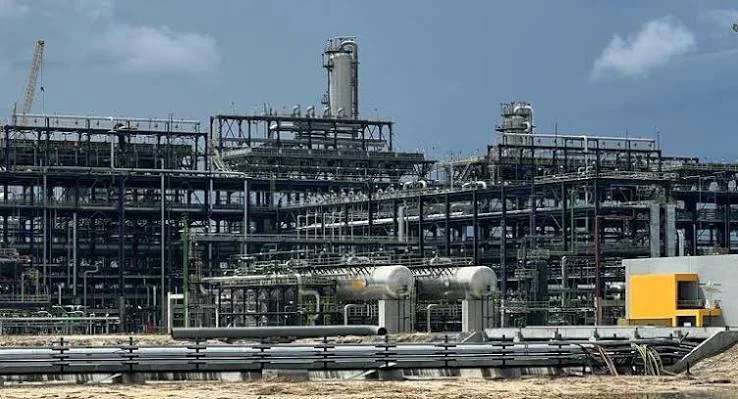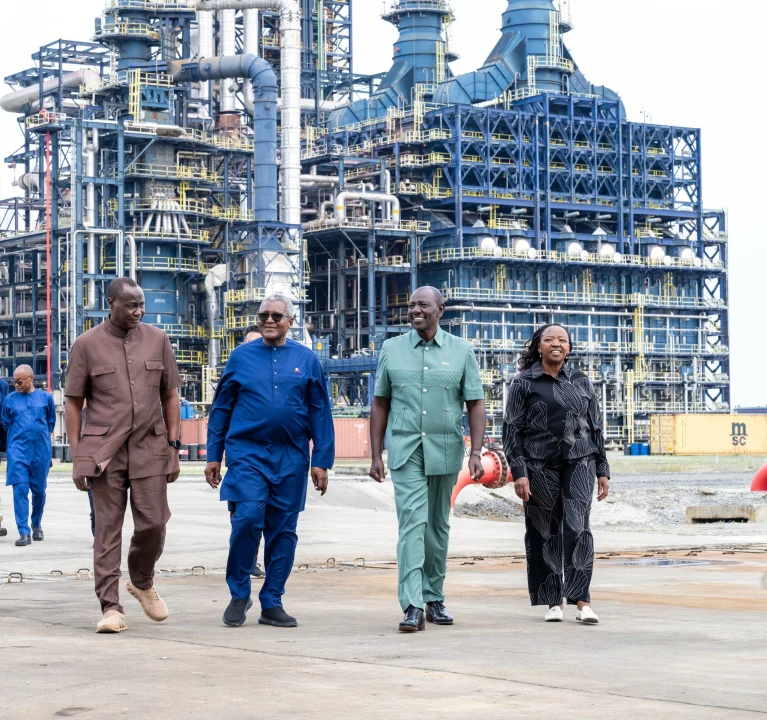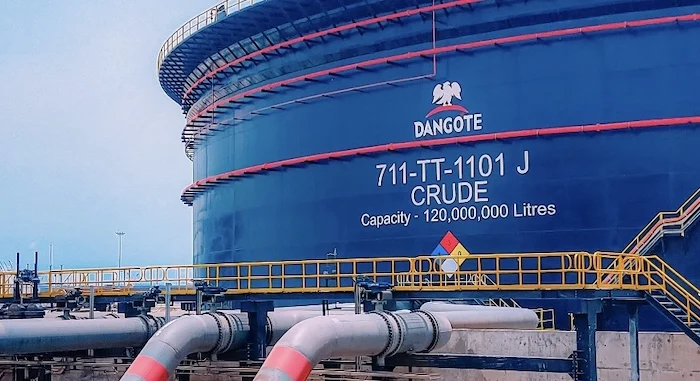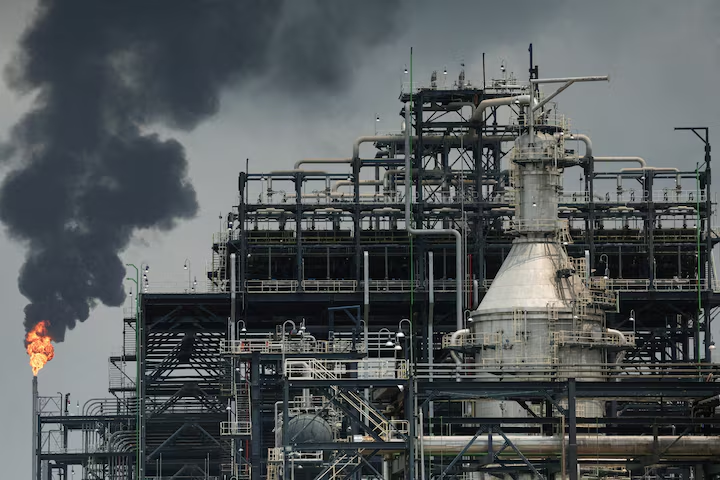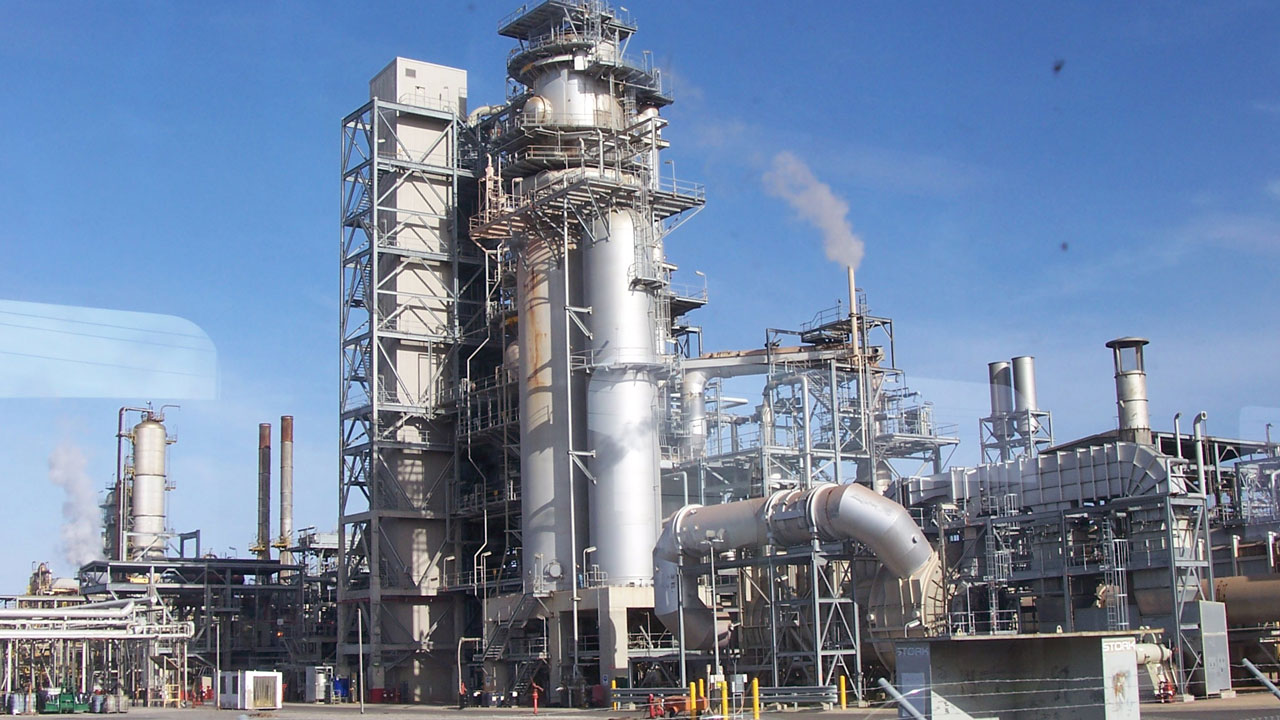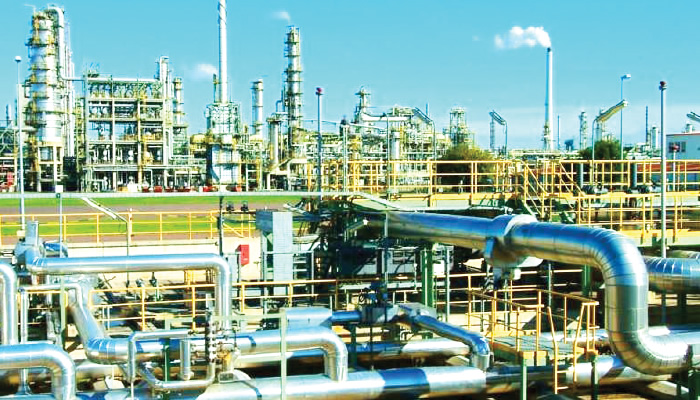
Dangote Petroleum Refinery & Petrochemicals has increased its crude oil processing capacity to 700,000 barrels per day, exceeding its official nameplate capacity of 650,000 bpd.
The achievement was confirmed following a performance test conducted by the refinery’s process licensors, marking a significant milestone in the facility’s operational development and growth.
The latest accomplishment further consolidates the refinery’s position as the world’s largest single-train petroleum refinery.
In a statement issued in Lagos on Thursday, the Head of Corporate Communications, Anthony Chiejina, said the increased processing capacity demonstrates the refinery’s robust engineering design and operational efficiency.
Commenting on the development, Devakumar Edwin, Vice President of Oil and Gas at Dangote Industries Limited, disclosed that the refinery is targeting an expansion of its processing capacity to 1.4 million barrels per day within the next 30 months.
According to Edwin, the objective is to position the facility among the largest refineries globally.
He explained that the planned expansion would significantly strengthen Nigeria’s energy security, eliminate dependence on imported petroleum products and enhance the nation’s standing as a major exporter of refined petroleum products.
Edwin added that the refinery’s long-term vision extends beyond satisfying domestic demand, with plans to establish it as a leading refining hub serving Africa and the international market.
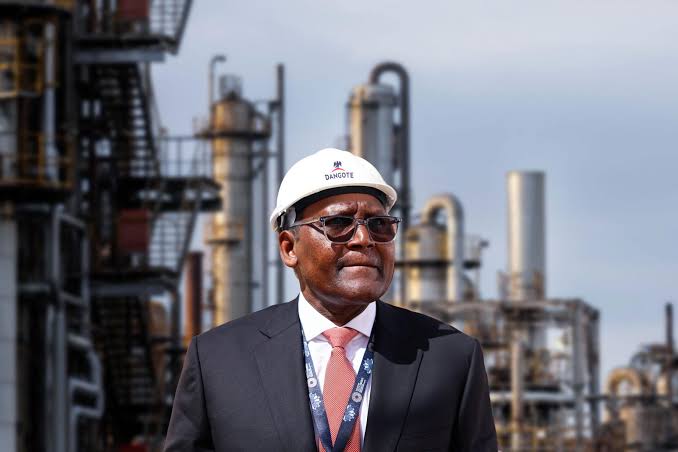
Owned by Nigerian businessman Aliko Dangote, the refinery commenced fuel production in 2024 and has steadily increased the output of petrol, diesel, aviation fuel and other petroleum products.
“It currently supplies both local and international markets, exporting products to several African countries as well as destinations in Europe, including the United Kingdom, France, Spain, Italy, and the Netherlands.
“The refinery has also supplied gasoline to the United States and jet fuel to Saudi Arabia.
“The refinery has emerged as a key stabilising force in the energy sector, particularly amid global supply disruptions linked to tensions in the Middle East,” he added.
Edwin stated that, as a result of its growing production and export capacity, a number of African countries now depend on the refinery to support their energy security requirements.
He noted that in April, Dangote Petroleum Refinery was identified by S&P Global Commodity Insights as the world’s largest exporter of jet fuel, highlighting its increasing influence in international energy markets.
The refinery has also contributed significantly to improving fuel availability in Nigeria by reducing the country’s dependence on imported petroleum products and easing pressure on foreign exchange reserves.
Its ongoing expansion aligns with national efforts to increase local refining capacity and derive greater value from Nigeria’s crude oil resources.
The steady rise in production has attracted growing interest from international crude oil suppliers and commodity traders, with the refinery sourcing feedstock from both local and foreign producers.
Looking ahead, Aliko Dangote has unveiled plans to expand the refinery’s capacity to 1.4 million barrels per day by 2028.
The proposed expansion is expected to deliver substantial economic benefits, including the creation of jobs, increased industrial activity and improvements in Nigeria’s trade balance.
The refinery is also expected to strengthen downstream manufacturing by ensuring a reliable supply of liquefied petroleum gas (LPG), polypropylene and other industrial feedstocks required for the production of packaging materials and consumer goods.
Future development plans for the facility also include the production of Linear Alkylbenzene (LAB), a critical raw material widely used in detergent manufacturing.