

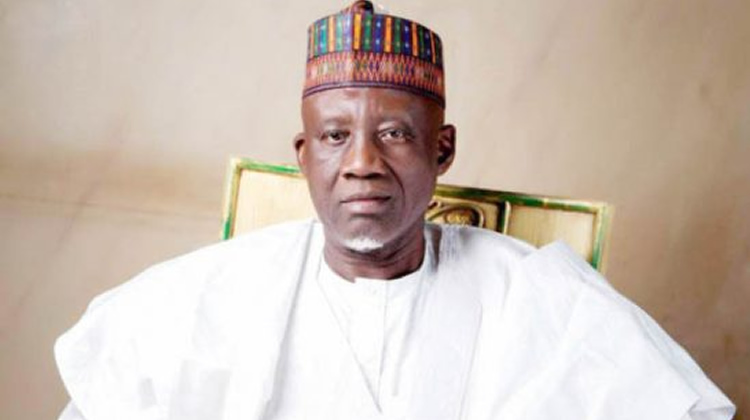
The Federal Government has called for the development of inclusive and human-centred artificial intelligence policies that will protect workers’ rights, prevent job losses and ensure that the benefits of technological advancement contribute to economic growth and increased productivity.
The PUNCH reported that the call was made by the Minister of Labour and Employment, Muhammad Dingyadi, during the 114th Session of the International Labour Organization Conference in Geneva, Switzerland.
Dingyadi made the remarks while responding to the report of the Chairperson of the Governing Body and the Director-General of the International Labour Organisation titled “A Moment of Choice: Harnessing Artificial Intelligence for Decent Work.”
According to the minister, the rapid advancement of AI is reshaping labour markets, workplace practices and employment relationships across the world, presenting both opportunities and challenges for governments, employers and workers.
He noted that while artificial intelligence has the capacity to drive innovation, improve productivity and create economic opportunities, it also presents significant risks, including job displacement, growing inequalities and the gradual erosion of human roles in certain sectors of the economy.
“The world is moving forward at a rapid pace, underpinned by advances in AI, and we as an organisation must match that pace. While welcoming the positive transformations AI offers, we are also pondering the uncertainties it connotes.
“These shifts, despite their benefits, also cast a dark cloud of uncertainty. Where AI creates new jobs, there may be job losses. Where digital and AI infrastructures are created, there may be a loss of the traditional role and value of the human factor in the work process. We therefore need a balanced approach that ensures that, while harnessing the benefits of AI, the attendant risks do not rob our societies of the gains of decent work,” he said.
The minister commended the leadership of the International Labour Organisation for its continued commitment to advancing the organisation’s mandate despite increasing global economic and social pressures.
Speaking on Nigeria’s efforts to strengthen its position in the rapidly evolving digital economy, Dingyadi said the Federal Government had established the Federal Ministry of Communications, Innovation and Digital Economy to drive policies aimed at accelerating technological advancement and improving the nation’s competitiveness in the global digital landscape.
He explained that Nigeria has already begun integrating digital technologies and artificial intelligence into governance processes through the automation of civil service operations and public service delivery systems.
“I’m also pleased to inform you that Nigeria is steadily harnessing the gains of this initiative in our Public Service. There is the service-wide automation of civil service processes and communication with AI playing a significant role. Additionally, platform work is gaining ground,” he said.
Dingyadi also welcomed ongoing discussions within the International Labour Organisation on the regulation of work in the platform economy, stressing the importance of developing labour standards that adequately protect workers engaged in new forms of employment generated by digital technologies.
Beyond artificial intelligence, the minister renewed Nigeria’s longstanding call for reforms within the International Labour Organisation.
He urged member countries to accelerate the ratification of the 1986 Amendment to the organisation’s Constitution and review the criteria used in determining countries of Chief Industrial Importance.
According to him, such reforms would enhance inclusivity, fairness and regional representation within the governance structures of the International Labour Organisation.
The minister further called on countries to align the ILO Centenary Declaration and the Global Coalition for Social Justice with national development priorities so that technological innovation can contribute meaningfully to social progress and decent work.
Nigeria’s intervention comes at a time of growing global debate over the impact of artificial intelligence on employment and the future of work.
International labour and development agencies have projected that while AI is expected to automate certain routine tasks, it is also likely to create new employment opportunities in technology, data science, digital services and other emerging sectors.
Despite these prospects, concerns remain that workers engaged in administrative, clerical and repetitive occupations could face significant disruptions if governments fail to implement policies that support skills development, workforce transition and social protection.
The issue has emerged as a major focus of discussions at the ongoing International Labour Conference, where governments, employers and workers’ representatives are exploring ways to deploy artificial intelligence in a manner that promotes productivity and economic growth without undermining labour rights, job security and social justice.
For Nigeria, the debate carries particular importance as the country pursues an ambitious digital transformation agenda aimed at expanding broadband access, deepening the digital economy and creating millions of technology-driven jobs for its growing youthful population.
Experts have consistently stressed that achieving these objectives will require sustained investment in digital education, skills development and worker protection measures to ensure that the benefits of artificial intelligence are widely shared across all segments of society.