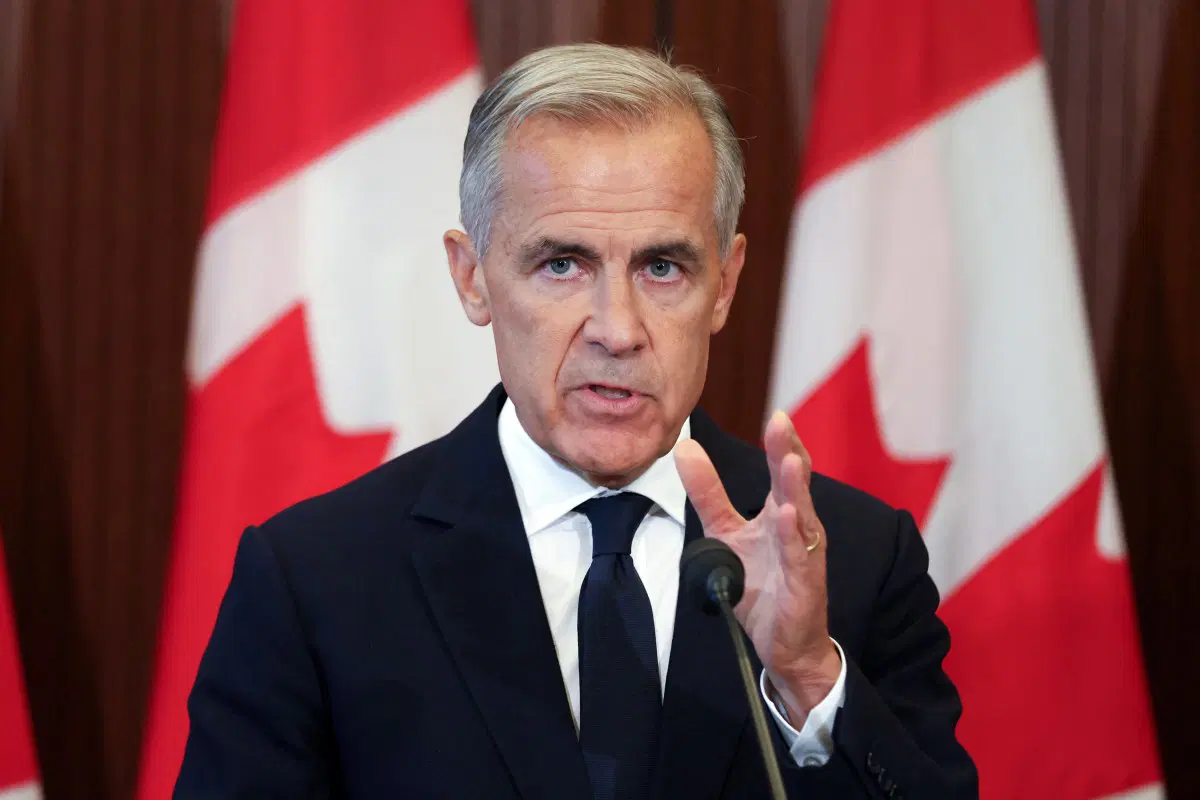
Canadian Prime Minister Mark Carney’s government is presenting its budget on Thursday, a spending plan aimed at reducing dependence on the United States, which remains Ottawa’s priority even after President Donald Trump’s midterm election setback.
Carney has argued that relations between Canada and the United States have been permanently changed and that the tariff-free ties that existed before Trump will not return.
The Prime Minister says Canada must urgently diversify its trade relationships, and he has titled Thursday’s budget, his second since taking office last year, “Masters of our Destiny.”
“At its core, our plan is about changing Canada’s growth model,” Finance Minister Francois-Philippe Champagne said this week.
Champagne, who will present the budget to parliament, added that the goals include boosting domestic commerce within Canada and “diversifying our trade.”
“No matter what happens south of the border, no matter what happens in the world, we will be more resilient, we will be stronger, we will be more independent,” Champagne said Wednesday.
He made the remarks after choosing a new pair of shoes for his budget speech, in keeping with a quirky Canadian tradition.
Trump’s tariffs have hammered Canada’s economy, but the future of his protectionist trade measures is now uncertain after his Republican Party suffered a crushing defeat in the midterm elections.
The Democrats, who have criticised the tariffs on Canada, will take control of both the US House and Senate next year.
Senior Democratic Congressman Jamie Raskin told Canada’s public broadcaster, CBC, on Wednesday that his party is “going to put an end to these tariffs” and will be seeking to repair ties “with our best friends like Canada.”
However, Canada’s minister responsible for US trade, Dominic LeBlanc, noted on Wednesday that tariff negotiations will be held with Trump’s White House, not Congress.
LeBlanc said Canada’s focus, including in the budget, will be on “diversifying our trading relationships.”
Both Trump and Carney have sounded optimistic in recent days about the prospects of a trade deal, but similarly rosy predictions were made in August before talks broke down.
The budget is expected to allocate funds to the major national projects Carney has described as crucial to Canadian economic sovereignty, including infrastructure for energy production and critical mineral mining.
Champagne said the budget will also provide support for workers hurt by Trump’s tariffs in sectors such as autos and steel.
The opposition is likely to raise concerns about deficit spending, but the deficit is expected to be lower than the CAN$78.3 billion ($56.3 billion) projected in Carney’s first budget last year.
University of Ottawa political scientist Genevieve Tellier noted that implementation of the budget will partly depend on “the impact of tariffs,” particularly whether Trump’s levies cause further job losses.
Last month, the Bank of Canada raised interest rates for the first time in three years, in a bid to tame inflation caused by surging energy prices amid the Iran war.
Budget bills in Canada are confidence votes, and last year Carney’s government needed opposition support and abstentions to survive.
Since then, however, his Liberals have secured a parliamentary majority.