




The United States Government has warned American investors and business executives that routine business trips to Nigeria could result in detention, particularly where their companies are involved in regulatory investigations, tax disputes or other disagreements with Nigerian authorities.
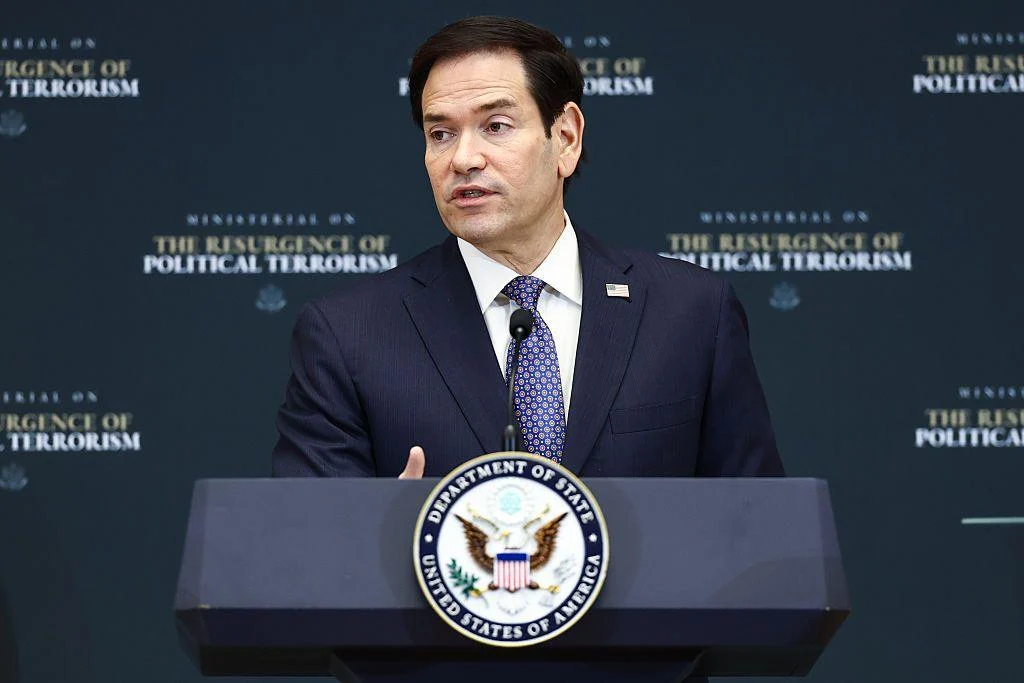
The warning was contained in the latest 2026 Nigeria Investment Climate Statement by the US Department of State. The report raised concerns over the alleged use of arbitrary detention, travel restrictions and immigration enforcement to pressure foreign businesses operating in Nigeria.
“U.S. businesses are advised that standard business trips can escalate into detention if the firm is under regulatory suspicion or faces charges by Nigerian authorities,” the report stated.
The US Government alleged that Nigerian authorities had previously used coercive exit bans and detention to compel multinational companies to resolve commercial disputes or make financial concessions.
“Nigeria has previously employed coercive exit bans and arbitrary detention as leverage in commercial or regulatory disputes, and to extract data or financial concessions from multinational firms,” it stated.
According to the report, Nigerian authorities frequently use entry and exit restrictions, commonly called watch lists, to pressure companies into settling outstanding regulatory disagreements or alleged tax liabilities.
The State Department cited the detention of American citizen and former United States Internal Revenue Service agent Tigran Gambaryan, who was working as an executive at cryptocurrency exchange Binance, as a prominent example of the risks facing foreign business representatives.
It recalled that Gambaryan and another senior Binance executive were detained in February 2024 after arriving in Abuja for meetings with Nigerian officials. Their passports were confiscated, and both were initially held without charge in a government guest house before one of them escaped.
Gambaryan was later transferred to Kuje Prison in Abuja. There he faced money laundering charges brought by the Economic and Financial Crimes Commission and tax evasion allegations filed by the Federal Inland Revenue Service, now known as the Nigeria Revenue Service.
The report noted that the American executive remained in detention for about eight months while judicial proceedings continued. The charges against him were eventually withdrawn on humanitarian grounds in October 2024.
The State Department described the incident as a warning to foreign executives about the potential consequences of regulatory disagreements with Nigerian authorities.
Beyond the Binance case, the report raised concerns about the treatment of international business travellers at Nigerian airports. It alleged that airport security personnel had increasingly targeted passengers perceived to be wealthy, citing investigations by Nigerian media organisations over the preceding year.
“Over the past year, investigations by local media outlets highlight ongoing ‘shakedown’ efforts by airport security officials, targeting passengers perceived as wealthy,” the report stated.
It further disclosed that some foreign travellers entering Nigeria on business visas had faced delays when trying to leave the country.
According to the report, immigration officials sometimes scrutinise the activities of such visitors to determine whether they have violated the conditions of their visas.
Business visas generally permit meetings and related commercial engagements but do not authorise paid employment.
The State Department said anecdotal accounts indicated that travellers on such visas had increasingly faced delayed departures from major airports while immigration officers reviewed their activities.
It also referred to a September 2025 US executive order aimed at protecting American nationals from wrongful detention abroad. It warned that such practices could be read as attempts to use foreign citizens as political bargaining tools.
Under the order, the US Government indicated that actions involving wrongful detention could be regarded as “political pawn” manoeuvres.
The concerns formed part of a broader assessment of Nigeria’s investment environment. The assessment acknowledged improvements in macroeconomic stability while identifying persistent security, governance and regulatory challenges.
The report noted that Nigeria’s investment framework generally permits 100 per cent foreign ownership in most sectors, although certain industries remain subject to regulatory restrictions.
It also highlighted the Nigerian Investment Promotion Commission’s One-Stop Investment Centre, which coordinates 27 government agencies to facilitate investment approvals.
However, the State Department maintained that corruption, inconsistent regulatory enforcement and weaknesses in the judicial system continued to undermine investor confidence. It observed that public confidence in the ability of Nigerian courts to deliver justice consistently in criminal and civil matters remained low.
Despite these concerns, the report disclosed that US foreign direct investment in Nigeria reached $7.9 billion at the end of 2024, a 25 per cent increase over the preceding year.
It added that bilateral trade between Nigeria and the United States reached $14.8 billion in 2025, reflecting continued commercial engagement between both countries despite the identified investment risks.