



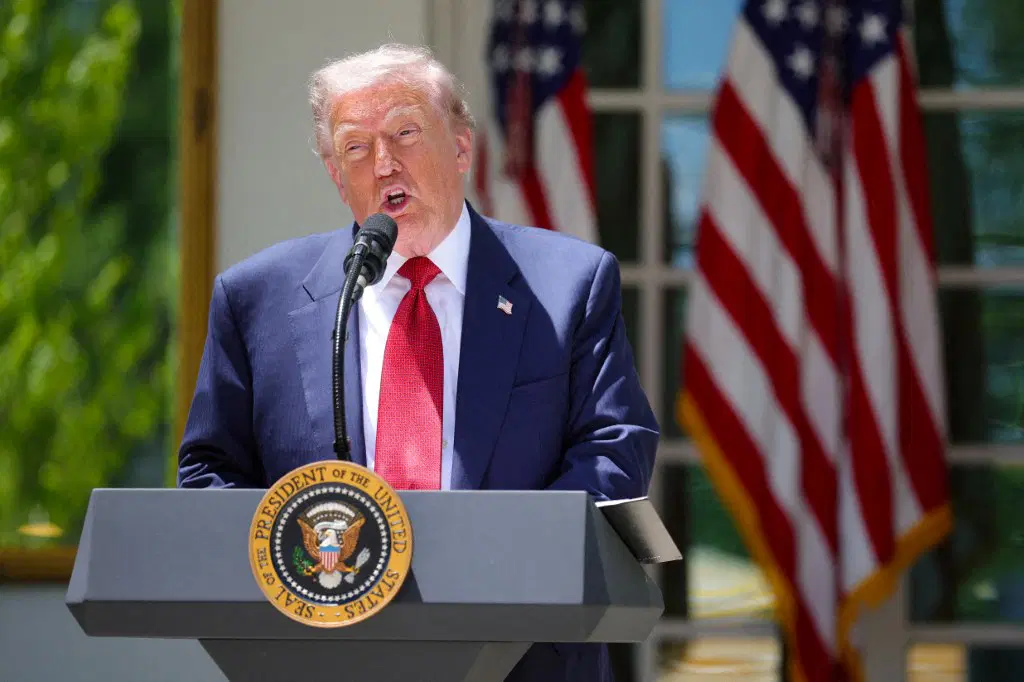
United States President Donald Trump has signed a new executive order banning what his administration describes as “birth tourism,” marking a fresh attempt to narrow access to birthright citizenship despite a recent Supreme Court ruling that blocked his broader effort to end automatic citizenship for many children born in the United States.
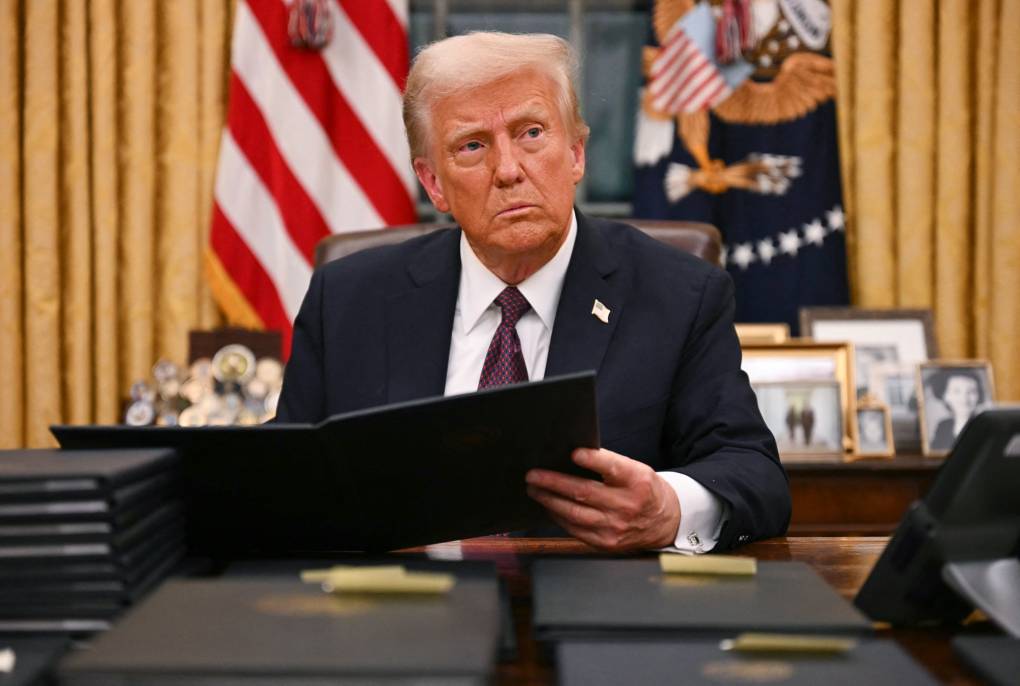
Trump signed the executive order on Thursday, with the White House arguing that the measure targets pregnant foreign nationals who travel to the U.S. primarily to give birth so their children can obtain American citizenship.
The move comes just over a month after the U.S. Supreme Court rejected Trump’s attempt to end birthright citizenship through executive action, ruling that children born in the United States to parents who are unlawfully or temporarily present are protected under the Citizenship Clause of the Fourteenth Amendment.
Speaking in the Oval Office on Thursday, Trump criticised the Supreme Court’s ruling, describing it as a “very unfortunate decision” and accusing people of building businesses around birth tourism.
“That’s not the way it’s supposed to work. It’s a disgrace. They’re buying their way in, and we’re not going to let it happen,” Trump said.
White House aide Stephen Miller said the administration was formally ending the practice through the new executive order.
Miller said birth tourism had been banned with the signing of the order, according to remarks made during the Oval Office ceremony.
Hours after being sworn in for his second term as U.S. president, Trump signed an executive order on January 21 seeking to end birthright citizenship for certain children born in the United States, particularly those whose parents were in the country illegally or temporarily.
At the time, Trump acknowledged that the order would likely face legal challenges but maintained that his administration was on solid legal ground.
He also said he supported legal immigration, arguing that the U.S. still needed immigrants who entered through lawful channels.
As he predicted, the executive order triggered a legal battle that eventually reached the Supreme Court.
In its June 30 ruling, the Court held that children born in the United States to parents who are unlawfully or temporarily present are citizens at birth under the Fourteenth Amendment, rejecting Trump’s attempt to end birthright citizenship through Executive Order 14160.
The justices said the Citizenship Clause must be interpreted in light of its historical origins, tracing its development from English common law through the adoption of the Fourteenth Amendment after the Civil War.
The Court said that history supports the principle that birth on U.S. soil generally confers citizenship, with only narrow exceptions.
The issue has implications for many immigrant communities, including Nigerians. It is estimated that more than 370,000 Nigerians live in the United States, although the exact figure has likely changed over the years.
The new order also draws attention to the long-running practice of birth tourism, where some foreign nationals travel to the U.S. specifically to give birth and secure citizenship for their children.
The Center for Immigration Studies estimated that between 20,000 and 25,000 mothers travelled to the United States for birth tourism during a one-year period between 2016 and 2017.
Trump’s latest order is part of a broader series of immigration restrictions introduced under his administration.
Since returning to office, the U.S. president has pursued an aggressive immigration agenda centred on tighter border controls, stricter visa rules, and expanded deportation measures. His administration has also repeatedly sought to limit the scope of birthright citizenship through executive action.
In July 2025, the United States introduced a policy requiring Nigerians applying for non-immigrant visas, including tourist and business visas, to receive only single-entry three-month permits, replacing the previous system that allowed multiple-entry visas valid for up to five years.
A month earlier, Nigeria was reportedly included among 36 countries that could face travel restrictions if they failed to address security and diplomatic concerns raised by Washington.
In December 2025, Nigeria and 15 other African countries were placed under a partial travel suspension.
The U.S. also introduced additional visa restrictions requiring applicants to undergo financial and health assessments and to disclose social media accounts used within the previous five years.
In January 2026, another policy required some Nigerians applying for B1/B2 business and tourism visas to post a visa bond of up to $15,000 before approval.