


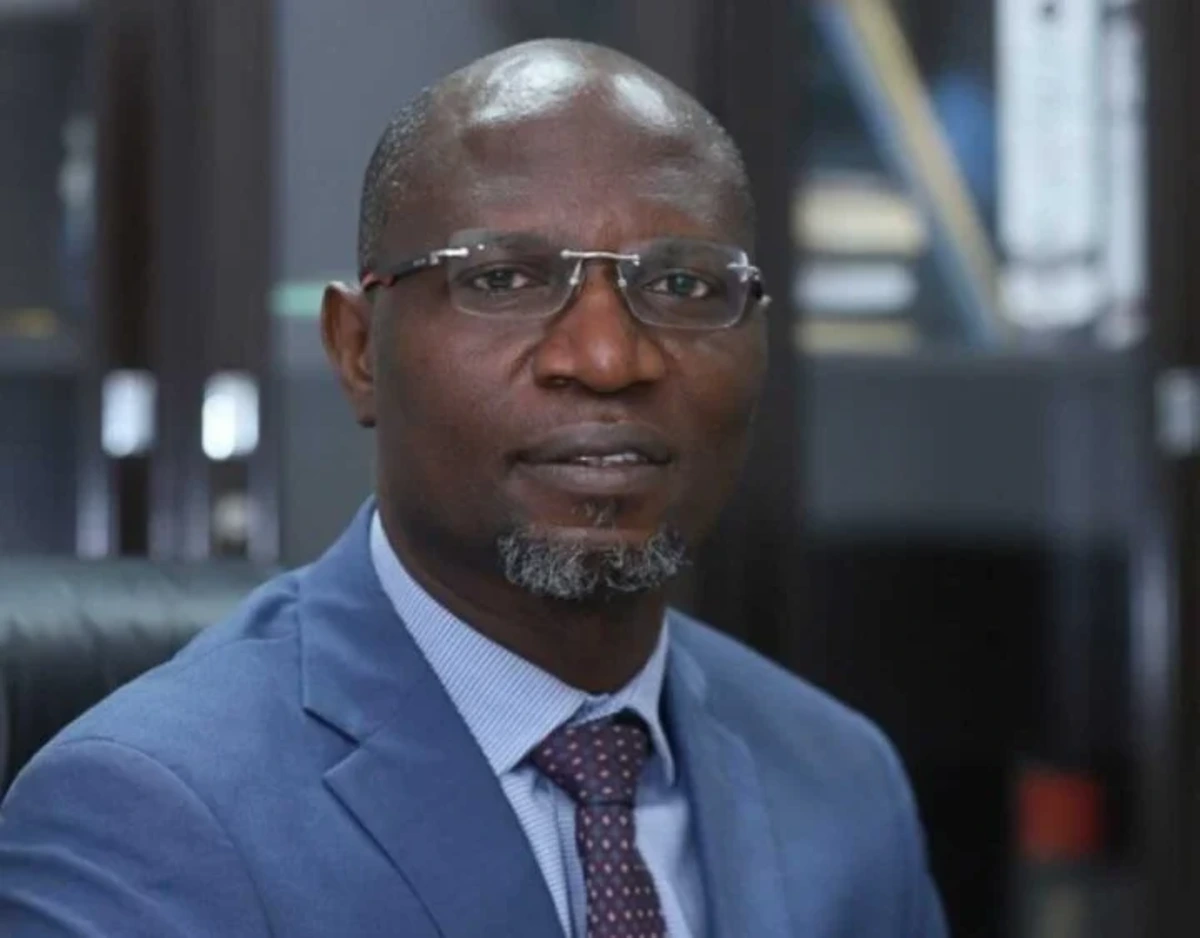
The Director-General of the Securities and Exchange Commission, Dr Emomotimi Agama, has cautioned that too few credible issuers in Nigeria’s capital market could push up the prices of existing assets instead of fostering real market development.
According to Nairametrics, Agama sounded the warning on Friday, October 9, 2026, in Ibadan, Oyo State, while delivering the University of Ibadan Alumni Association’s 2026 Annual Public Service Lecture.
The lecture was themed “First and Best — But Whose Capital Built It? Rethinking How Nigeria Funds Its Own Future.”
He said Nigeria has fallen into a habit of consuming resources that could have been invested in long-term, income-generating assets.
To illustrate the country’s wider challenge in mobilising capital, he pointed to the University of Ibadan’s historical reliance on external funding.
Agama cautioned that widening the capital market without increasing the number of credible institutions seeking investment could create too much demand for a limited pool of assets, leading to price inflation rather than sustainable growth.
According to him, the market’s more fundamental problem is not a lack of investors but an inadequate supply of institutions with strong governance, transparent financial records and credible investment structures.
“A deep market with no supply of credible issuers simply bids up the price of the few assets that exist. That is not development; that is inflation with better manners,” he said.
“The binding constraint on Nigeria’s capital market today is not the number of investors. It is the number of institutions capable of being invested in — organisations disciplined enough to be rated, transparent enough to be examined, and governed well enough to keep a promise for fifteen years.”
The SEC chief also noted that retail investor participation is growing at an unprecedented pace, with the capital market aiming to reach 30 million investors by 2030.
His remarks underscored the need to increase the supply of credible investment opportunities while also drawing more investors into the market.
Nigeria’s Capital Market Masterplan envisages growing the market from about ₦250 trillion to ₦750 trillion, as regulators pursue reforms to improve efficiency, attract investment and widen participation.
Several initiatives have been rolled out to modernise market infrastructure and strengthen investor confidence, including a move to a faster settlement cycle for securities transactions.
In March 2026, it was reported that the market would move to a T+1 settlement cycle from May 29, cutting the time needed to complete securities transactions from two business days to one.
In guidance published on May 18, however, the SEC clarified that the new settlement framework for equities and commodities transactions would take effect on Monday, June 1, 2026.
The directive required market operators and other stakeholders to align their systems and procedures with the revised framework, which was designed to improve liquidity, reduce counterparty risks and bring the market closer to international standards.
The Central Securities Clearing System (CSCS) later announced the official launch of the T+1 cycle on June 1, completing the transition from the previous two-day framework.
Beyond faster transactions, the SEC is pursuing wider retail participation and using technology to make the market more accessible to investors across different income groups.
The regulator is also preparing additional initiatives to encourage domestic savings and expand investment opportunities in the market.
In September, the SEC had planned to unveil the Capital Market Master Plan 2.0 at the 2026 National Capital Market Conference, scheduled for October 19 in Abuja.
The conference will also see the launch of a National Savings Scheme meant to encourage greater domestic savings and investment participation.
Meanwhile, the Dangote Petroleum Refinery and Petrochemicals (DPRP) is conducting an initial public offering valued at about ₦2.15 trillion ($1.6 billion), offering 4.1 billion shares at ₦525 each.
Subscriptions for the offer run from September 14 to October 13, 2026.
The company is targeting up to 10 million Nigerian investors through a technology-driven subscription process linked to the Bank Verification Number (BVN) system, designed to simplify access to equity investment.
The offering illustrates efforts to expand the supply of investable assets alongside rising retail participation, an issue central to Agama’s warning about increasing market liquidity without a matching rise in credible issuers.