
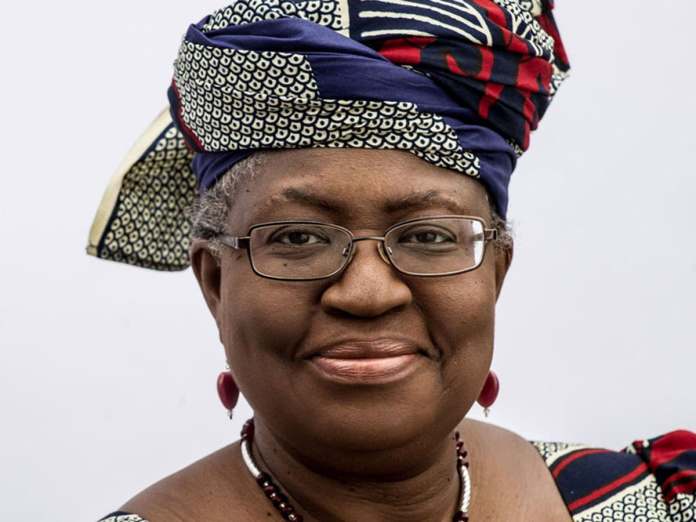
Director-General of the World Trade Organisation, Ngozi Okonjo-Iweala, has called on Nigeria to prioritise the effective execution and maintenance of infrastructure over simply increasing budget allocations, stressing that higher public spending alone will not deliver sustainable development.
Speaking on Monday at the 2026 Delta State Economic and Investment Summit, themed ‘Harnessing Our Strengths, Unlocking Our Potentials,’ the former Minister of Finance said Nigeria must cultivate a stronger maintenance culture while making strategic investments in critical infrastructure to support long-term economic growth.
She noted that the mere availability of natural and financial resources is not enough to achieve sustainable development, stressing that effective implementation and long-term management of public assets are essential for delivering lasting economic benefits.
“Endowments alone do not add value. Budgetary allocations alone do not lead to new roads, to good maintenance,” Okonjo-Iweala said.
Okonjo-Iweala decried Nigeria’s weak maintenance culture, emphasising that preserving existing infrastructure is just as important as delivering new projects. She identified efficient ports, stronger digital infrastructure and lower trade costs as critical priorities that require sustained investment and attention to enhance the country’s competitiveness.
“We lack a maintenance culture in the country. We need maintenance. We need better ports and digital infrastructure, and lower trade costs. Execution is what matters, and successful execution requires focus. It requires prioritisation,” she said.
she said recent macroeconomic reforms, including measures to stabilise the exchange rate and reduce inflation, have begun to improve Nigeria’s economic environment. She added that maintaining these reforms would enhance the growth prospects of states and support broader economic development across the country.
She stressed Nigeria should cultivate more economic growth centres beyond Lagos, Kano and Port Harcourt, arguing that Delta State has the capacity to develop into a major commercial hub and help reduce pressure on the country’s established business centres.
She also called on the Delta State Government to maintain fiscal discipline by channelling public resources into productive investments that promote sustainable economic growth, rather than recurrent expenditure or inefficient spending.
Okonjo-Iweala urged the Delta State Government to uphold fiscal discipline by ensuring public funds are invested in productive sectors that drive long-term economic growth, rather than being absorbed by recurrent or unproductive expenditure.
Commenting on the state’s proposed N1.664tn budget for 2026, she praised its strong focus on capital expenditure, noting that sustained investment in infrastructure could accelerate Delta State’s economic development.
She also backed the state’s plan to establish Special Economic Zones, describing them as one of the most effective industrial policy instruments for governments with limited fiscal space and relatively small domestic markets.