


European Union ambassadors will hold an emergency meeting on Monday as Spain comes under mounting pressure to strengthen control of the bloc’s external borders.
Ahead of the talks, officials will brief the EU’s Integrated Political Crisis Response group on Saturday regarding developments in the North African enclave of Ceuta over the past two days.
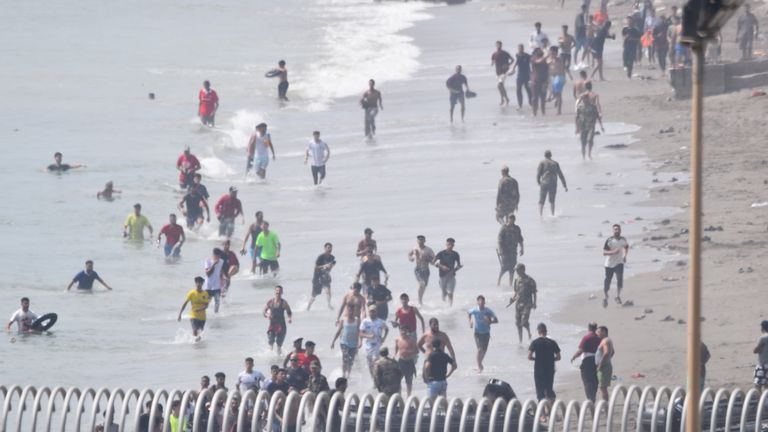
The development follows the Spanish government’s confirmation that about 50,000 people had crossed illegally from Morocco into Ceuta. However, Spain’s Interior Ministry said on Friday that more than half of those migrants have since left the enclave.
The crisis has drawn reactions from several European Union leaders after Spanish Prime Minister Pedro Sánchez described the influx as “a violation of Spain’s territorial integrity.”
They urged Spain to restore control over the situation and ensure the EU’s external border remains secure.
Germany announced it would extend its temporary border checks until September, while Italy said it would introduce entry controls for non-EU nationals arriving from Spain as European countries moved to tighten border security in response to the crisis.
“Images coming from Ceuta are unacceptable,” European Commission President Ursula von der Leyen, who runs the bloc’s executive arm, said in a post on X. “We cannot allow anyone to come to our Union without abiding by our rules.”
European Council President António Costa expressed solidarity with Spain, commending the country’s “firm response” to the crisis, including efforts to curb illegal migration and dismantle criminal smuggling networks.
The influx of thousands of migrants into Ceuta has also renewed scrutiny of the Schengen free movement area, which allows passport-free travel across 25 European Union member states, as well as Liechtenstein, Norway, Switzerland and Iceland.
EU officials, however, stressed that migrants arriving in the Spanish enclaves of Ceuta and Melilla on the North African coast are subject to a special provision under the Schengen Borders Code. The rule requires them to undergo border checks before they can travel onward to mainland Europe.
The officials also emphasised that the European Union maintains strong ties with Morocco, noting that a meeting between the EU’s ambassador in Rabat and Morocco’s foreign ministry is scheduled to take place on Monday.