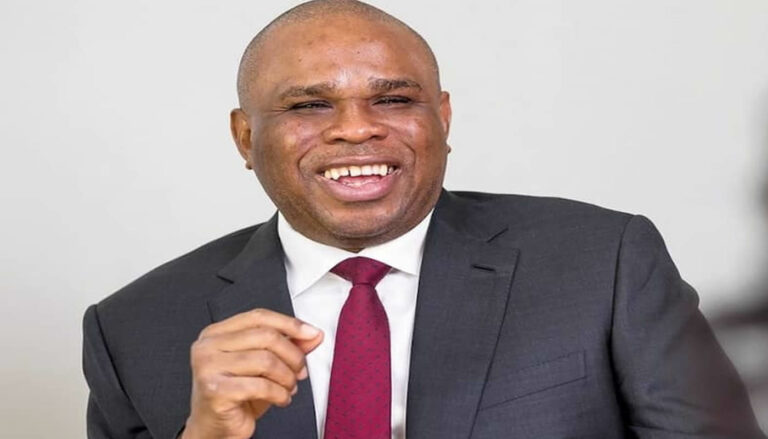
Africa must take advantage of economic opportunities arising from global disruptions, strengthen its financial institutions, retain greater control over its capital and speed up industrialisation to reduce its exposure to external economic shocks, former President and Chairman of the Board of Directors of the African Export-Import Bank, Prof. Benedict Oramah, has said.
Speaking at the 20th Annual AÉLEX Lecture in Lagos on Wednesday, themed, ‘Global Shocks, Local Impact: Battle for Survival or Opportunities to Leapfrog, and for Growth,’ Oramah said the changing global economic order offered Africa an opportunity to address longstanding structural weaknesses that had prevented the continent from fully benefiting from globalisation.
He said Africa must move beyond its traditional response of managing economic crises and build the capacity to transform global disruptions into opportunities for long-term economic prosperity.
Oramah warned that the continent’s reliance on commodity exports, foreign capital, external financial institutions and international currencies had left its economies vulnerable to geopolitical tensions, fluctuations in commodity prices and disruptions to global supply chains.
“My central message to you today is simple: we must see this moment for what it is,” he said.
He argued that the emerging global economic order would present significant opportunities for countries willing to adapt, while leaving those clinging to outdated economic structures more exposed to external shocks.
According to him, the global economic system is undergoing a major shift, as the multilateralism and efficiency-driven globalisation that have shaped international trade for decades give way to economic arrangements increasingly driven by national security concerns, political alliances and strategic interests.
He described the shift as a period of economic entropy, during which established institutions, relationships and structures were being disrupted, creating opportunities for new economic powers to emerge.
“Every transformation of the global order, of the magnitude that is imagined, creates extraordinary opportunities for those who are prepared, and profound risks for those who are not,” he said.
The former Afreximbank president identified capital retention as another key requirement for Africa’s economic transformation, noting that substantial financial resources were invested outside the continent while local businesses and institutions continued to face difficulties accessing affordable financing.