
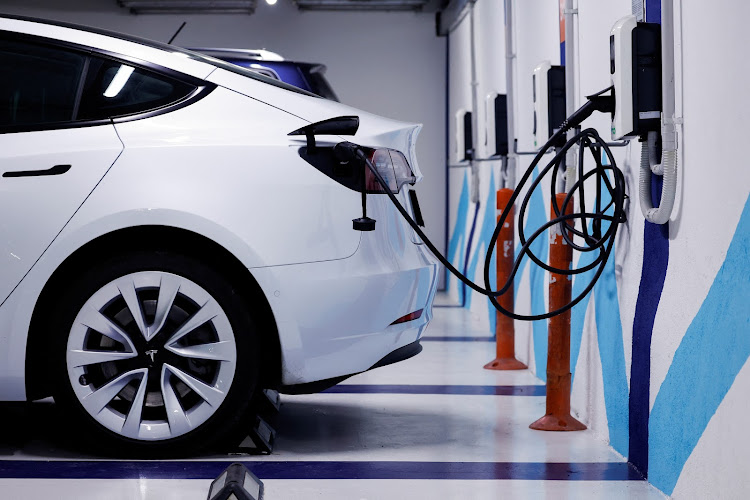
Sales of electric vehicles surged 51 per cent across continental Europe last month as petrol and diesel prices climbed in the wake of the Iran war.
Figures show that 224,000 new EVs were registered in March, bringing total sales to 500,000 in the first quarter, up 33.5 per cent from a year earlier, according to The Guardian.
The data, compiled from national sales records in 15 countries by New AutoMotive and E-Mobility Europe, underscores growing momentum in the sector.
Demand for electric cars has strengthened since the conflict in Iran began in late February, with higher fuel costs prompting more drivers to consider the lower running costs of plug-in vehicles.
As Donald Trump has repeatedly criticised Europe’s “windmills” and its shift toward renewable energy, recent figures suggest the US-Israel war on Iran is further accelerating the transition away from petrol and diesel vehicles.
Norway recorded the highest level of EV adoption, with 98 per cent of all new cars sold in March being electric.
It was followed by Denmark at 76 per cent and Finland at nearly 50 per cent.
The data covers 15 countries across the European Union and European Free Trade Association markets.
Across the Nordic region, led by Norway, electrification has advanced most rapidly, supported by higher incomes, generous government subsidies, and widespread charging infrastructure investments.
Last week, Europe’s only fully electric carmaker, Sweden-based Polestar, reported record sales of 60,000 vehicles over the past year.
While several Western automakers have been scaling back their EV ambitions amid signs of weakening demand and the rollback of tax incentives, the Iran war and the sharp rise in petrol prices over the past seven weeks appear to be reshaping the market.
The pressure has contributed to a noticeable rebound in electric vehicle demand across central and southern Europe.
In the first quarter of the year, major markets including Germany, France, Spain, Italy and Poland recorded a 40 per cent increase in EV adoption.
Italy, one of the slower adopters within the European Union, saw a 65 per cent year-on-year rise in March alone, although EVs still account for just 8.6 per cent of total car sales there.
This compares with a far higher 28% market share in France.