

Electricity distribution companies have criticised the Lagos State Government’s proposed move to eliminate electricity customer band classifications, warning that implementing the policy too soon could spark consumer backlash, deepen market inefficiencies, and increase the risk of power outages.
Speaking anonymously because of the sensitivity of the issue, officials of the distribution firms described the state government’s objective as laudable, according to The Punch.
However, they stressed that Lagos must first ensure reliable and stable electricity supply across all communities before scrapping the banding system introduced by the Nigerian Electricity Regulatory Commission in 2024.
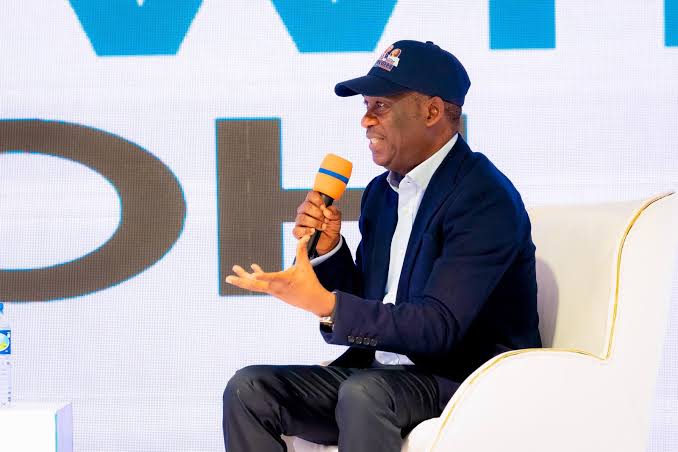
The reaction comes after the Lagos State Commissioner for Energy and Mineral Resources, Biodun Ogunleye, announced during a ministerial press briefing in Alausa, Ikeja, on Monday that the state was pursuing plans to abolish electricity band classifications and guarantee stable power supply to all residents.
Under the framework introduced by the Nigerian Electricity Regulatory Commission in April 2024, electricity consumers were grouped into Bands A to E according to the average number of hours of electricity supplied daily.
Customers under Band A, who receive a minimum of 20 hours of electricity supply, are charged cost-reflective tariffs, while consumers in lower bands continue to benefit from government subsidies despite receiving fewer hours of electricity.
However, the electricity distribution companies maintained that scrapping the classification system without first strengthening power generation and improving electricity supply across the state could create significant disruptions, particularly given the large number of unmetered customers.
“Their intention is very good. It is a laudable intention. But there’s a difference between good intentions and practicability. We have to always think about what is practicable and what is not practicable. A lot of people play to the gallery as far as power is concerned in Nigeria. Talk is cheap,” one of the operators said.
He acknowledged the capacity and governance structure of Lagos State but emphasised that ending estimated billing and introducing uniform cost-reflective tariffs would demand substantial financial investment.
“The Lagos State Government is still the best in Nigeria. No state is as good as Lagos in terms of data, in terms of performance, and in terms of practice. The Lagos State Government is better than any other government. So, as a result of that, one can say that Lagos State can do whatever it promises to do.
“But we have to be realistic. To stop estimated billing, you must meter everybody, and to meter all unmetered customers, you have to pay N180,000 multiplied by the number of electricity customers in Lagos. That’s the money you have to raise to meter them. You can calculate it. There’s a cost element to metering,” he added.
The operators cautioned that scrapping the band classification system while introducing full cost-reflective tariffs could trigger backlash from consumers in underserved areas who currently benefit from subsidised electricity rates.
“Eliminating band classification will cause crises. Lagos may not understand it now. Let me make it practical for you: some people live in areas with a stable power supply, while some are in underserved areas where they may not have a power supply for days or weeks.
“If you now remove band classification and ask all of them to pay a cost-reflective tariff, the people without electricity will protest. They will shout because they don’t have electricity, but you want them to pay the same amount as those enjoying a minimum of 20 hours of electricity.
“Let’s be practical; this is not about politics. The moment the state said it would charge cost-reflective tariffs and no subsidy payment, I knew it was coming up with something,” another operator stated.
The distribution companies further argued that the existing band classification system was introduced to encourage operators to improve electricity supply, enabling more consumers to gradually move into Band A.
“The removal of the electricity subsidy is good, but when you remove banding and charge cost-reflective tariffs, everybody will be paying over N200 per kilowatt-hour instead of N68 for those in underserved areas. This will generate crises. So you can’t do that until you first generate enough electricity for all customers to have a stable supply.
“The band classification is to wake operators from their slumber to generate and supply more so that more customers can be migrated to Band A, where they pay the real cost of electricity.
“If you collapse the band classification, those already in Band A won’t complain, but those in Band D or E will not be happy. The state government is trying to play politics with the state electricity market,” one of the sources said.
The firms insisted that priority should instead be placed on expanding electricity generation capacity and improving supply, which they said would naturally help reduce tariffs over time.
“What we should do is to try to see how we can reduce tariffs by generating more power. You can only reduce them by bringing in more capacity and increasing generation. It is a matter of demand and supply. If there’s enough supply, tariffs will start going down. But we don’t want to wait until then,” the source said.
According to the operators, there is nothing inherently wrong with eventually scrapping the band classification system, but they stressed that such a step should only be taken after sufficient electricity supply has been guaranteed across all customer categories.