





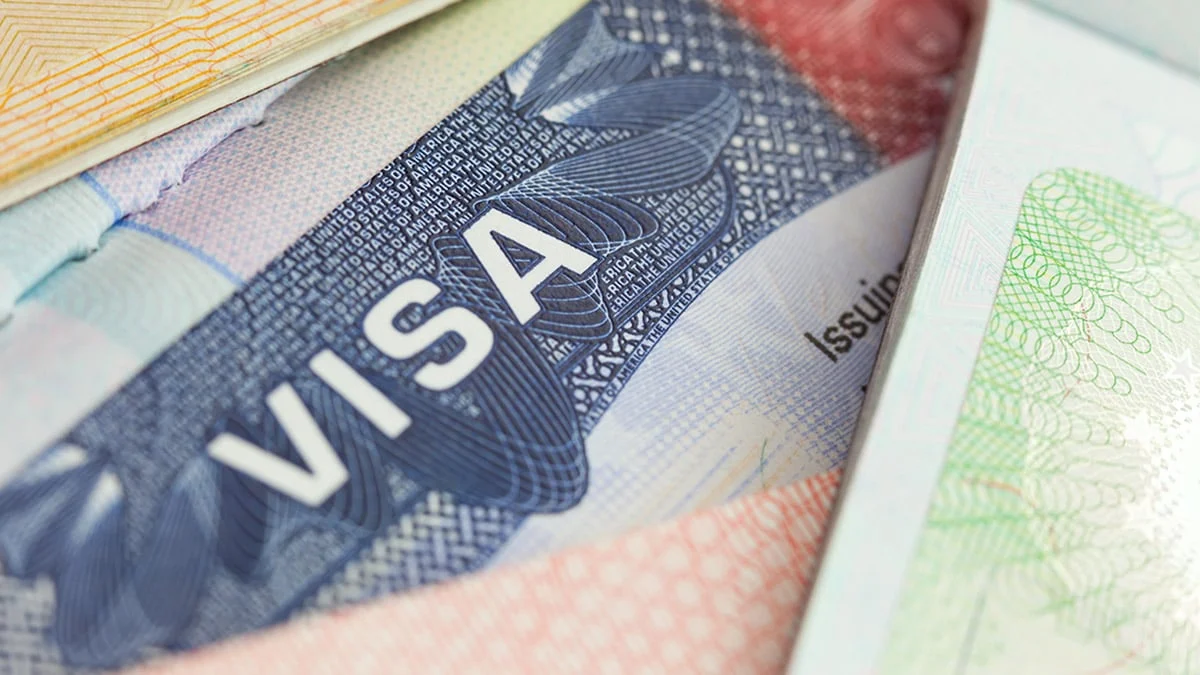
The United States has introduced a new pilot programme requiring some prospective immigrants to pay visa bonds of up to $250,000 before they can receive immigrant visas.
The policy, which takes immediate effect, applies to certain immigrant visa applicants from the Dominican Republic who have been deemed inadmissible on “public charge” grounds. US officials said the programme could later be extended to applicants from other countries.
The development was disclosed in a report published by the Washington Free Beacon on Wednesday and shared by the US Department of State.
“Immigrating to the United States is a privilege, not a right. Those who seek to obtain that privilege must be capable of demonstrating that they will be a benefit—rather than a burden—to our nation,” the department wrote while sharing the report.
The development comes days after the United States made permanent its $20,000 visa bond programme for certain non-immigrant visa applicants from 50 countries, including Nigeria, as part of efforts to curb visa overstays.
According to the report, the State Department said the latest programme is aimed at prospective immigrants who were previously denied visas after officials determined they were likely to rely on government-funded welfare programmes.
“Generally, consular offices will have discretion to set bond amounts and will assess them on a case-by-case basis that considers ‘the applicant’s particular circumstances.
“In some of the individual cases being processed this week, the bonds are being assessed in the range of $100,000 or $250,000,” the report said.
“As part of this comprehensive initiative, the Department is implementing a long-standing legal authority under the Immigration and Nationality Act (INA) to require certain visa applicants—those who are otherwise ineligible for a visa because they are likely to become a public charge—to post a bond as a way to tangibly demonstrate they have access to the funds needed to support themselves,” a state department official was quoted.
The State Department said the bonds are designed to “protect American public benefits programs from the financial burden of foreigners who arrive with major medical expenses or other needs.”
In defending the policy, the department described immigration to the United States as “a privilege, not a right,” arguing that the measure would help safeguard government-funded welfare programmes.
“Immigrating to the United States is a privilege, not a right. Those who seek to obtain that privilege must be capable of demonstrating that they will be a benefit—rather than a burden—to our nation,” the official said.
US officials said the programme would give applicants who were previously denied visas on public charge grounds an opportunity to demonstrate that they have the financial capacity to support themselves without relying on government assistance.
The bond may be revoked after five years if the immigrant does not receive public cash assistance or require long-term government-funded institutional care during that period.
The State Department said the Dominican Republic was chosen for the pilot programme due to the “scope and scale” of immigrant visa operations handled by the US embassy in Santo Domingo.