




The Manufacturers Association of Nigeria has called for stronger efforts to reduce the country’s dependence on foreign supply chains, urging the government to use its new industrial policy to strengthen domestic production and position Nigeria as Africa’s industrial hub.
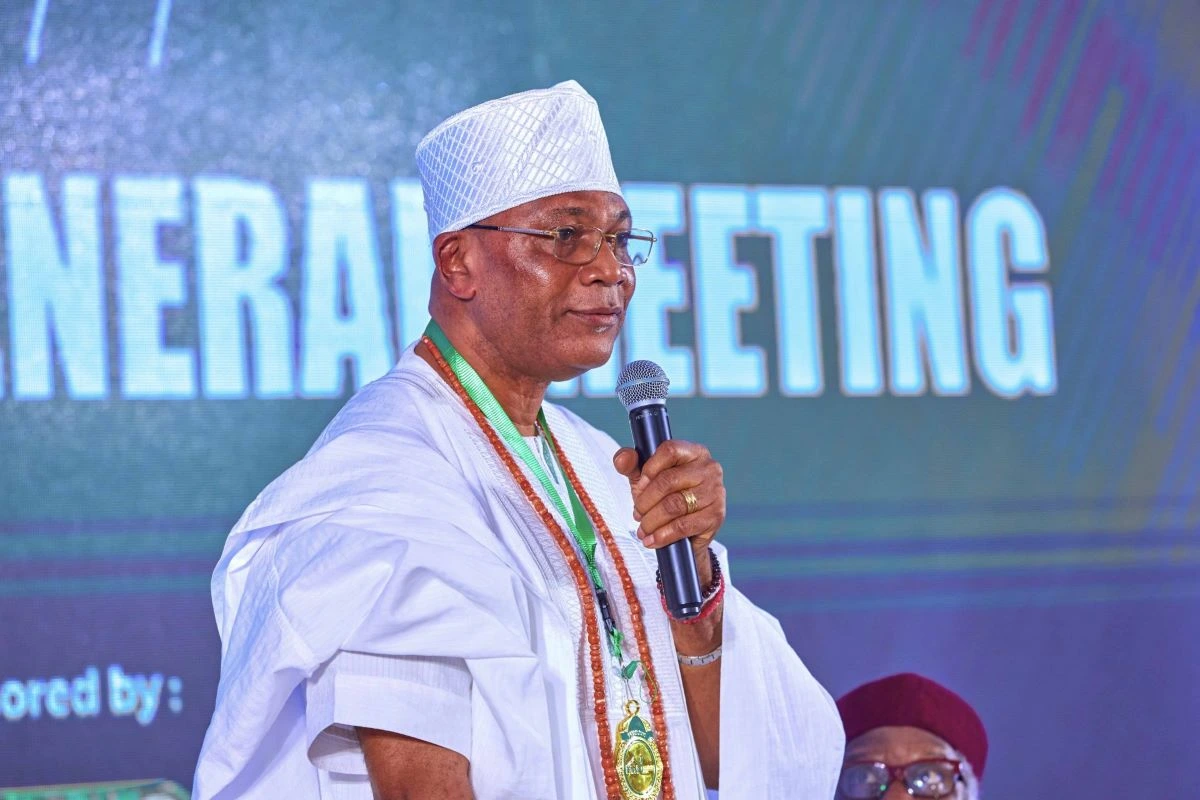
MAN President, Francis Meshioye, made the call on Tuesday in Lagos at a news conference ahead of the association’s 54th Annual General Meeting, scheduled to hold from October 5 to 7.
Meshioye said geopolitical tensions and disruptions in the global economy had exposed the risks associated with excessive reliance on external supply chains.
He said strengthening domestic industrial capacity had therefore become increasingly important to improving Nigeria’s economic resilience and reducing its vulnerability to global supply disruptions.
Meshioye said Nigeria’s industrial strategy must reflect changes in the global economic environment and address the risks arising from excessive dependence on external supply chains.
He said MAN’s advocacy had remained focused on creating the conditions needed for manufacturers to expand domestic production and compete effectively in the global market.
“Developments in the global economy and continuing geopolitical tensions have also reinforced the need for Nigeria to strengthen its domestic industrial capacity and reduce vulnerabilities arising from excessive dependence on external supply chains,” he said.
Meshioye identified macroeconomic stability, improved infrastructure, affordable long-term financing, a stable foreign exchange market and a predictable regulatory framework as key priorities.
According to him, these factors were critical to enabling manufacturers to expand domestic production and compete effectively in local and international markets.
Meshioye said Nigeria had the human capital, entrepreneurial capacity and energy resources needed to build a stronger industrial economy.
He said the country’s challenge was to harness these advantages through the implementation of its current industrial policies to build an economy that produced more of what it consumed, added value to its resources and competed effectively across African and global markets.
Meshioye said the National Industrial Policy 2025, fully launched by the Federal Government in April 2026, provided an opportunity to address some of the structural challenges hindering Nigeria’s industrial development.
He said the effectiveness of the policy would depend largely on its implementation and how well it enabled the country to expand domestic production and strengthen its industrial base.
The policy is aimed at deepening domestic value chains and placing production, competitiveness and job creation at the centre of Nigeria’s economic strategy.
It focuses on value chain development, strategic industrial sectors, infrastructure and energy alignment, skills development, technology adoption and the integration of micro, small and medium-sized enterprises.
However, manufacturers continue to face challenges including high production and energy costs, limited access to affordable financing, infrastructure deficits, inflation and foreign exchange constraints.
Meshioye said sustainable industrial growth also depended on strong institutions, policy consistency, critical infrastructure and effective collaboration between the government and private sector.
According to him, Nigeria has the resources and capabilities needed to build a stronger industrial economy, citing the country’s human capital, entrepreneurial capacity and energy resources.
“The opportunity for us is to harness these advantages through current industrial policy and disciplined implementation to build an economy that produces more of what it consumes, adds greater value to its resources and competes successfully across Africa and global markets,” he said.