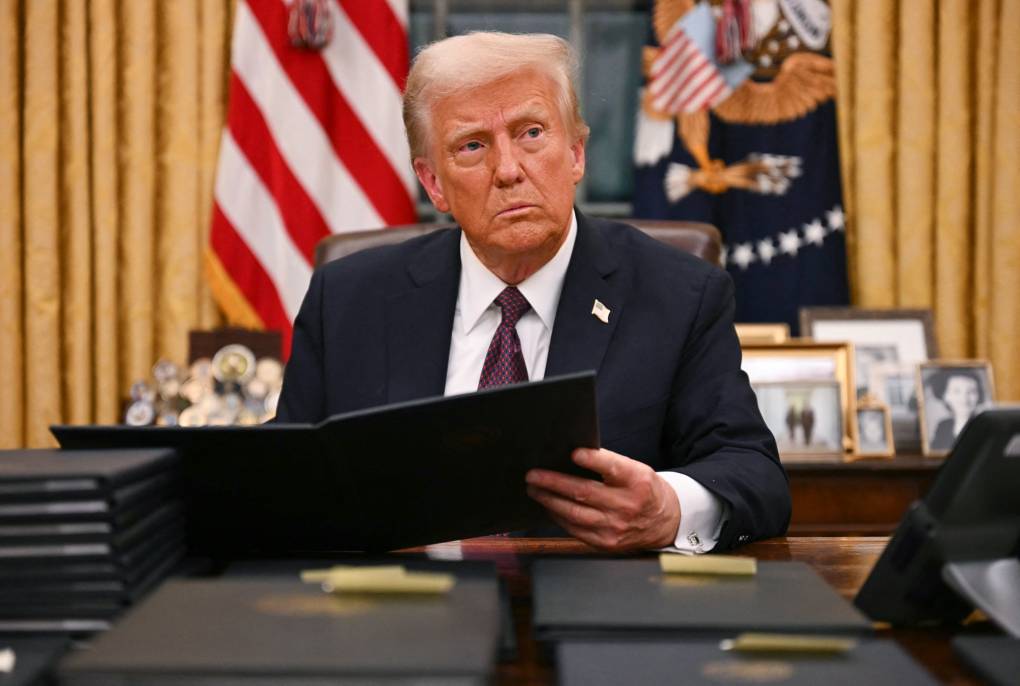
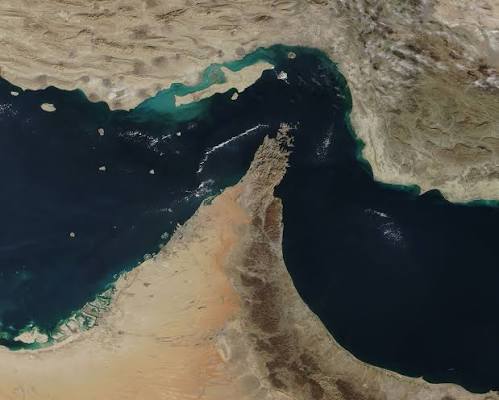
President Donald Trump said in a Truth Social post that the United States would reimpose its blockade of Iranian ports near the Strait of Hormuz, the focal point of the rapidly escalating conflict with Tehran.
The U.S. has dismissed Iran’s claims over the strategic waterway and its proposal to levy fees on ships transiting the strait.
However, instead of advocating a return to its previous status as a toll-free international shipping route, Trump said commercial vessels using the passage would be required to pay the United States for protection.
The announcement sent oil prices higher while global stock markets declined amid renewed concerns over disruptions to energy supplies and regional stability.
Oil prices surged and stock markets retreated after Trump’s announcement, reflecting renewed concerns over global energy supplies and escalating geopolitical tensions.
In a Truth Social post, Trump declared that the Strait of Hormuz, which handled about 20 per cent of global oil trade before the conflict disrupted shipping in late February, “is OPEN, and will remain OPEN, with or without Iran.”
He added that all countries except Iran would enjoy “fair and open use” of the strategic waterway.
The remarks came as fresh exchanges of fire between the United States and Iran further dimmed prospects for a diplomatic resolution and reduced tanker traffic through the strait to minimal levels.
“The U.S.A. will be, from this point forward, known as ‘THE GUARDIAN OF THE HORMUZ STRAIT,’” he claimed. “But as such, and as a matter of FAIRNESS, will be reimbursed, at the rate of 20% on all cargo shipped, for any and all costs necessary to do the job of providing safety and security to this very volatile section of the World.”
“The process and formation will begin immediately,” he added.
Trump had signalled the policy earlier on Monday during an interview with Fox News, saying the United States was “going to get paid for guarding” the Strait of Hormuz.
“We can’t be expected to do that for nothing, unlike we had for many years,” he added. “We guarded it for nothing, and now we’re going to guard it, we’re going to get paid for guarding it. A lot of money.”
Since the conflict began, Iran has indicated it intends to impose tolls or other charges on commercial vessels transiting the Strait of Hormuz, a move the United States has firmly rejected.
A temporary ceasefire agreement reached between Washington and Tehran in mid-June explicitly barred Iran from levying fees on ships using the strategic waterway. However, the truce has been severely undermined by repeated military exchanges in the region, prompting Trump last week to declare that the ceasefire was “over.”