



Nigeria’s three largest listed upstream and integrated oil companies generated a combined N7.05 trillion in revenue during the first half of 2026, as the oil price rally triggered by the United States-Israel military campaign against Iran translated into one of the strongest earnings seasons the sector has witnessed in years.
The figures, compiled from the unaudited H1 2026 financial statements of Seplat Energy Plc, Aradel Holdings Plc and Oando Plc, show that the geopolitical shock significantly boosted revenues, profitability, cash generation and balance sheets across much of Nigeria’s listed oil and gas industry.
Ironically, the same favourable market conditions failed to lift the financial performance of Nigeria’s state-owned oil company, NNPC Limited, whose half-year profit declined sharply despite recording stronger monthly earnings towards the end of Q1 2026.
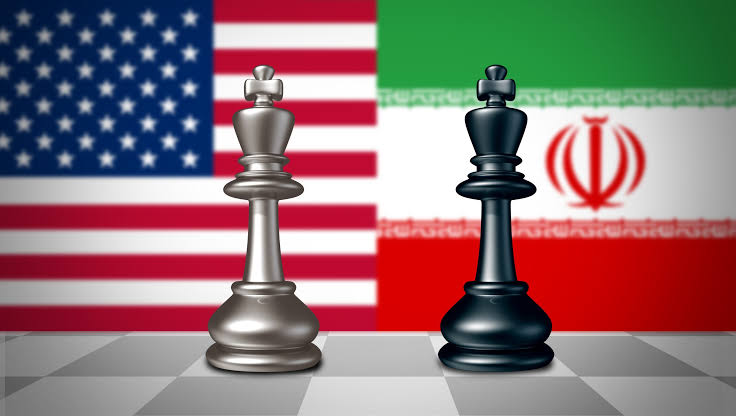
The conflict between the United States, Israel and Iran sent Brent crude prices sharply higher during the first half of the year, briefly touching about $118 per barrel in late March before easing to around $85 per barrel by the end of June.
That pricing environment coincided with improved production, stronger export volumes and better operational performance across Nigeria’s listed producers.
Collectively, the three companies generated approximately N7.05 trillion in revenue during H1 2026.
Revenue was led by Seplat Energy with N2.50 trillion, followed by Aradel Holdings with N2.49 trillion and Oando Plc with N2.06 trillion.
Combined, the companies reported approximately N7.05 trillion in revenue, N1.51 trillion in pre-tax profit and N485.1 billion in profit after tax.
The earnings underscore how quickly higher international crude prices flowed into the financial performance of Nigeria’s listed upstream operators.
Higher crude prices alone did not drive earnings. All three companies also benefited from stronger production profiles, improved operating efficiency and more favourable product mixes.
Seplat increased total production to 139,509 barrels of oil equivalent per day (boepd) while significantly expanding Natural Gas Liquids (NGL) output, helping diversify earnings beyond crude oil.
Aradel delivered perhaps the most dramatic operational improvement, following the consolidation of acquired assets.
Crude oil generated N1.98 trillion, accounting for roughly 79 per cent of group revenue, while exports represented almost 78 per cent of total sales.
Oando’s upstream business also benefited from improved exploration and production performance, although the company continued to rely heavily on its lower-margin Supply and Trading business, which contributed over 83 per cent of total revenue.
While revenues rose across the sector, profitability varied considerably.
Seplat Energy delivered the strongest overall earnings quality.
The company increased pre-tax profit by 74.1 per cent to N790.4 billion, while profit after tax surged 430.3 per cent to N225.5 billion, supported by lower production costs, declining finance expenses and stronger commodity prices.
Seplat also rewarded shareholders with its highest-ever quarterly dividend of US$0.12 per share, reflecting management’s confidence in cash generation.
Aradel Holdings produced the fastest revenue expansion among the three companies.
Revenue jumped 577 per cent to N2.49 trillion, while pre-tax profit almost quadrupled to N752.7 billion.
The remarkable performance reflected expanded production following the ND Western and Renaissance transactions.
However, after-tax profit increased by a modest 30 per cent, largely because finance costs surged to N326.1 billion and other losses remained significant.
Oando Plc remained the turnaround story.
The company still recorded a pre-tax loss of N32.84 billion.
However, this represented a 77.5 per cent improvement from the previous year.
Profit after tax nevertheless rose 8.3 per cent to N68.56 billion, while the second quarter returned to profitability after several weak quarters.
However, finance costs continued to consume operating earnings, highlighting that Oando’s recovery remains incomplete.
The oil boom also translated into stronger liquidity.
Seplat ended June with N598.3 billion in cash while reducing debt following repayment of US$200 million of APF borrowings.
Aradel strengthened its balance sheet even further.
Cash balances increased to N1.72 trillion, while total assets expanded to N10.88 trillion despite significant capital expenditure and tax payments.
Oando also improved liquidity, increasing cash balances to N544.9 billion, although its balance sheet remains under pressure with negative shareholders’ equity of N530.5 billion and a working capital deficit exceeding N3 trillion.
The biggest surprise during the period came from NNPC Limited.
Despite operating in the same favourable oil price environment, the NNPCL reported profit after tax of N2.28 trillion, down 35.4 per cent from N3.53 trillion recorded during H1 2025.
The decline came even though monthly profits improved steadily through the period, rising from N136 billion in February to N535 billion in June, the company’s strongest monthly performance this year.
Overall, NNPC earned approximately N1.25 trillion less than during the corresponding period of 2025.
The first-half results reinforce how closely Nigeria’s upstream earnings remain tied to global geopolitical events.
The Iran conflict temporarily tightened global crude supplies and lifted prices sufficiently to generate exceptional earnings across Nigeria’s listed producers.
Yet the contrast between the private operators and NNPC also illustrates that stronger oil prices alone do not guarantee superior financial performance.
Operational efficiency, production growth, capital allocation and financing costs increasingly determine which companies convert higher crude prices into shareholder value.
Although oil prices retreated from their March highs before the end of June, H1 2026 demonstrates that Nigeria’s listed upstream companies remain highly leveraged to global commodity cycles.
Against this backdrop, the market has been cautious about pricing-in the earnings releases, as the share prices remained stable across the tickers.
The share price of Aradel came down to N1,275.50 as of July 1, and later moved up to N1,549.80 as of July 9 before moderating to N1,526.80 on July 10.
Since then, the price has remained stagnant despite the improved earnings release. Aradel opened the year at N679.9 per share.
Similarly, Seplat’s share price has depreciated to N11,363.90 after hitting N11,600 on May 8. Since June 8, it has remained stagnant. Seplat opened the year at N5,610 per share.
Oando has suffered the worst fate as the price touched its lowest at N34.85 per share on August 3, down from its highest at N56.75 on June 13. The stock opened the year at N40.20 per share.
With geopolitical risks still elevated and OPEC+ supply decisions likely to influence crude prices through the second half of the year, investors will now be watching whether these companies can sustain earnings momentum if oil prices moderate from the extraordinary levels recorded during the Iran conflict.