

The Revenue Mobilisation Allocation and Fiscal Commission has said the review of Nigeria’s revenue allocation formula is at an advanced stage, as it begins a nationwide data verification exercise to update the indices used for sharing revenue among the federation’s tiers of government.
This was disclosed in a statement on Thursday by the Head of Information and Public Relations Unit of the Commission, Maryam Yusuf.
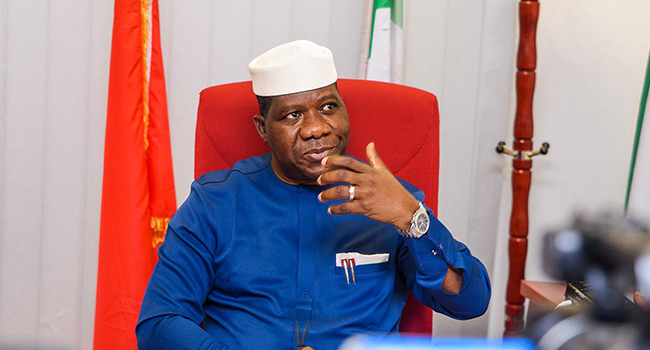
According to the statement, the Chairman of the Commission, Mohammed Shehu, said, “The commission is committed to ensuring that Nigeria’s revenue allocation framework reflects the realities on the ground.
“Accurate data is the backbone of fairness, equity, and national cohesion. This nationwide exercise represents our determination to build a more transparent and responsive revenue distribution system that serves the interests of all Nigerians.”
He said the exercise is intended to reassess the factors and indicators used in distributing revenue among states and local governments, with the goal of aligning allocations with prevailing socio-economic realities.
He added that reliable and verified data remains central to a fair and sustainable revenue-sharing system, noting that the verification process would enhance fiscal federalism and support more effective national development planning.
The statement added, “He (Shehu) further disclosed that the current review of the national revenue allocation formula has reached an advanced stage, making the data verification exercise a critical step in safeguarding the integrity and reliability of the indices that will underpin future allocations.”
Shehu further noted that the exercise would have far-reaching implications for fiscal management and balanced regional development, and called on state governments, local government authorities, traditional institutions, civil society organisations, and community leaders to give full cooperation to the commission’s teams.
The Commission also explained that the nationwide verification exercise would be implemented across all states and the Federal Capital Territory in a phased, region-by-region rollout. It added that the process would involve gathering, validating, and reconciling critical socio-economic and infrastructural data.
It further explained that the exercise would assess key indicators such as education and healthcare delivery, internally generated revenue capacity, and the level of infrastructure development across states and local government areas.
The Commission also noted that stakeholder engagement meetings would be held in every state to enhance transparency, strengthen trust, and promote collaboration among government agencies and local communities.
Shehu said Nigeria’s revenue allocation system is based on indices such as population, landmass, infrastructure, and other socio-economic indicators, noting that these factors must be reviewed regularly to reflect evolving realities.
“Over time, Nigeria has witnessed significant socio-economic transformations marked by population growth, expansion of infrastructure, urbanisation, and widening development gaps among regions. These evolving realities necessitate the validation of existing datasets to ensure fairness, transparency, and equity in revenue sharing,” he added.