
The Nigeria Revenue Service has pledged transparent and fair administration of mining royalties under the new tax laws that transferred the collection of mineral royalties and related fees to the agency.
The agency also pledged to ensure transparency, fairness and accountability in the administration of the mining sector under the 2025 reforms signed into law by President Bola Tinubu.
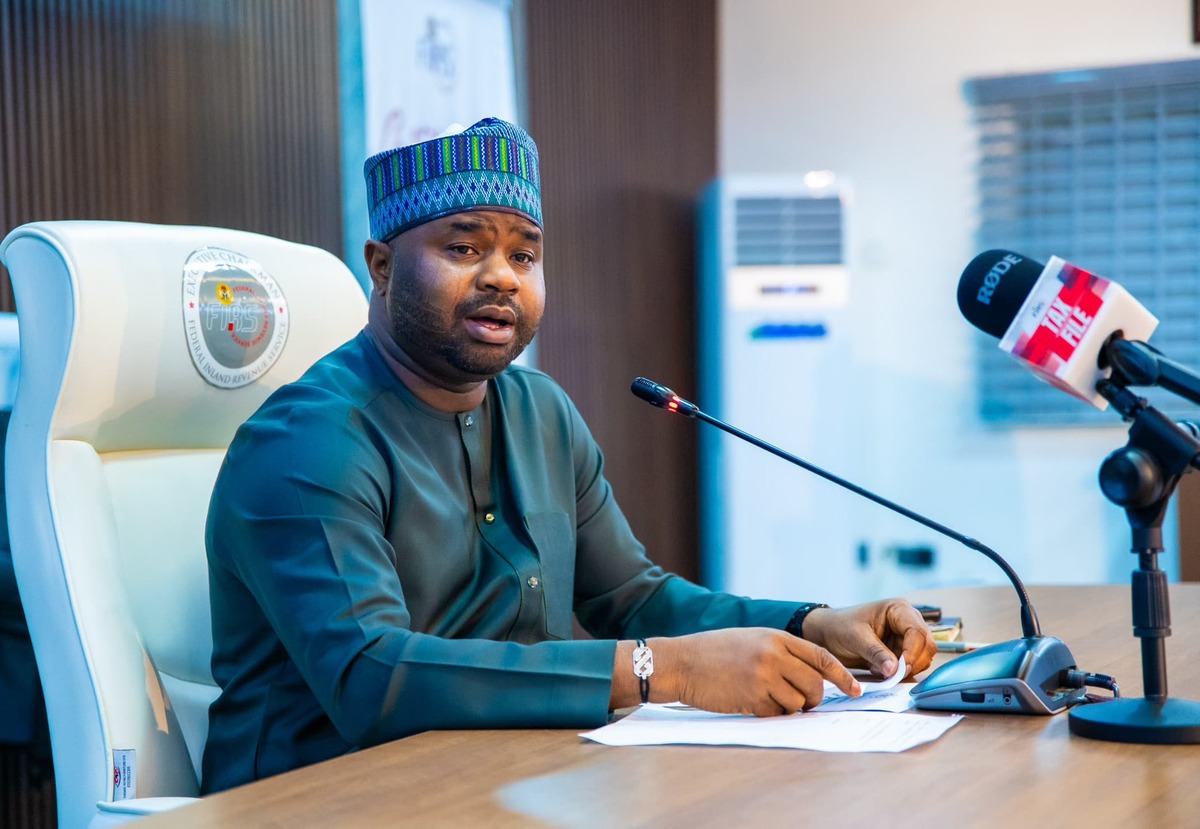
In a statement on Sunday by the Executive Director of the Government and Large Taxpayers Directorate of the NRS, Amina Ado, the agency said the assurance was given during a mining stakeholders’ workshop.
Ado said the reforms were designed to tackle long-standing challenges in the sector, including illegal mining activities, weak oversight and revenue leakages.
“Since the first of January this year, by the tax laws signed in June 2025 by His Excellency President Bola Ahmed Tinubu, the collection of mineral royalty and other fees in the solid minerals sector have come under the purview of NRS,” she said.
She explained that while the Ministry of Solid Minerals Development remained the sector regulator and provider of geological, pricing and production data, operators would now have “one clear address for the fiscal obligation.”
“One framework. One assessment. One door to knock on. That is Nigeria Revenue Service,” Ado stated.
According to her, the new framework would reduce multiple and overlapping demands on mining operators and encourage compliance through a more predictable and transparent system.
“When many bodies may each lay a claim on the same operator, no single body carries the cost of over-reach and so the demands multiply, the burden becomes unknowable, and the sector retreats from view,” she said.
She added that the agency would administer the tax laws in a way that keeps the mining sector “alive, formal, and thriving — not just taxed.”
“We hear the concerns of the mining community. We will administer the tax laws in the spirit of a Service that wants the sector alive, formal, and thriving not just taxed,” she said.
Ado noted that a major challenge confronting the sector over the decades was that much of mining activity remained outside formal government oversight.
“A government cannot assess what it cannot see. It cannot collect what it has not assessed. It cannot account for what it has not collected,” she said.
She warned that weak regulation had allowed illegal operators, foreign syndicates and armed groups to thrive in mining communities across parts of the country.
“In Zamfara, in Niger, in parts of Kaduna and beyond, the vacuum where formal authority should have stood did not remain empty. It was filled by illegal operators, by foreign syndicates working our gold and lithium with no licence and no accountability,” she added.
The former director urged operators to embrace formalisation, saying it would provide predictability, legal protection and improved security for licensed miners.
“Visibility is not only an obligation we ask of you. It is, in the end, a protection we owe you,” she said.
She assured stakeholders that the NRS would be guided by fairness and dialogue in implementing the reforms.
“We intend to meet it through clarity — you will know what is required of you, and when. Through fairness, like cases treated alike, whether the operator is a multinational or a registered cooperative of artisanal miners in Kebbi,” Ado stated.
She added that Nigeria’s mineral resources must be harnessed to build sustainable national industries and development.
“Our task, in our time, is to make sure that the gold of Zamfara and Osun, the lithium of Nasarawa, the tin that still lies in the soil of Jos, the limestone and the barite and the iron ore are harnessed in such a way that this generation of mineral wealth builds something that stays,” she said.
The Federal Government recently transferred the collection of mineral royalties and related mining fees to the Nigeria Revenue Service under the new tax laws signed by President Bola Tinubu in 2025.
Nigeria’s mining sector has operated for decades with low formal compliance, widespread illegal mining and minimal contribution to national revenue despite the country’s vast deposits of gold, lithium, tin and other solid minerals.