

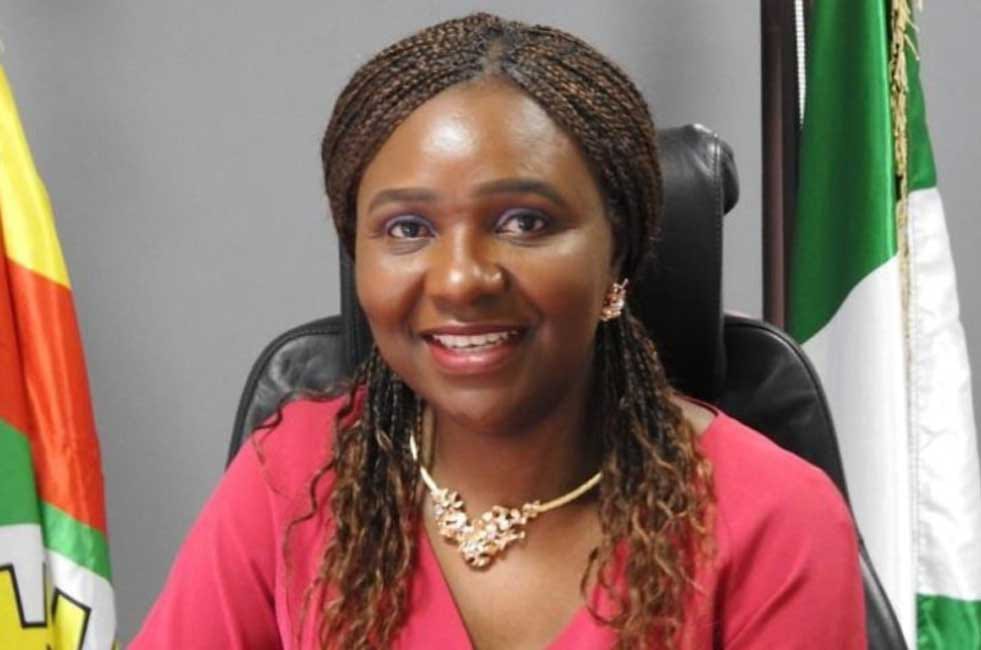





Minister of Budget and Economic Planning, Abubakar Bagudu, says Northern Nigeria’s fiscal outlook has significantly improved under President Bola Tinubu, with domestic debt in the region dropping by 42.06% due to recent economic reforms.
Bagudu made the remarks in a statement released by the ministry on Wednesday, following his presentation at a two-day forum hosted by the Sir Ahmadu Bello Memorial Foundation in Kaduna. The event focused on tracking the fulfillment of campaign promises made to Northern stakeholders ahead of the 2023 elections.
Themed “Assessing Electoral Promises: Fostering Government-Citizen Engagement for National Unity,” the session aimed to promote transparency and accountability in governance.
The ministry noted that key reforms—including the removal of fuel subsidy—have boosted federal revenue allocations to states and contributed to a nationwide decline in subnational debt.
Overall, the domestic debt profile of Nigeria’s 36 states and the Federal Capital Territory dropped by 33.4%, from N5.8 trillion to N3.8 trillion. Northern states recorded an even sharper reduction, with debt falling from N1.98 trillion to N1.14 trillion.
The statement read, “He explained that the debt portfolio of the 36 states and Abuja was reduced by 33.4 per cent from N5.8tn to N3.8tn under the President’s deft financial engineering. Isolating the North’s share of this, the minister noted that the region’s 19 states experienced a 42.06 per cent reduction, from N1.98tn to N1.14tn.”
The minister explained that between May 2023 and June 2025, net statutory revenue and value-added tax allocations to states and local governments more than doubled, rising from N458.81 billion to N991.81 billion—a N533 billion increase, representing a 116.17% growth.
Bagudu noted that the increase in allocations excludes foreign exchange gains, Electronic Money Transfer (EMT) levies, and other augmentation payments. He attributed the surge in revenue to the removal of fuel subsidy, which he said freed up trillions of naira for redistribution through the Federation Account.
According to the minister, federal allocations have grown by over 340% since the reform took effect. While all states have benefited from the increase, he emphasized that the Northern region recorded some of the most significant gains.
He highlighted specific state-level gains, noting that Gombe State’s monthly allocation rose from N6.69 billion in May 2023 to N24.91 billion in 2025—a 272.35% increase. Kaduna State also saw a significant boost, with allocations climbing from N11.94 billion to N42.01 billion, representing a rise of N30.07 billion or 251.84%.
At the regional level, the North Central recorded a 145% increase in allocations, the North East 149%, and the North West 143%.
The minister said these reforms have provided states with the fiscal space to invest in infrastructure and social development without relying on unsustainable borrowing.
Bagudu also pointed to several major infrastructure and health projects underway across Northern Nigeria under President Tinubu’s Renewed Hope Agenda. These include the Sokoto-Badagry Superhighway, the dualisation of the Kano-Maiduguri Road, the Sokoto-Gusau-Funtua-Zaria Highway, the Abuja-Keffi-Makurdi Road, the Ilorin-Jebba-Minna Road, the Abuja-Lokoja Road, the Kano-Katsina Road dualisation, the Abuja-Kaduna-Kano Expressway, and the AKK Gas Pipeline.
He further highlighted ongoing work on the Kaduna-Kano Railway and light rail projects in Kaduna, Kano, and the Federal Capital Territory.