

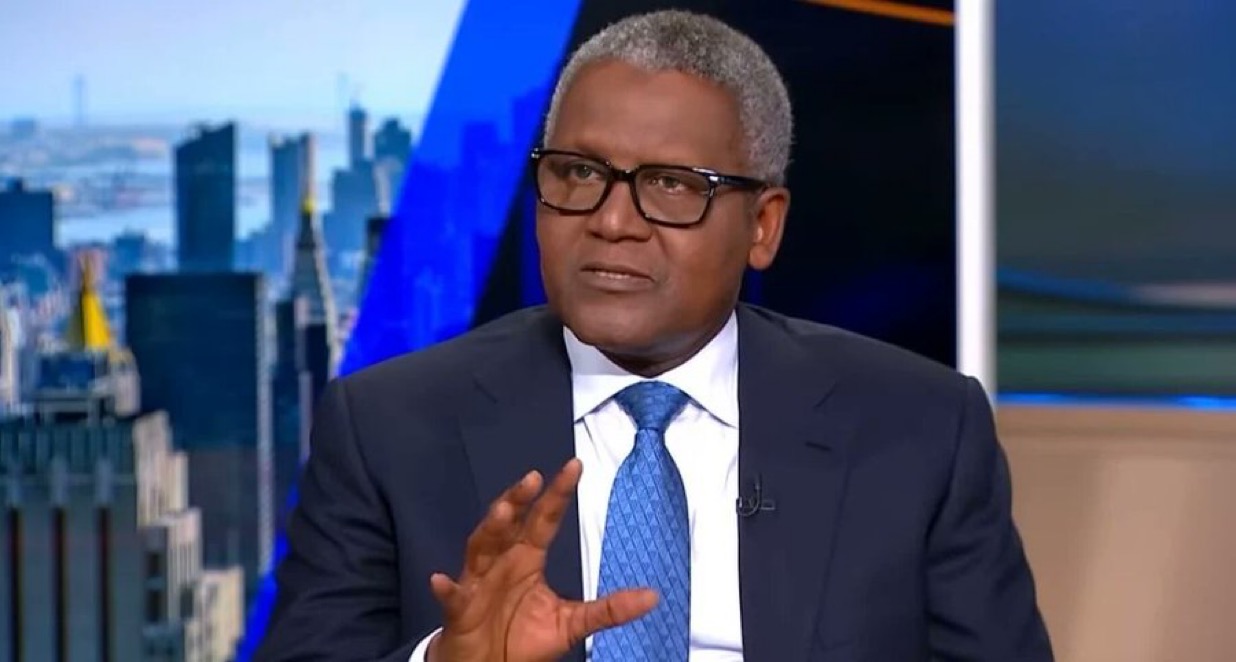
The President of Dangote Industries Limited, Aliko Dangote, stated yesterday that the Nigerian Midstream and Downstream Petroleum Regulatory Authority continues to issue licences for petrol imports, despite public assertions suggesting otherwise.
He warned that this practice could threaten the operations of his refinery and put the country’s energy security at risk.
Dangote added that the ongoing importation of refined petroleum products is undermining the refinery, which he says has sufficient capacity to satisfy Nigeria’s entire fuel demand, according to THISDAY.
Dangote noted that while his refinery can produce up to 75 million litres of petrol daily, some market players continue to import fuel into the country, a practice he warned could eventually compromise Nigeria’s energy security.
He added that the continued issuance of import licences appears to contradict official assurances from the NMDPRA that fuel imports would be curtailed as domestic refining capacity increases.
He noted that even as his refinery has begun exporting refined petroleum products abroad, certain importers are still bringing fuel into Nigeria, engaging in activities that disrupt the domestic market.
“They are still issuing licences despite that we can meet the demand. They are still killing us with importation. They are importing and we are exporting. Yes, we can do 75 million litres, but they are still back-loading,” Dangote told THISDAY.
Recall NMDPRA recently stated that it has halted the issuance of new licences for petrol imports, citing that domestic refining is now meeting a significant portion of Nigeria’s demand.
The downstream regulator said the decision is in line with the Petroleum Industry Act (PIA), which permits fuel import licences only when local production falls short of national demand.
The agency further explained that no new petrol import licences have been issued in 2026, as domestic refinery output—particularly from the Dangote Petroleum Refinery, is deemed sufficient to meet local market needs.
However, the statement appears to contradict NMDPRA’s latest data for January 2026, which showed daily consumption of 24.8 million litres of imported petrol.
In February, however, imported petrol consumption in Nigeria fell sharply to 3 million litres per day.
Dangote further alleged that many companies importing petrol into Nigeria lack retail outlets or filling stations, raising concerns that some of the imported fuel may be diverted or smuggled after entering the country.
He warned that if this trend continues, it could mirror the challenges faced by local agricultural producers in Nigeria’s rice sector, where unchecked imports have undermined domestic farmers.
“When they bring the goods, they smuggle them because they don’t have any filling stations. These importers don’t have filling stations. It’s affecting us. It’s the same thing they did with rice, they killed (the businesses of) every rice farmer. This is where we are,” he said.
Nigeria’s fuel supply has long depended on imports due to the underperformance of state-owned refineries.
The launch of the Dangote Petroleum Refinery, with a nameplate capacity of 650,000 barrels per day—the world’s largest single-train refinery, has raised expectations for a shift.
The facility is seen as key to Nigeria’s efforts to end decades of reliance on imported refined petroleum products.