


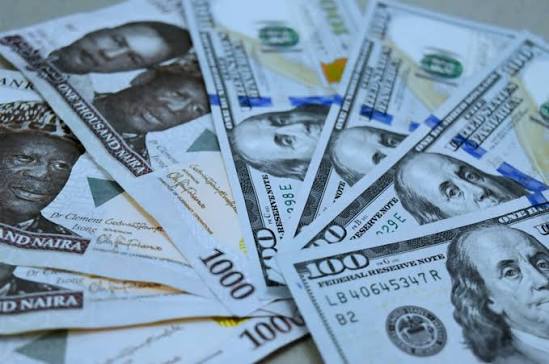




Nigeria’s external reserves have expanded by $7.09 billion since the start of 2026, climbing to $52.66 billion as of August 19, according to the latest figures released by the Central Bank of Nigeria.
The growth represents a 15.6 per cent expansion in under eight months, rising from $45.57 billion recorded on January 2, 2026.
This development has strengthened the central bank’s external buffer, giving monetary authorities additional firepower to stabilise the local currency and absorb external economic shocks.
Data tracked from the apex bank shows a steady upward trajectory following a brief contraction earlier in the second quarter.
Reserves dipped by $855 million between April 1 and May 7, falling from $49.18 billion to a period low of $48.33 billion.
Since hitting that low in May, the reserves have rebounded strongly, gaining $4.33 billion over the past three months.
The balance crossed the $50 billion mark in early June, reached $51.06 billion by June 19, and broke past $52 billion in July.
From $51.94 billion on August 3, the reserve balance added approximately $715 million in under three weeks to close at $52.66 billion on August 19.
The buildup in external reserves has coincided with improved foreign exchange liquidity and a stronger naira in recent months.
The naira traded around N1,346.90/$ at the Nigerian Foreign Exchange Market (NFEM) as of August 21, according to recent market data.
Analysts say the continued accumulation has been driven by stronger foreign exchange inflows, including oil export earnings and investment inflows.
Dr Jerry Igwilo, Chief Executive Officer of Nisela Capital Limited, said higher crude oil prices had supported Nigeria’s dollar earnings.
“We have seen that in the last couple of months, the prices of crude oil have gone up because of the Iran-US war. What that has done is that it has increased the amount of dollars we get for selling our crude oil,” he said.
“For Nigeria, the increase in foreign reserves means that we’re able to get in more revenue in foreign currency,” Igwilo added.
Dr Muda Yusuf, Chief Executive Officer of the Centre for the Promotion of Private Enterprise (CPPE), also attributed the buildup to improved investor confidence and stronger external inflows.
According to Yusuf, increased portfolio investment and better export performance have contributed to the accumulation.
The reserve improvement has occurred alongside ongoing changes in Nigeria’s foreign exchange market, including efforts by the CBN to deepen the market, improve transparency and strengthen liquidity.
The recent gains have strengthened Nigeria’s foreign exchange buffer and provide a larger cushion against external shocks, while supporting the country’s capacity to meet international obligations.
In July, the Monetary Policy Committee retained the Monetary Policy Rate at 26.5 per cent at its 306th meeting held in Abuja on July 20 and 21, 2026.
The Cash Reserve Ratio was retained at 45 per cent for commercial banks and 16 per cent for merchant banks.
The Standing Facilities Corridor remained at +50/-450 basis points around the MPR.
The CRR on non-TSA public sector deposits was retained at 75 per cent.