


The Nigerian Shippers’ Council has intensified efforts to reposition the country’s maritime sector as a key driver of the Federal Government’s target of building a $1 trillion economy by 2030.
Digital transformation and institutional modernisation have emerged as the central pillars of the council’s reform agenda.
The renewed push was unveiled during a five-day strategic management retreat for senior management staff of the council in Abeokuta, Ogun State.
Industry leaders outlined a roadmap to strengthen maritime regulation, enhance trade facilitation, and improve efficiency across the country’s shipping and logistics ecosystem.
Officials said the initiative is designed to strengthen the council’s operational effectiveness as the nation’s port economic regulator.
It also aims to align its institutional strategy with the Renewed Hope agenda of President Bola Tinubu and the national policy on Marine and Blue Economy.
The retreat had the theme “Advancing Strategic Execution: Driving Collaboration, Innovation and Excellence for a Future-Ready NSC.”
It brought together directors and management staff for strategic recalibration, capacity development, and policy alignment.
These efforts are aimed at deepening reforms in Nigeria’s maritime governance structure.
Executive Secretary of the Council, Dr. Pius Akutah, said digital transformation and institutional modernisation would be central to the next phase of the council’s development.
He stated this as the council seeks to deliver measurable results under its 2025–2029 Strategic Plan.
According to him, the theme of the retreat reflects the council’s determination to translate strategic vision into concrete institutional outcomes capable of strengthening the maritime regulatory environment.
He said: “This theme highlights three strategic imperatives that must guide the next phase of the Council’s institutional development. Collaboration because no regulatory institution can operate effectively in isolation within a complex maritime ecosystem.
“Innovation, because the dynamics of global trade and logistics require institutions that are adaptive, technology-driven and forward-looking. Excellence, because the credibility and authority of a regulator ultimately depend on professionalism, integrity and performance of its people.
“These three pillars must shape how we think, lead and execute our responsibilities as an institution.
Akutah stressed that policy frameworks alone cannot drive reform without effective execution by management.
“In practical terms, this transformation requires stronger collaboration across departments and units, greater innovation in the way we deploy technology and regulatory tools, with an uncompromising commitment to excellence in service delivery and institutional performance,” he said.
The NSC boss also expressed appreciation to Tinubu for supporting reforms in the maritime and logistics sector.
He acknowledged the policy direction of the Minister of Marine and Blue Economy and the strategic guidance of the council’s governing board.
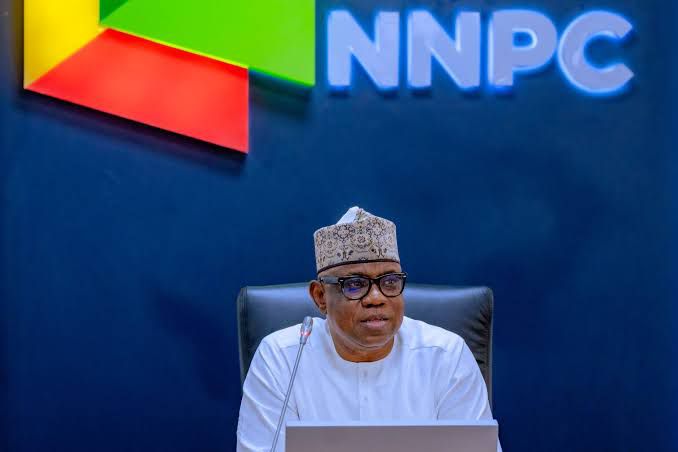
Chairman of the NSC Governing Board, Dr. Ibrahim Shema, said Nigeria’s maritime and blue economy sector holds enormous potential to drive economic growth, job creation, and investment if properly harnessed.
He noted that the country could unlock significant value through targeted investments across maritime and coastal industries.
He said: “With strategic investment in port infrastructure, shipping, fisheries, aquaculture, offshore energy and coastal tourism, Nigeria can unlock tremendous economic value while creating millions of jobs by exploiting the vast potential in the marine environment.”
He also emphasised the council’s responsibility in supporting the government’s economic ambitions through effective maritime regulation.
“We are reminded of the critical role the Council plays in promoting growth and development of our nation’s marine and blue economy sector as the nation’s Port Economic Regulator.
“In line with the ‘Renewed Hope Agenda’ of our dear President, Bola Ahmed Tinubu, GCFR, a target of $1 Trillion economy by the year 2030 has been set. This can only be achieved if our Ministry keys into the target by effectively implementing the country’s National Policy on Marine and Blue Economy,” he said.
Shema added that the Governing Board would continue to provide strategic guidance and policy support to enable management deliver on its mandate.
Also speaking, the Permanent Secretary of the Federal Ministry of Marine and Blue Economy, Fatimah Sugra Mahmood, represented by the Director of Planning, Research and Statistics, Kalthhum Ibrahim, urged management staff to demonstrate professionalism and stronger institutional collaboration.
She said the strategic role of the council in Nigeria’s maritime ecosystem demands higher commitment from its leadership.
Mahmood noted: “Effective execution of the council’s mandate also requires strong collaboration within the organisation and the strategic deployment of technology.”
Participants at the retreat engaged in a series of technical sessions, policy discussions, and knowledge-sharing engagements.
These were designed to strengthen regulatory capacity and align operational priorities with global best practices in maritime governance.