





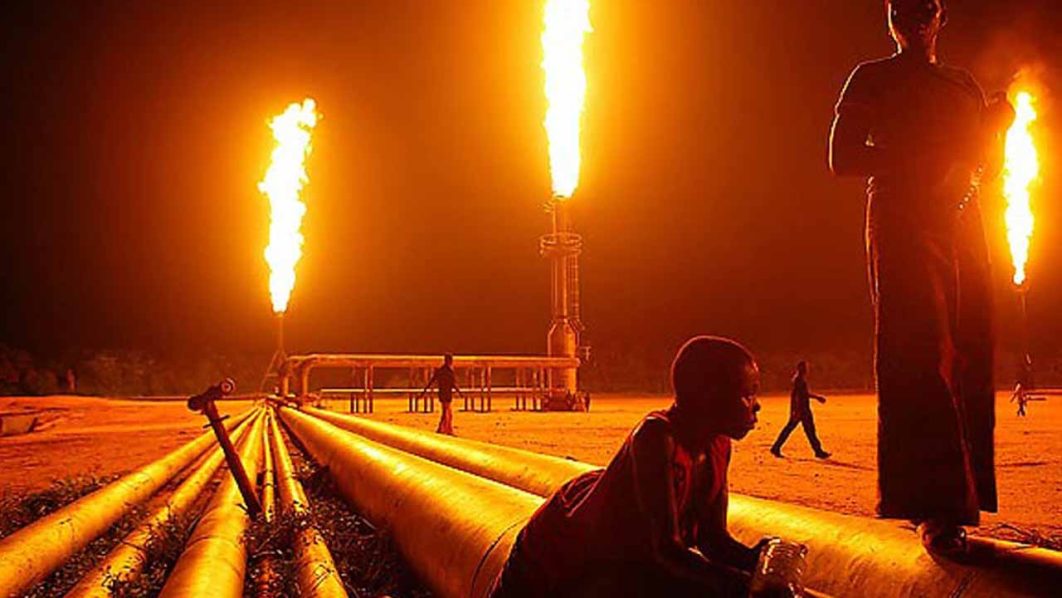
Nigeria remained one of the world’s largest gas-flaring countries in 2025, ranking among the nine nations responsible for 83 per cent of global gas flaring.
This was disclosed in the World Bank’s Global Gas Flaring Tracker Report, released on Tuesday.
The report identified Russia, Iran, Iraq, Venezuela, Mexico, Libya, Algeria, Nigeria, and the United States as the leading contributors to global gas flaring.
Collectively, these countries accounted for the bulk of emissions, while more than 90 other oil-producing nations contributed just 17 per cent of total flaring despite producing 54 per cent of global oil output.
According to the World Bank, Nigeria recorded increases in both oil production and gas flaring volumes during the year. This trend highlights ongoing infrastructure and efficiency challenges within the country’s oil and gas sector.
The World Bank reported that Nigeria’s gas flaring intensity remained largely unchanged in 2025, despite increases in both flare volumes and crude oil production.
The country recorded an 8 per cent rise in gas flaring volumes alongside an equivalent 8 per cent increase in oil output during the period.
While flaring intensity stayed broadly stable, other countries such as Mexico, Russia, Algeria, and Iran saw increases, whereas Venezuela and the US achieved reductions of 11 per cent and 10 per cent, respectively.
Iraq, Libya, and Nigeria, however, recorded little or no change compared to 2024.
The share of total flaring from the top nine flaring countries – Russia, Iran, Iraq, Venezuela, Mexico, Libya, Algeria, Nigeria, and the United States – represents 83 percent of total flaring in 2025,” the report noted.
The report highlighted that several major oil-producing nations continue to demonstrate that crude oil can be produced with significantly lower levels of gas flaring.
According to the World Bank, inadequate infrastructure remains a major barrier to reducing gas flaring in Nigeria.
It noted that limited capacity to transport associated gas to markets, combined with ageing gas processing facilities and frequent downtime, continues to drive elevated flaring levels in the country.
The report also noted that aging gas processing facilities and high downtime rates have contributed to elevated flaring levels.
It added that countries such as Kazakhstan, Saudi Arabia, and the United States were able to reduce flare volumes while maintaining or lowering flaring intensity.
However, Mexico, the Republic of Congo, and Vietnam recorded some of the largest increases in flaring intensity globally over the same period.