
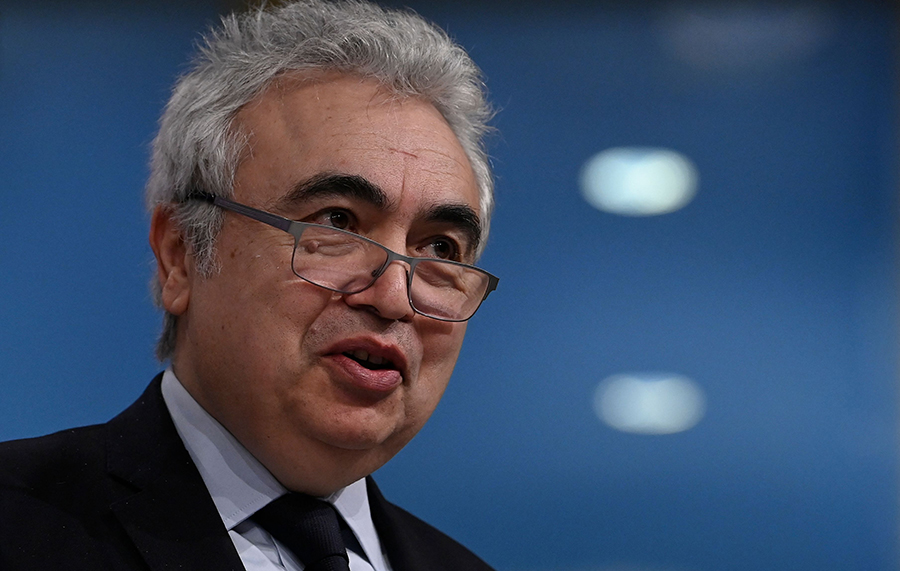
Nigeria could double investment in its energy sector over the next five years, the Executive Director of the International Energy Agency, Fatih Birol, has projected.
Reuters reported that Birol made the projection on Thursday during a visit to Abuja, where he said Nigeria’s recent admission as an associate member of the Paris-based energy watchdog could help attract more capital, expand technical cooperation and enhance the country’s influence in global energy policy discussions.
Birol’s comments came less than a month after the IEA’s Governing Board unanimously approved Nigeria’s admission as an Association country, marking a significant expansion of the agency’s cooperation with Africa’s most populous nation and one of its largest energy producers.
Nigeria is targeting a near-doubling of crude oil production to three million barrels per day by 2030. Achieving the target will depend largely on sustained sector reforms, improved infrastructure, enhanced security and stronger measures to combat oil theft.
Nigeria is also seeking to attract fresh investment following years of underinvestment in its oil and gas industry, while broadening opportunities in renewable energy, particularly solar power.
Birol said he hoped the closer partnership between Nigeria and the IEA would help significantly increase investment inflows into the country’s energy sector.
“My goal is, in a very short period of time, in five years, at least doubling the energy investments Nigeria is receiving today,” Birol said.
The IEA chief said Nigeria’s abundant energy resources and evolving global energy trade patterns could make the country increasingly attractive to governments and private investors seeking reliable energy partners.
Birol noted that trust had become a critical factor in global energy relationships as geopolitical conflicts and disruptions along key supply routes continue to threaten energy security.
“The most scarce commodity is not oil, not gas, not uranium, not lithium. It is trust. Countries are looking for partners they can rely on,” he said.
He described Nigeria as a credible energy supplier, highlighting exports from the Dangote Refinery that have helped ease fuel supply pressures in Europe in recent months.
The International Energy Agency announced on July 2 that its Governing Board had unanimously approved Nigeria’s admission as an Association country.
The move deepened the agency’s cooperation with Nigeria and marked a major step in strengthening the country’s role in global energy governance.