

The Nigerian Civil Aviation Authority has dismissed claims that domestic airfares are inflated due to multiple taxes, insisting that airlines do not pay the alleged levies and attributing the increase in ticket prices to the forces of demand and supply.
The clarification was made by the Director of Public Affairs and Consumer Protection at the NCAA, Michael Achimugu, in a statement posted on X on Sunday, where he described repeated allegations of excessive government taxation on domestic flights as unfounded.
Achimugu reshared a past interview in which he debunked the claim that domestic airlines pay as many as 18 different taxes on local flights.
“Any domestic carrier operating domestic flights that says that they are paying 18 taxes is a liar. No domestic carrier pays 18 taxes for domestic flights,” he said.
He explained that the spike in airfares during the festive season is driven by market realities rather than government charges.
“We understand the high air fares this period are down to market forces—demand and supply. Let us assume there are 18 taxes, where those taxes increased recently, so why is it different in December?” he added.
Achimugu further stated that although the NCAA does not regulate airfares, the authority had engaged domestic airlines to clarify the issue of taxes and charges.
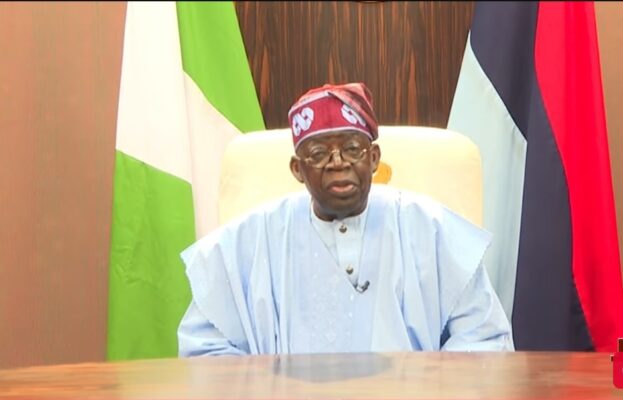
“They all admitted to not paying the volume of taxes being bandied around. I don’t understand this 350k and 81k narrative, but I know that, for the kind of support that President Bola Ahmed Tinubu, the aviation minister, Festus Keyamo; and the DGCA, Capt. Chris Najomo have given to domestic carriers, I see no reason why the government keeps getting thrown under the bus via statements like this.”
The NCAA’s clarification followed comments made by the Chief Executive Officer of Air Peace, Allen Onyema, during an interview on ARISE News, where he said that many return flights on South-East routes operate almost empty while airlines still bear the full operational cost of both legs of the journey.
Onyema stated that a significant portion of ticket revenue does not go to the airlines.
“Almost 65 to 70 per cent of that money is not coming to the airlines. They’re going somewhere else—levies, taxes, and other charges,” he said, describing airlines as the “sacrificial lamb” of the aviation industry.
He maintained that high ticket prices are a reflection of operational realities rather than deliberate exploitation of passengers.
Onyema also explained that airfares vary depending on booking time and demand, noting that passengers who book early often secure cheaper tickets.
He further compared Nigeria’s domestic aviation market with international standards, stating that airfares within the country remain among the lowest globally.
Reacting to claims of profiteering, Achimugu questioned the justification for the fare increases, noting that there had been no recent hike in taxes or aviation fuel prices.
“It is even ironic that, in the same statement, it is alleged that Nigerians pay the lowest domestic airfares in the world while also justifying the astronomical airfares in December, even though there was no hike in taxes or jet fuel.
“If high taxes were the reason why airfares were 150k–200k, why did tickets sell for as high as 500k for a 45-minute trip when the said taxes did not increase?” he asked.
Achimugu concluded by reiterating that the sharp rise in airfares during December is driven purely by market forces associated with increased demand.
“As far as I am concerned, the astronomical airfares in December are limited to certain destinations because of high demand. It is never just the airfares—it is bus fares, Airbnb rates, the price of food. It is market forces. It is Nigerians on Nigerians. This is not government.”