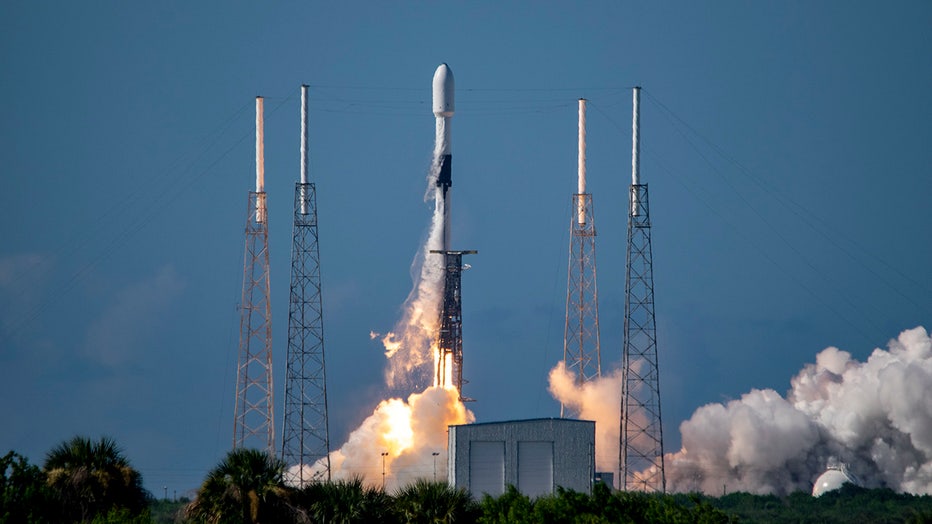

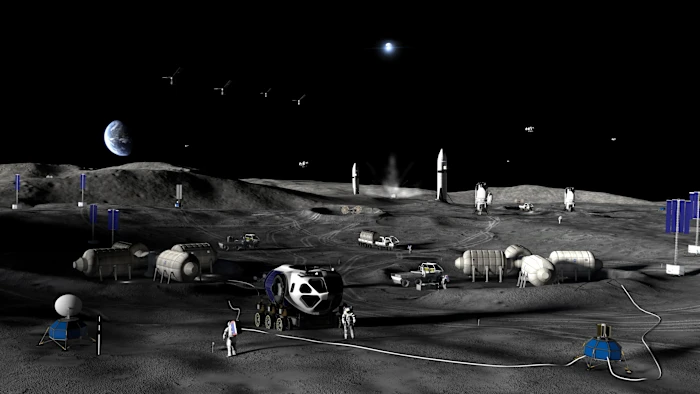
NASA on Tuesday unveiled plans for three uncrewed lunar missions scheduled for this year, marking the start of an ambitious $20bn project to build a base on the Moon.
The agency also said it had selected Blue Origin, founded by Jeff Bezos, over SpaceX, led by Elon Musk, to carry out the first mission.
The announcement was made in Washington DC by Nasa administrator Jared Isaacman, who gave the most detailed public outline yet of the timeline and structure for constructing the lunar base.
He said the initial three missions planned for 2026 would be followed by more than a dozen additional launches in the coming years to test equipment and systems needed for sustained lunar operations.
Isaacman also pointed to the success of the recent Artemis II mission, which carried four astronauts around the Moon for the first time since 1972, as a key driver accelerating the programme.
“People are looking up again, believing in big things again, and paying attention as America returns to the moon again, and this time to stay,” he said.
He added, without naming anyone, that the agency had been “having tough conversations with those failing to meet expectations” since the Artemis splashdown on 10 April.
“We are not jumping right into the glass dome moon base. We intend to take an iterative approach, sending a demand signal to industry for a lot of landers and rovers and tech demonstrations, and all the scientific payloads these missions can accommodate,” Isaacman said.
“We are leveraging the Nasa playbook from the 1960s, figuring out what works and what doesn’t in this epic science of survival, because the moon base is as beautiful as it is hostile.”
The headline announcement was the selection of Blue Origin, founded by Jeff Bezos, to carry out the first mission as early as the fall.
NASA said the company has been awarded $230.4m for each of its first two lunar base missions, though it will be expected to shoulder most of the overall operational costs itself.
“Moon Base One will be the first privately funded lunar lander mission in history,” Isaacman said.
Blue Origin is competing with SpaceX to provide crewed lunar landers for a series of upcoming Artemis programme missions, including the planned 2028 return of humans to the Moon under Artemis IV.
NASA is expected to assess SpaceX Starship Human Landing System alongside Blue Moon lander during next year’s Artemis III mission phase, before making a final selection decision thereafter.