





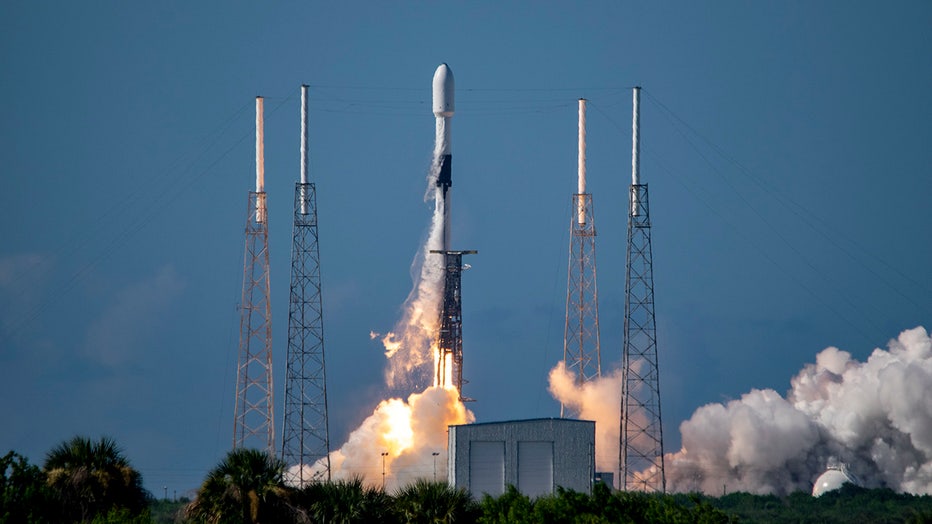
Relativity Space, the rocket manufacturer acquired last year by former Google executive chairman Eric Schmidt after struggling to reach orbit, could now be positioned to reach Mars ahead of rivals including SpaceX.
On Tuesday, NASA announced it has awarded the company a contract to design, build, and launch a spacecraft carrying a suite of scientific instruments on a mission to Mars.
The deal follows a similar model to NASA’s partnerships with SpaceX for cargo missions to the International Space Station and Firefly Aerospace for lunar landers, where the agency provides scientific payloads while private firms supply launch and spaceflight infrastructure at lower cost.
The mission, named Aeolus, will carry four instruments designed to observe and image Mars from orbit. It is expected to deliver the first daily, global dataset on Martian dust, wind patterns, and atmospheric temperatures.
“By pairing NASA’s world‑class instruments with commercial innovation and investment, we can deliver more science, more often, and reduce the time it takes to get essential data into the hands of researchers preparing for future human missions to Mars,” NASA administrator Jared Isaacman said in statement.
The mission is scheduled for launch in 2028, an aggressive timeline that will require Relativity Space to design and build the spacecraft carrying the Aeolus instruments while also completing development of the rocket that will send it to space.
NASA and Relativity Space did not disclose the value of the contract.
Jared Isaacman, who has flown to space twice aboard private SpaceX missions, has been a strong advocate of such public-private partnerships. Under this approach, private companies share development costs with NASA, enabling the agency to extend its budget further while reducing its financial exposure.
The model has increasingly become a blueprint for funding ambitious space exploration programs.