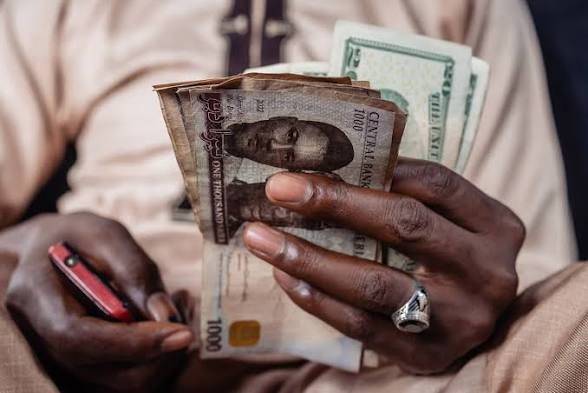
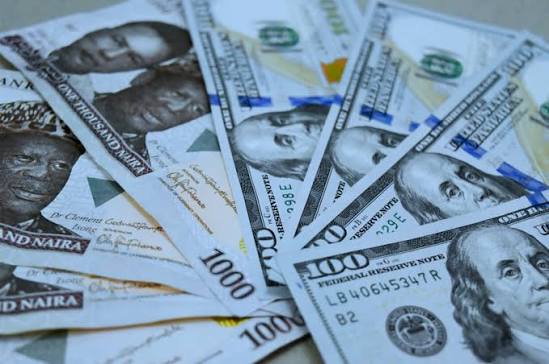
The Nigerian currency showed consolidation against the American dollar after the recent bullish run for the Naira after the pair peaked at N1,389/$ earlier this month.
The pair is consolidating, but the bias is still downward (appreciating).
The latest price action showed the Naira saw a slight increase of roughly 0.3 per cent at the official market. The exchange rate fell as low as N1,346.6/$ in the early hours of today before a return to N1,348/$.
The Naira has strengthened considerably since the beginning of 2026, from January’s N1,440/$ levels. Improved foreign exchange liquidity and persistent central bank interventions are major factors in this recovery.
The black market used by retail and small-scale businesses paints a somewhat different picture. The US dollar is being quoted at a premium over the official rate by traders in Lagos and Abuja. The parallel market is still a crucial indicator for small businesses and individuals who want quick access to foreign exchange, even though the price difference between the two markets has shrunk over the past year amid monetary reforms. Currently, the gap is less than five per cent.
Frequent auctions to Bureau De Change (BDC) operators have prevented the parallel market from getting out of control. The government now has more “firepower” to protect the currency because stable crude prices have increased foreign reserves. Some portfolio investors are still drawn to high domestic interest rates.
The bearish scenario (Naira appreciates) assumes a breakdown of the pair through the support at N 1,340, with the psychological target seen at N 1,300/$. This scenario is supported by the increase in oil output and the steady rise in the oil reserve size, which is almost $48 billion.
Bullish scenario (Naira depreciates) assumes a close above N 1,360/$, opening the possibility of a retest at the N 1,380 range. This scenario will mostly play out in case of a seasonal increase in corporate demand and/or a negative political shock that will reduce oil revenue.
The American Dollar Index (DXY), which measures US dollar strength against a basket of six world currencies, is currently trading near 98.3. The greenback trades with modest gains due to fresh tensions between the US and Iran. According to the Guardian, Esmail Baghaei, a spokesman for Iran’s Foreign Ministry, claimed that the US blockade of Iran’s coastline and ports is an act of aggression that goes against the ceasefire.
Iran announced on Sunday that it would not be participating in the second round of negotiations with the United States. Days before a Middle East ceasefire expires on April 22, US President Donald Trump issued an order for US negotiators to visit Pakistan. Investors turned to safe-haven currencies like the US dollar amid an uncertain outlook for a Middle East peace agreement. The Strait of Hormuz remains crucial, and it now seems unlikely that the US and Iran will negotiate before the ceasefire expires.
The latest price action indicates a bearish bias because the dollar index is in the descending channel. The US Dollar Index maintains a bearish near-term bias by continuing to fall below the short-term averages. The nine-period and fifty-period Exponential Moving Averages are now above the market after being broken, suggesting that prior to dynamic support has turned into resistance on a modest rebound.