
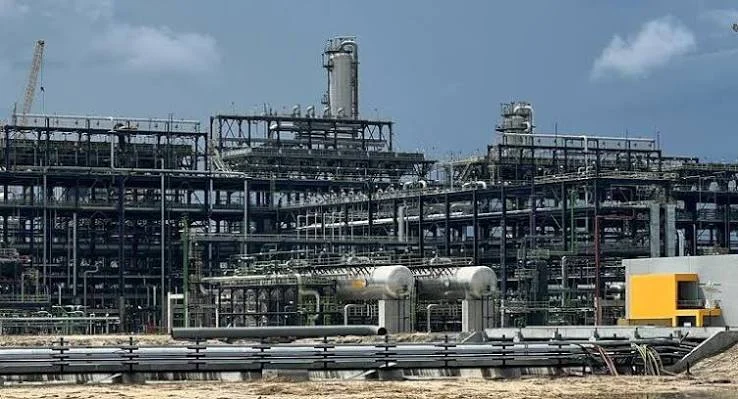






Oil producers in Nigeria supplied approximately 58.8 million barrels of crude oil to domestic refineries in the second quarter of 2026, surpassing the 55.1 million barrels earmarked under the Domestic Crude Supply Obligation framework.
The move reflects a stronger commitment by upstream operators to meet local refining needs, as domestic capacity expands with the ramp-up of the Dangote Petroleum Refinery and ongoing upgrades of modular refineries.
The disclosure was made by the Nigerian Upstream Petroleum Regulatory Commission in its latest report on the enforcement of the Domestic Crude Supply Obligation, obtained by our correspondent on Friday.
The commission stated that producers made 58.8 million barrels available to local refiners during the quarter under the regulatory framework designed to ensure steady crude supply to domestic processing facilities. Although 55.1 million barrels were formally allocated for the period, the actual volumes offered exceeded that figure by 3.7 million barrels.
However, the regulator noted that the final volumes of crude actually delivered and processed into refined petroleum products would be announced after the May 2026 Domestic Crude Request Review and Production Curtailment Management meetings.
It stated, “Allocated: 55.1M BBLS | Offered: 58.8M BBLS.” The commission added, “Supplied: BBLS | Conversion: – per cent (Update for supplied volumes will be after the May 2026 DCRR and PCM meetings).”
The new data points to a marked rise in producers’ readiness to serve the domestic market compared with earlier quarters, amid ongoing concerns about crude supply constraints affecting local refineries.
The NUPRC attributed the shortfall to pricing disagreements, mismatches in crude grades, and the “willing buyer, willing seller” model, which makes transactions dependent on commercial negotiations rather than strict regulatory enforcement.
This has continued to constrain refinery utilisation and slow Nigeria’s push for energy self-sufficiency, despite rising investments in refining capacity driven by the Dangote Petroleum Refinery and several modular plants.
Reacting to the development, the Crude Oil Refiners Association of Nigeria said the Dangote Petroleum Refinery’s increasing reliance on imported crude stems from commercial pricing dynamics and crude grade differentials within the domestic market.
In an interview, CORAN Publicity Secretary, Eche Idoko, said the refinery’s inclination toward imported crude is primarily influenced by cost considerations and product compatibility, rather than insufficient demand for locally produced supply, according to The Punch.
He noted that Nigerian producers largely market Brent-linked crude at a premium, whereas the refinery frequently sources West Texas Intermediate crude, which is better suited to its operational configuration.
Idoko said, “So one of the major issues we are having with Dangote buying more crude from the U.S. is because of the type of products offered and the pricing. It is based on commercials. So producers sell more Brent crude at a premium, but the import from other countries is WTI, another grade that is utilised by the refinery.”
He argued that the prevailing pricing structure puts domestic refiners at a disadvantage relative to international suppliers, especially in terms of competitiveness and exposure to risk.
According to him, there is a need for a more customised pricing framework that reflects Nigeria’s local refining dynamics and helps curb dependence on external markets.


