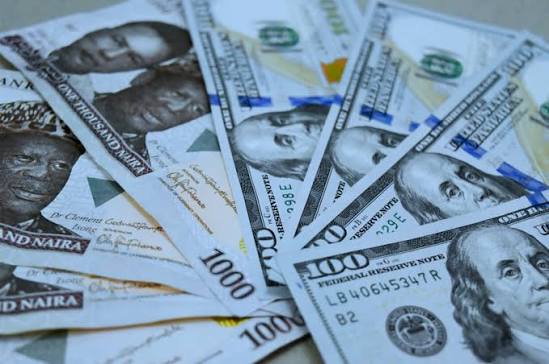


The Naira extended its losing streak on Friday, closing at N1,361.5 per dollar, its weakest level in three weeks, amid persistent pressure in the foreign exchange market.
Data from the Central Bank of Nigeria showed the currency has depreciated for the most part of the week.
The latest decline reflects sustained demand pressures, constrained FX supply and lingering market uncertainty.
Recent trading data shows the naira has remained under pressure, posting losses across multiple sessions and extending a broader depreciation trend.
The naira closed at N1,361.5/$ on Friday, down from N1,355/$ on Thursday and N1,348.1/$ on Wednesday.
It had also weakened to N1,350.99/$ on Tuesday and N1,349.67/$ on Monday.
A week earlier, the currency closed at N1,342.5/$, indicating a depreciation of nearly N20 against the dollar within one week.
The latest exchange rate marks the weakest level for the naira since April 9, when it settled at N1,365/$.
The trend points to persistent volatility and sustained pressure in the foreign exchange market.
The CBN data further show that external reserves declined to $48.4 billion from $48.54 billion recorded at the start of the week on April 20, 2026.
Analysts say a mix of domestic and external factors continues to weigh on the naira, including rising demand for dollars and uncertainty in global markets.
A forex trading analyst, Samuel Obadofin, noted, “Demand for dollars is still significantly higher than supply, especially from importers and manufacturers who rely heavily on FX for their operations.”
He added that this imbalance is “putting sustained pressure on the naira despite policy interventions.”
He further noted, “What we are seeing is a mid-week spike in dollar demand, which tends to push rates higher toward the end of the trading week.”
“Until liquidity improves, this pattern may persist,” he added.
Increased demand from importers and constrained FX inflows have continued to pressure the market.
Seasonal demand for foreign currency and limited supply from official channels have widened liquidity gaps.
Global dollar strength and fluctuations in oil prices have added to pressure on Nigeria’s FX earnings.
Analysts note that while exchange rate reforms have improved market structure, short-term pressures remain unresolved.
The current outlook for the naira reflects a complex interplay of domestic and global factors, with analysts highlighting key areas that will determine future stability.
Higher oil prices could support Nigeria’s FX inflows, but global uncertainties may offset these gains.
Earlier this week, Nairametrics reported that the Naira depreciated to N1,349/$ on Monday, down from N1,342.5/$ recorded at the close of trading on Friday.
Recently, the Governor of the Central Bank of Nigeria, Olayemi Cardoso, had said that the recent decline in Nigeria’s external reserves should not be a cause for concern.