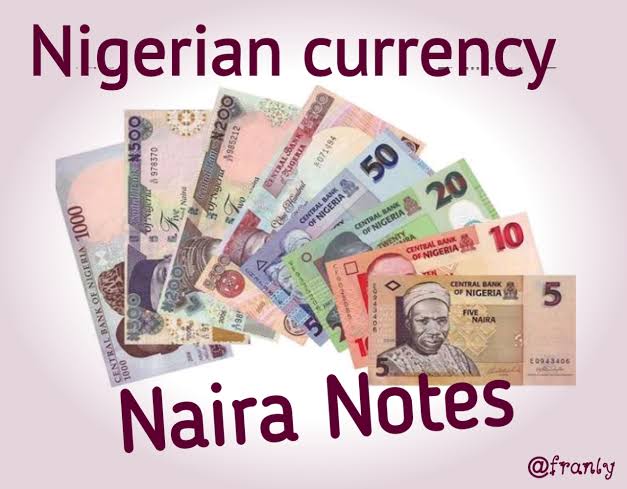

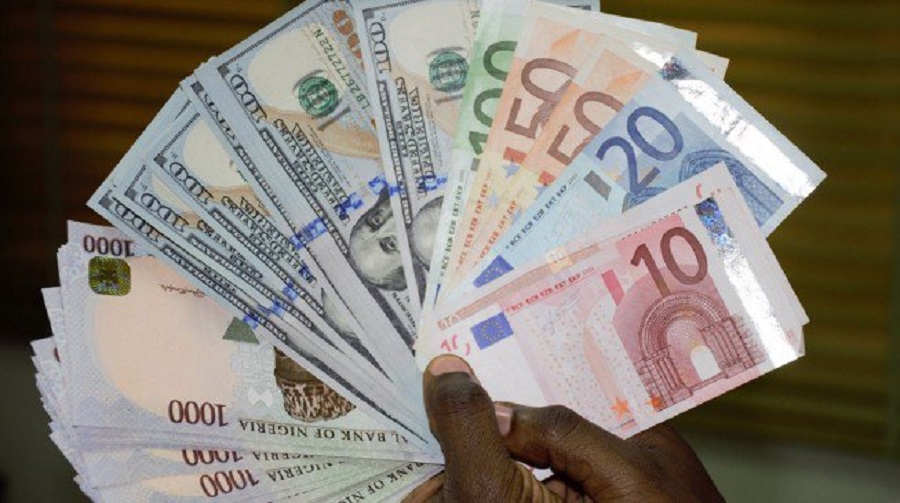
The Naira has broken through a key resistance level against the Euro, as the European currency slid to its weakest point against the United States dollar since May 2025.
Latest data from the Central Bank of Nigeria show that the Naira closed at ₦1,497/€, breaching the ₦1,500/€ resistance for the first time since April 2024.
Before then, the exchange rate had been considerably stronger for most of 2023, staying below ₦1,000/€.
However, following sweeping foreign exchange market reforms and the devaluation of the naira in 2024, the rate climbed above ₦1,500/€ and reached as high as ₦1,800/€.
The EUR/NGN pair has gone through notable bearish phases, falling from levels close to ₦1,684/€ late last year to ₦1,497/€.
As a result, the Nigerian Naira has stayed within a relatively narrow band of ₦1,327/$ to ₦1,330 per US dollar in the official Nigerian Foreign Exchange Market, backed by successive liquidity injections from the central bank and stable foreign reserves.
Recent market movements point to a narrowing spread between official and parallel market rates, which improves price discovery and discourages arbitrage opportunities.
In the parallel market, the US dollar has mostly traded between ₦1,370/$ and ₦1,390/$.
Fundamentally, the Naira has effectively appreciated against the Euro because the value of the Nigerian Naira is strongly correlated with the US dollar in Nigeria’s foreign exchange market. When the Euro weakens against the dollar in the global forex market, cross-rates adjust accordingly. This makes euro-denominated transactions more costly and causes the Naira to appreciate relative to the Euro, even if the dollar remains stable.
Speculative demand has been curbed by the CBN’s foreign exchange reforms, tighter monetary policy and greater transparency within official currency windows, such as the Nigerian Autonomous Foreign Exchange Market.
A significant macroeconomic factor working in the Naira’s favour is the increased use of Nigeria’s domestic refining capacity, notably the Dangote Refinery. This has reduced the country’s foreign exchange spending on imported petroleum products, thereby conserving FX reserves.
In addition, strong trade performance, driven by robust agricultural exports and high crude oil prices, has supported the country’s forex surplus with the Eurozone.
The Naira has held key moving averages on cross-currency charts, suggesting a more stable short-to-medium-term trend than in previous years marked by heavy depreciation. Continued inflows and tighter liquidity controls are expected to sustain this trend.
Euro melts against the greenback in the global foreign exchange market
The Euro has weakened to its lowest level since May 2025 amid growing investor concerns over political and fiscal instability across the Eurozone.
The common currency fell 0.8 per cent to $1.1161 during Asian trading sessions, with hedge funds contributing to the sell-off. News of preparations for an early election in Spain further heightened regional instability and affected French bond markets.
The premium investors demanded for French debt over comparable German bunds rose to its highest level since 2011.
Market sources, who asked not to be named because they were not authorised to speak, said short-term funds in Asia were offering US dollars in exchange for euros. This fuelled selling pressure that led to further options-related sales.
Investors are particularly worried about the political situation in France, where opposition parties have shown limited willingness to negotiate with President Emmanuel Macron’s outgoing government ahead of the upcoming election. A recent poll indicates that both far-right candidate Marine Le Pen and far-left contender Jean-Luc Mélenchon are projected to advance to the second-round runoff.