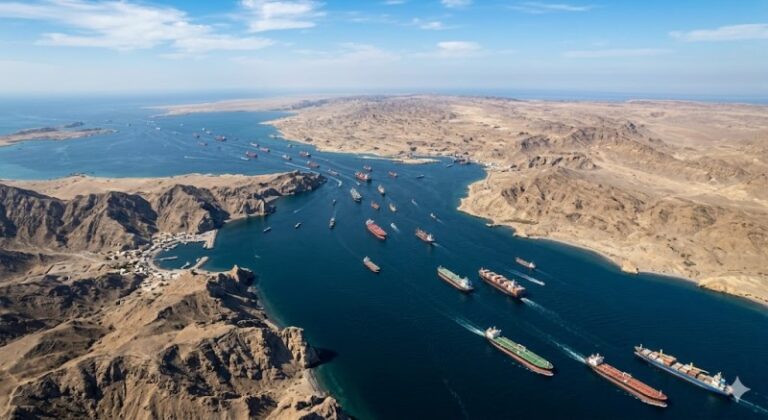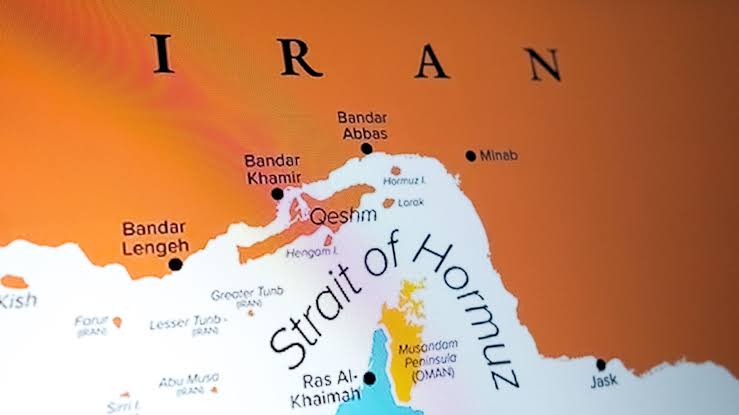

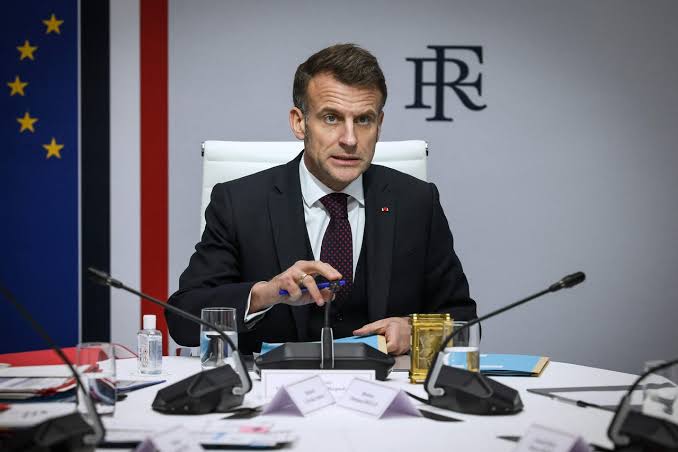
French President, Emmanuel Macron, on Monday cautioned Iran against introducing tolls on maritime traffic passing through the Strait of Hormuz, insisting that “everything” must be done to prevent any charges on vessels using the strategic waterway.
This comes after Iran’s Fars news agency reported that Tehran had inserted a clause on maritime service fees into a framework agreement with the United States aimed at ending the Middle East conflict, just before the deal was announced.
Speaking to TF1 television ahead of the G7 summit in France, which is expected to be attended by US President Donald Trump, Macron stressed the importance of upholding free navigation.
“We defend international law, and we will do everything in our power to ensure there is no toll,” Macron said.
While noting that the full details of the agreement have not been made public, he added that the deal had already been signed “electronically” and that supplementary annexes would be “finalised” on Friday.
“I don’t want to enter into the details,” he said.
Macron also revealed that a joint France-UK operation aimed at securing the reopening of the Strait was ready for rapid deployment, saying the French aircraft carrier Charles de Gaulle could be positioned in the area “on a timescale of two to three days”.
“We do everything so that this accord is a reality and that Hormuz can reopen,” Macron said, adding that European countries are eager for the reopening of the waterway to help reduce energy and goods prices.
He rejected suggestions that the arrangement amounted to a diplomatic win for Tehran, saying, “I would be patient and prudent.”
“As you know, we didn’t participate in that offensive,” he said, referring to the US-Israeli war against the Islamic Republic.
“So our objective now is the reopening of the Strait of Hormuz. And indeed, there shouldn’t be any tolls or anything that would enrich those in power,” he said.
Macron further stated that Iran’s stockpile of enriched uranium must be brought under control and placed under the supervision of the UN nuclear watchdog.
“We will ensure that the enriched uranium capabilities that remain are properly neutralised,” Macron said.
He added that the sensitive material should be “either taken out, or diluted” and subsequently monitored by the International Atomic Energy Agency.