





Minister of Finance and Coordinating Minister of the Economy, Mr Wale Edun, has warned that about 50 percent of low-income countries are in or approaching debt distress, requiring urgent actions.
It was not clear where Nigeria stands on his assertion but based on World Bank classifications for 2024–2026, Nigeria is classified as a lower-middle-income country, not a low-income country.
However, Nigeria’s public debt has sustained an upward swing since 2023 with an estimated figure at an all-time high of $100 billion while the debt service to revenue ratio is put at 47% in 2025.
Mr Edun spoke at the ongoing Technical Group Meeting of members of the Group of 24 Nations (G-24) held in Abuja yesterday.
He disclosed that debt servicing has become a major burden for many countries in the Global South, also known as developing countries.
He noted that total annual debt servicing payments by debtor countries in the Global South far exceed both inflows of Overseas Development Assistance and Foreign Direct Investments from the Global North.
“The gathering was an opportunity to re-shape the development trajectory of the Global South at a time when global risks are converging faster than institutions can respond,” Edun stated.
According to him, about 25 per cent of Emerging and Developing Economies (EMDEs) have lost access to international capital markets, making internally generated revenue more compelling than ever.
The Governor of the Central Bank of Nigeria (CBN), Mr. Olayemi Cardoso, also spoke at the meeting.
He described cross-border payments among members of the Group of 24 Nations (G-24) as too costly and slow.
“Today, cross border payments remain too slow, too costly, and too fragmented, especially for developing economies. With global remittance corridors costing over 6.0 percent, settlement lags of several days, and compliance burdens that exclude MSMEs, millions remain disconnected from global opportunity,” Cardoso said.
He called for immediate actions to address the challenges through modern digitalization that would make such payments faster and cheaper.
Cardoso said his keynote speech on “Digital Cross-Border Payments, Global Finance, and Economic Transformation – Opportunities and Risks” was not merely a technical discussion but a foundational development priority for G-24 countries.
He commended Mr. Edun, who is also the Chairman of G-24, for articulating the Group’s vision anchored on modernizing global finance, strengthening domestic capacities, and ensuring that the digital transition becomes a force for shared prosperity.
“These priorities resonate deeply with the mandate of central banks across the G-24 countries,” he added.
The CBN boss further stated, “Across the world, cross border payments are becoming the backbone of the international monetary and financial system. For G 24 economies, inefficiencies in these systems translate directly into higher remittance costs, costly FX transactions, fragmented settlement processes, and barriers to MSME participation in global trade.
“Improving cross border payments, therefore, is not simply a technical reform, it is a macroeconomic and development priority. The channels through which capital, remittances and trade flows move, now form a critical part of global financial stability architecture.”
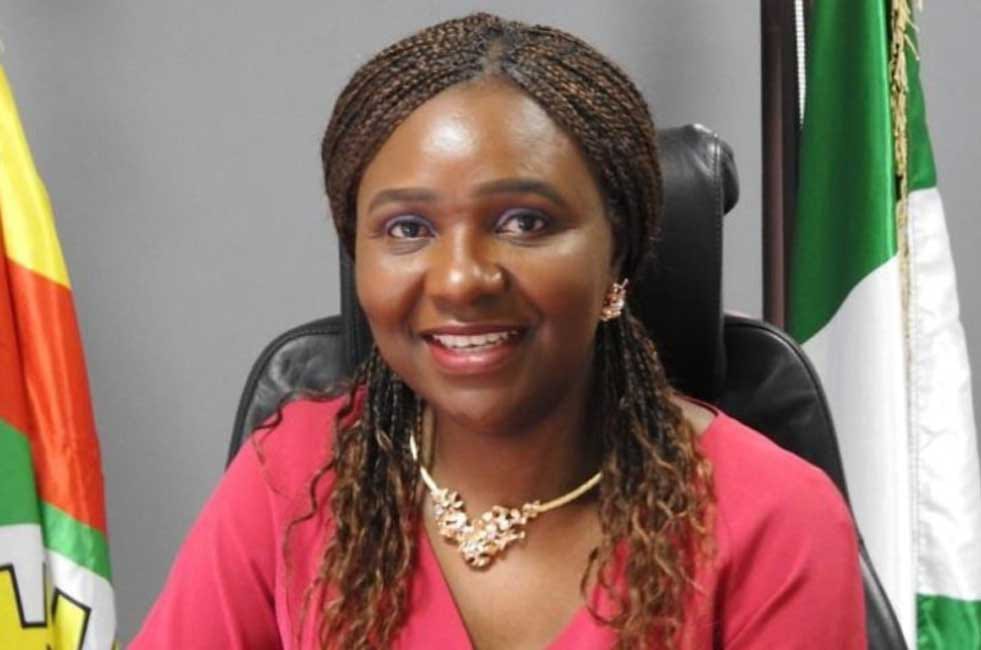
Earlier in her remarks, Dr. Iyabo Masha, Director and Head of the G-24 Secretariat, said that the meeting was holding at a time of heightened uncertainty, policy fragmentation, and structural transformation, which made the conversations not merely valuable, but essential.
“We meet at a moment of measured resilience but constrained ambition in the global economy. For many EMDEs, the challenge is no longer simply to ‘recover,’ but to restore development trajectories, protect macroeconomic stability, and finance transformation in a world of higher volatility,” she said.