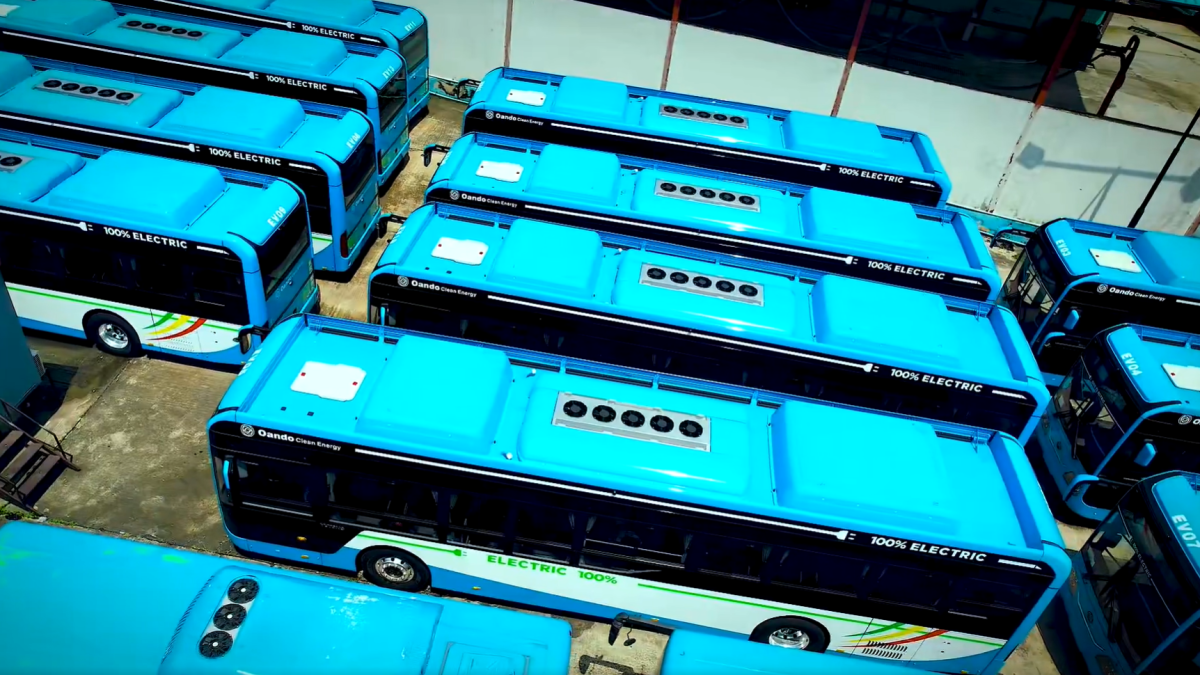
Lagos State has taken delivery of 11 new electric buses supplied by Oando Clean Energy Limited to the Lagos Metropolitan Area Transport Authority, as part of a partnership aimed at deploying 552 electric vehicles for public transportation across the state.
The Vice President, Opportunity, Maturation and New Ventures at Oando Clean Energy, Hadiza Adukonu disclosed this in a video shared by LAMATA on its X account to announce the arrival of the buses.
The latest delivery brings the total number of electric buses supplied by Oando under the initiative to 13, following the delivery and deployment of two buses in May 2023.
Speaking in the video, Adukonu said the 11 buses represent the first batch of an additional 50 planned for Lagos, with the remaining 39 expected to be delivered subsequently.
Oando Clean Energy and LAMATA signed a Memorandum of Understanding (MoU) in 2022 to advance sustainable transportation in Lagos State. The partnership led to the deployment of their first two electric buses in May 2023.
“May 2023 commenced what we call the new phase in Lagos State as it relates to sustainable, clean, efficient transportation. Our two buses have run since May 2023 up until today, and they’ve had very little downtime, close to zero downtime. The relationship between OCEL and LAMATA has proven to be one that is tested, trusted, and others continue to leverage.
“OCEL’s plan is to ramp this up from the two buses that we have, through the initial deployment of an additional 50 buses. Right now, we are launching the first set of 11 buses, and then we’ll ramp up by adding on an additional 39 buses. Ultimately, heading to 552 100% electric buses in Lagos State,” she said.
Manufactured by China’s Yutong, the buses have a capacity of 39 seated and 40 standing passengers. Their features include air conditioning, Wi-Fi, 360-degree cameras and additional security cameras, as well as wheelchair access and priority seating for elderly passengers.
Adukonu also outlined the performance of the first two electric buses deployed in 2023, providing figures on passenger numbers, distance covered and energy consumption over the three-year period.
According to her, the buses transported 788,000 passengers and covered 433,000 kilometres between May 2023 and the time of the announcement.
She added that the two buses saved approximately 216,000 litres of diesel over the period.
The buses consumed 584,000 kilowatt-hours of electricity while generating an additional 192,000 kilowatt-hours through their regenerative braking systems.