
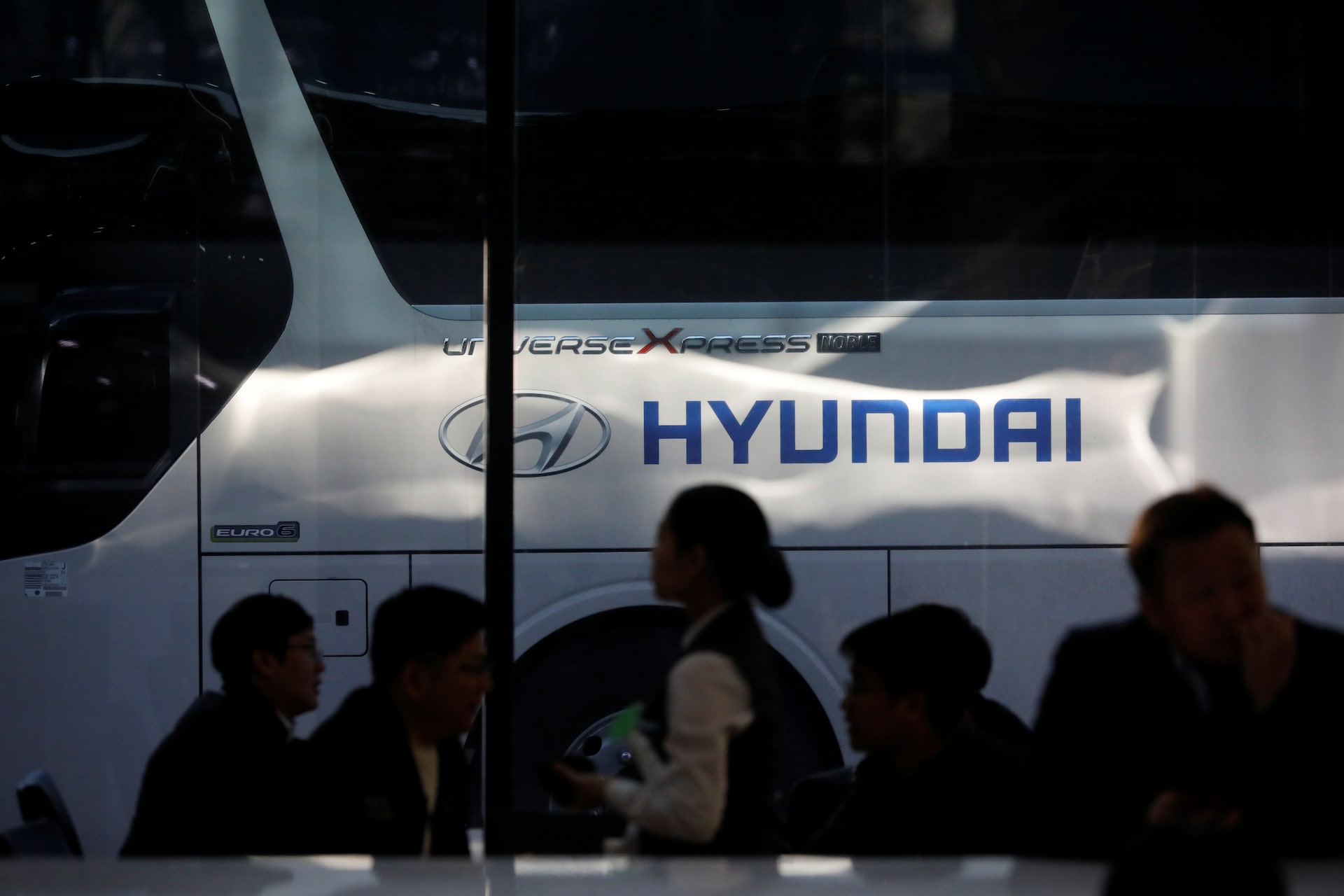
Hyundai Motor’s labour union has launched a three-day partial strike after wage negotiations with management reached an impasse.
Employees at South Korea’s largest automaker will stage four-hour daily walkouts from July 13 to July 15, demanding higher wages, increased bonuses and an extension of the retirement age.
The industrial action also reflects growing concerns over job security as the rapid adoption of artificial intelligence reshapes the automotive industry.
The union and Hyundai Motor’s management have been negotiating since May but remain deadlocked after a fifth round of wage talks ended without an agreement on July 8.
“We are going to halt production lines for four hours a day – with day and night shifts each stopping for two hours – from Monday to Wednesday,” a union official told AFP.
The union said employees in sales, maintenance and the company’s Namyang research and development centre will also participate in the industrial action, with the timing and extent of their involvement varying according to operational circumstances.
The strike is expected to cost Hyundai Motor about 200 billion won (S$171 million) in lost production, according to the Maeil Business Newspaper.
Union leaders also began an overnight sit-in protest on July 13, escalating pressure on management as the labour dispute intensified.
The company has proposed increasing the monthly base salary by 89,000 won, alongside a performance bonus equivalent to 350 per cent of monthly base pay plus 10 million won, as well as the allocation of 15 company shares to employees.
Union leaders also began an overnight sit-in protest on July 13, escalating pressure on management as the labour dispute intensified.
The company has proposed increasing the monthly base salary by 89,000 won, alongside a performance bonus equivalent to 350 per cent of monthly base pay plus 10 million won, as well as the allocation of 15 company shares to employees.
In a statement to employees at its Ulsan plant, Executive Vice-President Choi Yeong-il expressed “deep regret” over the industrial action, urging workers to reconsider the walkout.
“Production disruption should not take place at a time when we should be seeking an earnings turnaround through the launch of new models in the second half,” he said, according to Yonhap.
The strikes come amid growing concerns over the impact of advances in robotics and automation on employment.
Hyundai plans to begin deploying humanoid robots, including Atlas, at its U.S. plants from 2028.
Although the company has yet to announce plans to introduce the robots at its South Korean facilities, analysts believe their eventual deployment is inevitable.