





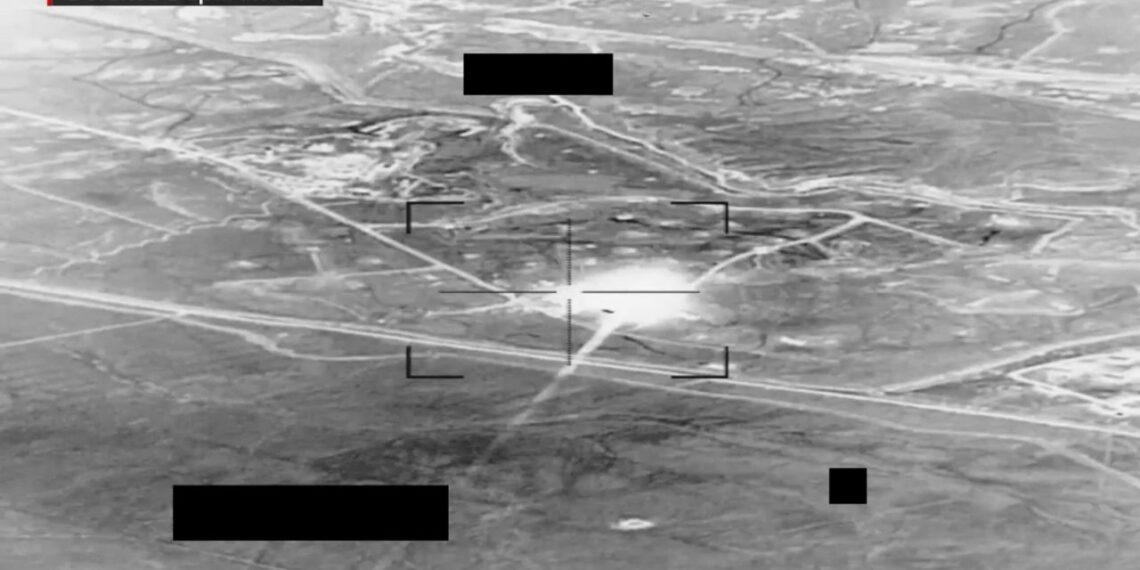
The United States conducted airstrikes in Nigeria, relying on intelligence influenced by reports from Emeka Umeagbalasi, a screwdriver trader and small NGO operator based in Onitsha, Anambra State, according to a New York Times investigation.
The investigation identifies Emeka Umeagbalasi as a key source whose unverified claims about Christian genocide in Nigeria were referenced by U.S. lawmakers.
This development has raised significant concerns regarding the reliability of the intelligence used for U.S. military operations and the wider narrative on religious violence in Nigeria.
Emeka Umeagbalasi stated that he has documented 125,000 Christian deaths in Nigeria since 2009. He compiled these figures using Google searches, Nigerian media reports, secondary sources, and data from advocacy groups such as Open Doors.
The New York Times report has drawn international focus to Emeka Umeagbalasi, who operates a small shop selling screwdrivers and wrenches in the bustling market of Onitsha, the commercial center of southeast Nigeria. He also manages a small-scale NGO from his home.
“The man, Emeka Umeagbalasi, owns a tiny shop selling screwdrivers and wrenches in this market in Onitsha, the commercial hub of southeast Nigeria…
“But this screwdriver salesman is also an unlikely source of research that U.S. Republican lawmakers have used to promote the misleading idea that Christians are being singled out for slaughter in Africa’s most populous nation,” the New York Times reported.
Umeagbalasi told the Times he had documented 125,000 Christian deaths since 2009 using Google searches, Nigerian media reports, and data from advocacy groups like Open Doors.
He admitted to rarely verifying the data and assuming victims’ religions based on geographic location, saying, “If a mass abduction or killing happens in an area where he thinks many Christians live, he assumes the victims are Christians.”
He also claimed that 20,000 of Nigeria’s 100,000 churches had been destroyed in the past 16 years, figures he says he found by “Googling it.”
The New York Times noted that his reports have been cited by U.S. lawmakers such as Senator Ted Cruz, Representative Riley Moore, and Representative Chris Smith — and even by former President Donald Trump to justify military actions in Nigeria.
The U.S. airstrikes occurred amid escalating measures tied to allegations of Christian persecution in Nigeria.
In October, former President Donald Trump redesignated Nigeria as a “country of particular concern” over alleged mass killings of Christians.
Trump warned in November that the U.S. military would intervene “guns-a-blazing” if Nigeria failed to act against the so-called genocide.
On December 26, U.S. forces conducted air strikes on alleged ISIS targets in Sokoto State, reportedly “at the request of Nigerian authorities.”
These actions were shaped by a narrative increasingly driven by unverified reports and politically motivated assertions.
The reliance on questionable data to support military intervention has sparked serious ethical and strategic worries.
Military operations grounded in unverified intelligence can lead to misguided strikes and potential civilian harm.
If the narrative of Christian genocide lacks solid evidence, it could distort foreign policy decisions and exacerbate sectarian divisions.
The dependence of lawmakers on information from an untrained individual underscores the risks of politicizing human rights issues.
This case emphasizes the critical need for reliable intelligence in guiding international policy and military involvement.
Nigeria grapples with ongoing security threats from various armed groups, including Islamist insurgents.
Boko Haram and other jihadist factions have operated for over a decade, attacking both Christian and Muslim communities alike.
Nairametrics has provided extensive coverage on the worsening insecurity in northern Nigeria, including increased displacement and loss of life.
While U.S. military operations in Nigeria remain uncommon and typically coordinated with Nigerian authorities, their legitimacy hinges on the precision of the underlying intelligence.
Dependence on dubious sources for such decisions could further complicate Nigeria’s security situation and diplomatic relations.