
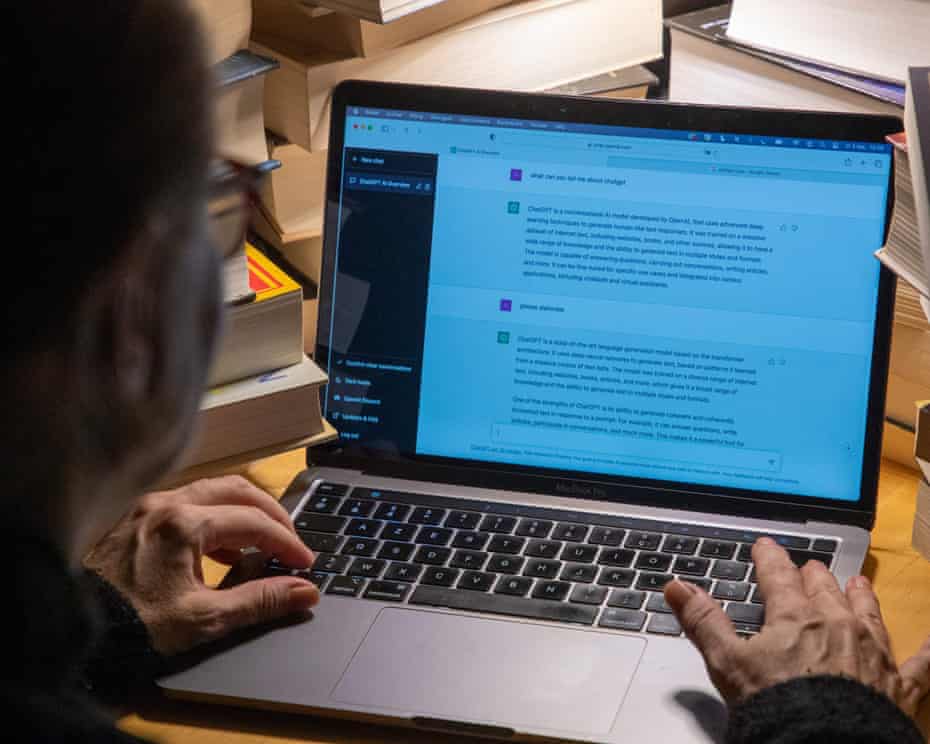
A new study by the Massachusetts Institute of Technology has added to growing evidence that excessive reliance on artificial intelligence chatbots may weaken critical-thinking abilities and reduce people’s capacity to independently identify misinformation.
As AI tools become increasingly advanced and widely available, the spread of manipulated images and deceptive headlines has intensified.
While AI has shown promise in helping users detect false or misleading content, the study suggests there may be a downside.
Dependence on AI systems to determine what is genuine online can erode users’ own ability to make those assessments.
The four-week study, released in April, involved 67 participants who were asked to determine whether pairs of news-related images and headlines were authentic.
Researchers found that AI assistants such as Claude and ChatGPT could help users identify fake news. However, participants who relied heavily on these tools became less effective at recognizing misinformation on their own.
Researchers also found that when assessing the authenticity of news headlines and images, AI systems tended to prioritize delivering the correct answer rather than helping users develop their own analytical skills. According to the study, this reliance on AI could weaken judgment over time.
“When we’re interacting with AI, we feel we’re becoming better at certain tasks, but there’s enough research showing that we are not,” said Anku Rani, a PhD student at MIT and co-lead author of the study.
As part of the month-long experiment, participants were asked to evaluate potentially misleading news content and images, both with and without assistance from an AI chatbot powered by GPT-4o and integrated with Google Search. The chatbot provided hints and suggested clues for users to examine. In one example, it directed a participant to scrutinize a police badge in an image, revealing signs that the picture had been manipulated.
The researchers assessed not only how effectively the AI improved participants’ accuracy, but also how it influenced their ability to make independent judgments over time.
Their findings revealed a clear trade-off: while AI assistance improved users’ ability to distinguish real content from fake, increasing the likelihood of making the correct decision by 21 per cent, it also reduced their capacity to perform the same task without technological support.
“These results indicate that while AI may help immediately, it may ultimately degrade long-term misinformation detection abilities,” the study noted.
Concerns about the long-term effects of excessive reliance on AI and other technologies are not new. Tools such as calculators and GPS navigation systems have long been associated with a decline in people’s ability to perform mental arithmetic and navigate unfamiliar areas without assistance.
Recent research suggests a similar pattern may be emerging with AI. A 2025 study published in The Lancet found that doctors who relied heavily on AI-powered cancer detection tools became less accurate at identifying cancer independently over time. Separately, a neuroscientist at the Possibility Institute, a metascience research organisation, warned that outsourcing too much cognitive effort to AI could weaken the brain’s resilience and potentially increase vulnerability to conditions such as dementia.