




Food prices across major Lagos markets surged in March 2026 as rising petrol costs drove up transportation and logistics expenses, triggering widespread increases in staple commodities.
This is according to a Nairametrics Research physical market survey tracking 68 food items across Mushin, Daleko, Mile 12, and Oyingbo markets. The data shows a sharp reversal from February’s modest easing, with inflationary pressures re-emerging across both perishable and non-perishable food categories.
The surge in oil prices increased logistics and transportation costs, which in turn drove up food prices in March. Fuel prices began to rise in late February, with pump prices increasing from N875 to N960 per litre, while Dangote Refinery raised its price from N774 to N874 per litre, driven by a spike in global oil prices linked to the Middle East war. Lagos, as a consumption-driven economy, continues to experience amplified effects of national inflation trends, particularly due to its dependence on transported food supplies.
The survey indicates that 43 items recorded price increases in March, up significantly from 23 items in the February food survey. Meanwhile, only 13 items declined in price, compared to 35 in the previous month, while 12 items remained unchanged, highlighting limited areas of price stability. As of February 2026, headline inflation remained elevated at 15.06%, with food inflation continuing to be the primary driver of overall price pressures at 12.12% in February, an increase from 8.89% in January 2026. While there were signs of moderation earlier in the year, the March surge in market prices suggests that inflationary risks persist.
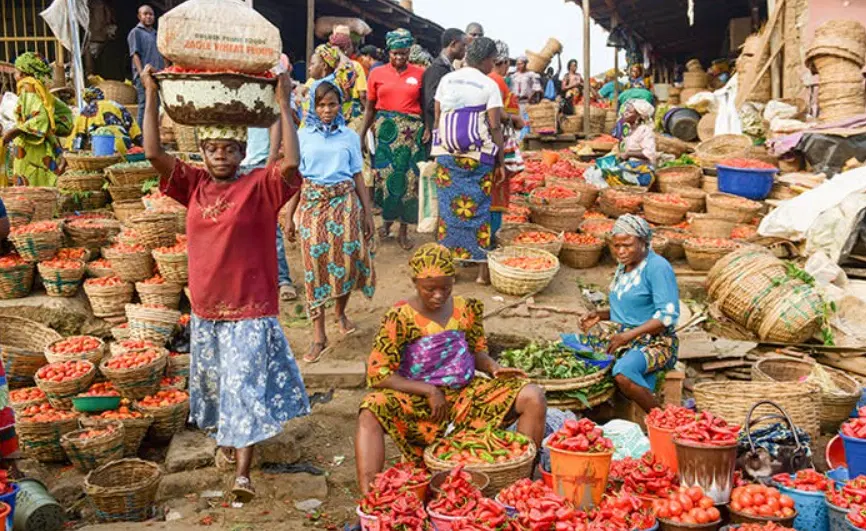
The most significant price increases were recorded in staple foods such as pepper, beans, tomatoes, and fish, with some items rising by over 100% within a month. Pepper prices surged significantly across both medium and big bag categories. A medium bag rose from N32,000 in February to N80,000 in March, while a big bag jumped from N58,000 to N140,000, reflecting increases of 141.38% and 150% respectively. Traders attributed this spike to a combination of seasonal scarcity and a sharp rise in transport costs.
Tomatoes increased sharply, with big baskets rising from N40,000 to N60,000 by 50% and oval varieties from N25,000 to N35,000 by 40%. Market participants noted that supply inflows from northern farming belts declined during the period, compounding the effect of rising haulage costs. Beans recorded one of the most significant increases across staple grains. Brown beans (50kg) climbed from N50,000 to N85,500, thereby recording over 70% rise, while Oloyin beans rose from N45,000 to N75,000 by 66.67%. Larger bag variants over 50kg surged to N180,000, a 63.64% increase, effectively reversing the price relief recorded in February.
Fish prices also increased sharply, with Kote (horse mackerel) rising from N5,000 to N8,500 per kilogram by 70%, and Titus (mackerel) moving from N7,000 to N9,500 by 35.71%. Other notable increases were observed in 0.9kg Olaola poundo yam flour which went up 34% from N10,000 to N13,400, a big bag of dry onions which rose 21.05% from N95,000 to N115,000, 2.6litres of Poweroil which increased 14.68% from N10,900 to N12,500, and medium size Abuja yam which rose 12.5% from N4,000 to N4,500. The prices of palm oil and processed foods such as pasta, beverages and noodles recorded increases ranging between 0.32% to 10%.
Despite the widespread increases, a few items recorded price declines, largely concentrated in grains and processed wheat-based products. Wheat products (Honeywell brand across multiple sizes) saw consistent reductions, with the 10kg variant dropping from N14,000 to N12,000, posting a 14.29% drop. Semovita prices also declined across different sizes, as 5kg decreased by 13.33% from N7,500 to N6,500, while a 2kg reduced from N3,000 to N2,800. Mama’s Pride (50kg) dropped moderately from N65,000 to N57,500 by 11.54%, while short-grain rice (Royal Stallion) declined slightly to N53,000 from N54,000. Garri (white, 50kg) reduced from N22,000 to N20,000 by 9.09%, while yellow garri remained stable. Melon, also called Egusi (big bag), recorded a 4.72% decrease, selling for an average of N252,500 from N265,000 recorded in the previous month. Ogbono (bush mango seed) recorded a marginal decline of 1.40%. However, the scale of these reductions was relatively modest compared to the magnitude of increases recorded in other categories.
Twelve items tracked in the survey recorded no price movement between February and March. These included select vegetable oil variants, yellow garri, maize, milk and sweet potatoes.
Buyers, sellers, and transporters attributed the surge in food prices to rising fuel costs and logistics challenges, noting that Lagos’ dependence on food transported from other regions makes it highly vulnerable to such shocks. “The cost of moving goods from the North has gone up significantly. Even loading charges have increased because everything depends on fuel,” a transporter at Mile 12 market said. “Everything changed when fuel went up again. Transporters increased their charges almost immediately, and we had no choice but to adjust prices,” said Mrs Abeni, a trader at Daleko market. “Just last month, beans were affordable again. Now it has doubled. It’s becoming difficult to keep up,” said Bro James, a shopper in Oyingbo market. “If we increase food prices too much, customers will stop buying. But if we don’t, we run at a loss,” said Tutu, a food vendor in Mushin.
Market participants say the rising cost of transportation is directly feeding into food inflation, leaving both traders and consumers under pressure. The Nairametrics Food Price Watch is a monthly market survey tracking the prices of major food items across Nigeria. This report specifically covers four key markets in Lagos State: Mushin Market, Daleko Market, Oyingbo Market, and Mile 12 Market. The survey provides up-to-date insights into food price trends, helping businesses, policymakers, and consumers make informed decisions.