





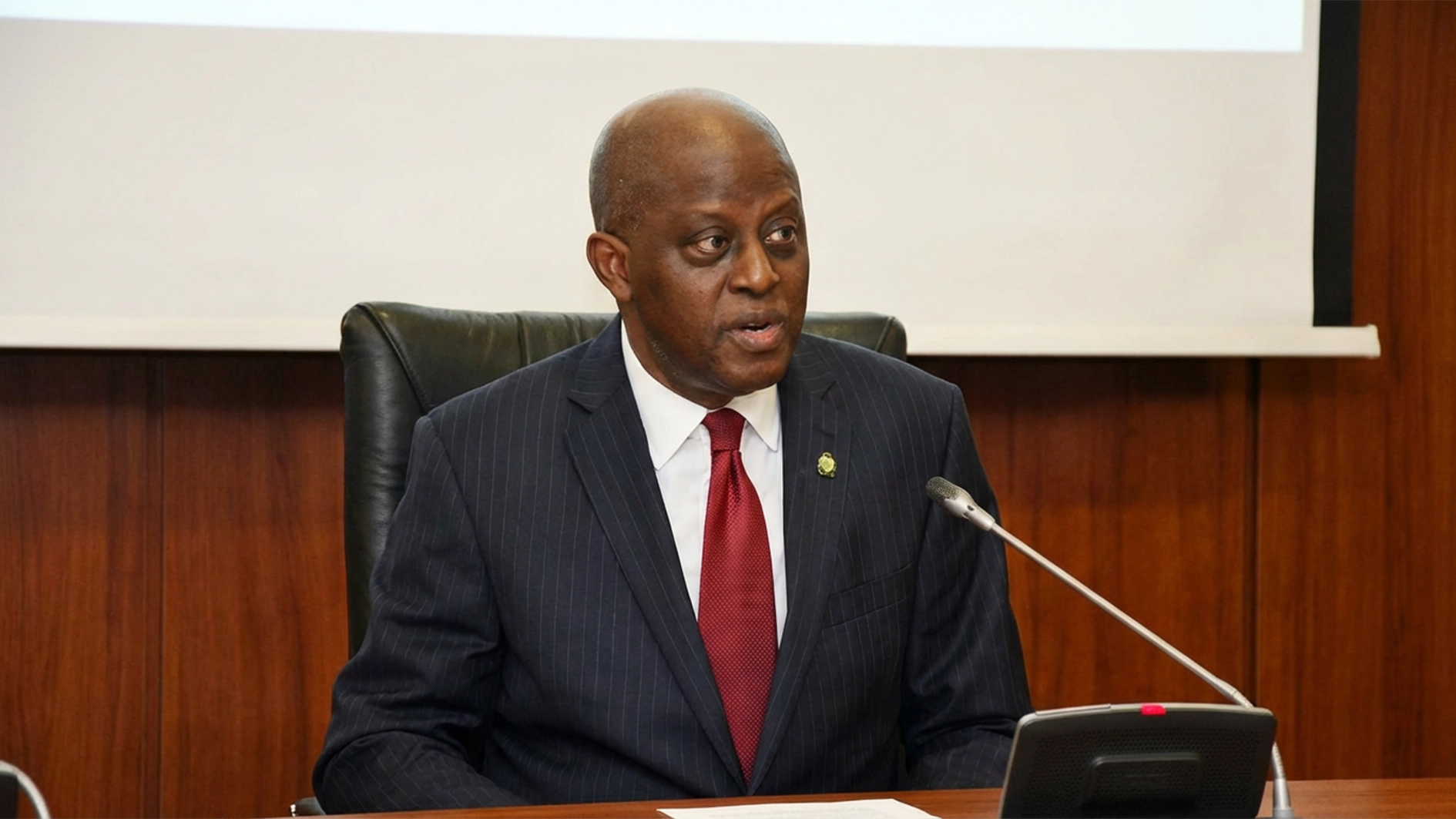
The Federal Government and the Central Bank of Nigeria have signed a Memorandum of Understanding aimed at formalising coordination between fiscal and monetary authorities, with a focus on strengthening macroeconomic management and policy consistency.
The agreement, signed by the Federal Ministry of Finance and the CBN in Abuja on Friday, establishes a structured framework for regular consultations, information sharing and joint policy assessments.
CBN Governor Olayemi Cardoso said the MoU would institutionalise a longstanding relationship between both institutions, strengthening their capacity to respond to economic challenges and support stability.
Cardoso said fiscal and monetary policies function as complementary tools for managing the economy, noting that government spending, taxation and borrowing decisions interact closely with monetary policy decisions on liquidity, interest rates and financial conditions.
He stressed that the agreement does not create a new relationship between the two institutions, which have long collaborated on issues including inflation, debt sustainability, budget financing, exchange rate stability and responses to domestic and global shocks.
“What distinguishes today’s event is the formal institutionalisation of that collaboration,” Cardoso said.
Under the new framework, both institutions will deepen cooperation in areas such as government cash management, debt issuance planning, liquidity forecasting, macroeconomic analysis and periodic policy consultations.
Cardoso said the arrangement would create more predictable channels for engagement and enhance the quality of economic decision-making.
“It transforms a relationship built on practice into one anchored by clear processes and enduring institutional commitment,” he said.
The CBN governor described the agreement as particularly timely, coming as the apex bank advances its transition toward an inflation-targeting framework.
He noted that the success of inflation targeting depends not only on effective monetary policy but also on a supportive fiscal environment.
Through sustained dialogue and coordinated assessments, the two institutions are expected to better align their actions, minimise policy trade-offs and develop an operational framework for implementing the MoU.
Finance Minister and Coordinating Minister of the Economy, Taiwo Oyedele, said the agreement acknowledges the need for coordination while preserving the distinct mandates of fiscal and monetary authorities.
“Good economic management requires independence of institutions but independence must not mean isolation,” Oyedele said.
He explained that the policies of both institutions are closely interconnected, noting that government borrowing influences liquidity and interest rates, while monetary policy in turn affects government financing costs.
“Tariffs and exchange rate affect prices and revenues. Spendings affect demands. Our mandates are distinct but our outcomes are interconnected,” he said.
Oyedele said the MoU was designed to formalise existing coordination rather than build collaboration from scratch, pointing to mechanisms already in place such as the Economic Management Team, the National Economic Council and established legal links between the ministry and the CBN.
The development comes after the International Monetary Fund (IMF) recently urged Nigeria and other major African economies to deepen reforms across fiscal policy, monetary and financial sectors, as well as governance, in order to strengthen macroeconomic stability and support more inclusive growth.
The Fund also identified the strengthening of monetary policy frameworks and transmission mechanisms as a priority for Nigeria, Egypt and Ethiopia, while recommending that governance reforms in Nigeria and other major economies prioritise greater fiscal transparency, stronger public financial management and improved anti-corruption practices.
For Nigeria, these recommendations come as the Federal Government continues implementing a broad tax reform programme designed to simplify the tax system, improve compliance and expand the country’s revenue base.
The reforms, which took effect in January 2026, introduced a new legal framework through the Nigeria Tax Act, Nigeria Tax Administration Act, Nigeria Revenue Service (Establishment) Act and Joint Revenue Board (Establishment) Act.
Presidential aide Tope Fasua recently called for a rethink of the current tight monetary policy stance, arguing that prolonged high interest rates could constrain economic growth without necessarily achieving the desired reduction in inflation.
The Monetary Policy Rate stood at 18.75 per cent in 2023 before the CBN embarked on a series of increases in 2024, raising the benchmark rate to 22.75 per cent in February 2024 and subsequently to 27.5 per cent by the end of that year.
The CBN also tightened liquidity conditions through adjustments to banks’ Cash Reserve Ratio, raising it from 32.5 per cent to 45 per cent in early 2024, and later to 50 per cent, as part of efforts to absorb excess liquidity in the system.
The tightening cycle has since given way to a gradual easing phase as inflationary pressures moderated and economic conditions improved.