








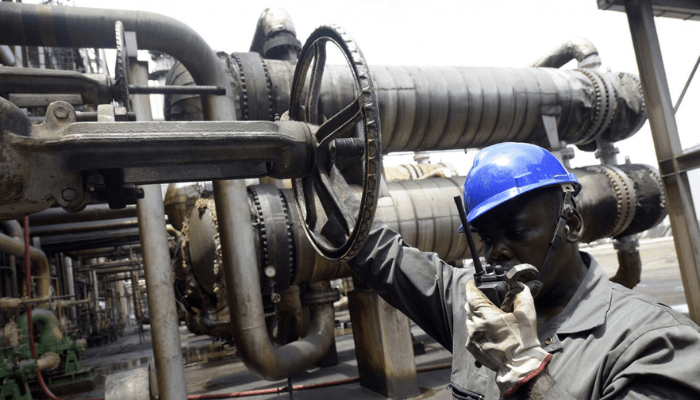
The Federal Government has stepped up measures to boost accountability in the crude oil sector with the launch of Nigeria’s first Gravimetric Multifaceted Flow Metering Calibration Facility in Eket, Akwa Ibom State.
Unveiled by the Nigerian Upstream Petroleum Regulatory Commission, the facility aims to improve the accuracy of crude oil measurements, reduce production losses, and enhance revenue transparency across the upstream industry.
The calibration centre offers precise testing and verification of oil flow meters used by operators, ensuring production volumes are accurately measured and properly recorded.
The facility is expected to enhance regulatory oversight, eliminate discrepancies in crude oil lifting data, and close revenue leakages that have historically affected government earnings from the petroleum sector.
Accurate metering is vital to Nigeria’s oil revenue management, especially as the country works to optimise production and increase earnings amid ongoing upstream reforms.
The facility, the first of its kind in West Africa, tackles a long-standing challenge in the industry: uncertainty in crude measurement. For decades, inaccurate metering has led to disputes, revenue losses, and dependence on foreign laboratories for calibration.
At the commissioning, the Chief Executive of the Nigerian Upstream Petroleum Regulatory Commission, Oritsemeyiwa Eyesan, praised Engineering Automation Technology Limited, the indigenous company behind the facility, for its vision, courage, and patriotism in investing in the cutting-edge project.
Represented by NUPRC Deputy Director for Development, Manuel Ibituroko, Eyesan described the plant as “a transformative leap forward,” highlighting its zero-touch automation, tamper-proof audit trails, and high-precision gravimetric standards designed to reduce human error and minimise downtime.
The facility is capable of calibrating turbine, ultrasonic, Coriolis, electromagnetic, and positive displacement meters—key instruments used to measure crude volumes in pipelines and export terminals—thereby enhancing operational efficiency, regulatory compliance, and production optimisation.
The Managing Director and CEO of Engineering Automation Technology Limited, Emmanuel Okon, said the project grew out of Nigeria’s local content initiative, launched in 2020 to encourage indigenous companies to develop technical capacity within the country.
“Without dependable calibration, even advanced meters produce inconsistent narratives. With it, we align on a unified truth,” he said.
The project was implemented under the oversight of the Nigerian Upstream Petroleum Regulatory Commission, with support from the Nigerian Content Development and Monitoring Board and other stakeholders, ensuring that certificates issued are recognised for statutory reporting and compliance.
The development is expected to enhance transparency in royalties and taxes, combat crude oil theft, and boost investor confidence through verifiable production data. Additionally, the facility is set to establish technical hubs in the host community, create hundreds of skilled jobs, and strengthen domestic expertise in petroleum measurement technology.

