





The Economic and Financial Crimes Commission has revealed how public money was diverted from a local government account into a private company before being routed into cryptocurrency wallets.
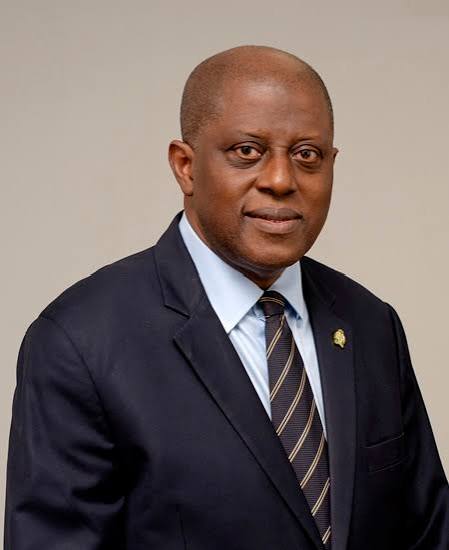
EFCC Chairman, Ola Olukoyede, made the disclosure on Monday during an interaction with media executives and journalists in Abuja, insisting that the commission could not turn a blind eye to the suspicious movement of public funds.
He did not name the local government, company, or state connected to the transaction.
According to him, the commission’s Fraud Risk Assessment and Control Department detected the unusual transactions and moved swiftly to freeze the funds for 72 hours in order to trace their destination and purpose.
Olukoyede expressed displeasure over criticism directed at him following the action taken by his agency.
He said, “When we see money moving suspiciously, we move in and freeze it in the interim. I know some of you are calling for my head. The account was frozen for 72 hours. Okay, come and show where this money is going? Why are you moving money? We saw money being moved from the local government account to a company. Apart from that phase, we discovered that the money has gone into cryptocurrency wallets.”
He added, “Is that the road to build? Is that the power to generate cryptocurrency wallets for your people? Are you asking me to close my eyes and not do something like that? Then you don’t need me in this office.”
The EFCC boss said the development highlighted the need for law enforcement agencies to shift from reacting after public funds have been stolen to proactively preventing suspicious transactions from being completed.
He said, “Why must we be waiting for money to be stolen? Why can’t we change the narrative? And that’s the main thing we need to bring to the office.”
The disclosure follows an earlier outcry this month after the EFCC froze an account belonging to the Osun State Government, just days before the August 15 governorship election.
Olukoyede, however, did not link the transaction he referenced to Osun State or any other specific state.
He also noted that cybercrime in Nigeria had evolved beyond the traditional “Yahoo Yahoo” perception, pointing out that some young people were being used as fronts by public officials to move allegedly stolen funds through cryptocurrency wallets.
He said, “We have gotten to a stage in Nigeria now that public officials steal money and they put it in cryptocurrency wallets.”
He added, “Most of the directors we are investigating now, you can’t trace tangible assets to them. They steal this money, give it to students, give it to young people. They open cryptocurrency wallets all over the world. They plunder the money there within 24 hours.”
He continued, “The money moves abroad. They buy a house anywhere in the world, buy luxury items. Those are the recent trends.”
The EFCC boss disclosed that the commission had developed the capacity to trace cryptocurrency wallets, particularly those linked to virtual asset platforms registered in Nigeria.
He noted that about 40 virtual asset platforms had been licensed, following regulatory measures introduced to strengthen oversight of the sector.
He said, “Now we also have the capacity to trace cryptocurrency wallets now, at least with those that are registered in Nigeria, and we are doing that.”
Reeling out the achievements of the commission over the last three years, Olukoyede said it had also recovered virtual assets connected to the CBEX fraud, but identified the management of confiscated cryptocurrency as a challenge that had previously raised accountability concerns.
He said, “When you recover virtual assets, where do you put them? No accountability. That’s why we can’t continue like this.”
He disclosed that the Federal Government had, as a result, approved the establishment of a national confiscation wallet where virtual assets recovered by law enforcement agencies would be kept.
He said, “Today, now we have a national confiscation wallet. So if I confiscate virtual assets now, it’s a national wallet that we put into those.”
Olukoyede further warned that the growing use of cryptocurrency to move illicit funds required stronger technological capacity among financial and law enforcement institutions.
He said, “When we are talking about cybercrime, please cooperate with us, understand the scope. Not just Yahoo. Some of the people you are calling Yahoo, see your young children; they are stealing on behalf of London, on behalf of public servants.”
Olukoyede said the commission’s anti-corruption activities had also contributed significantly to revenue mobilisation, with federal and state tax recoveries amounting to approximately N288.1 billion during the period under review.
He said the figure comprised about N173.2 billion in federal tax recoveries and N114.9 billion attributed to State Internal Revenue Services.
Olukoyede also disclosed that more than 40 of its personnel were dismissed over alleged corruption and financial malpractice in the past two and a half to three years.
He added that some of the dismissed officials were already facing prosecution, while case files involving others were being prepared for prosecution.