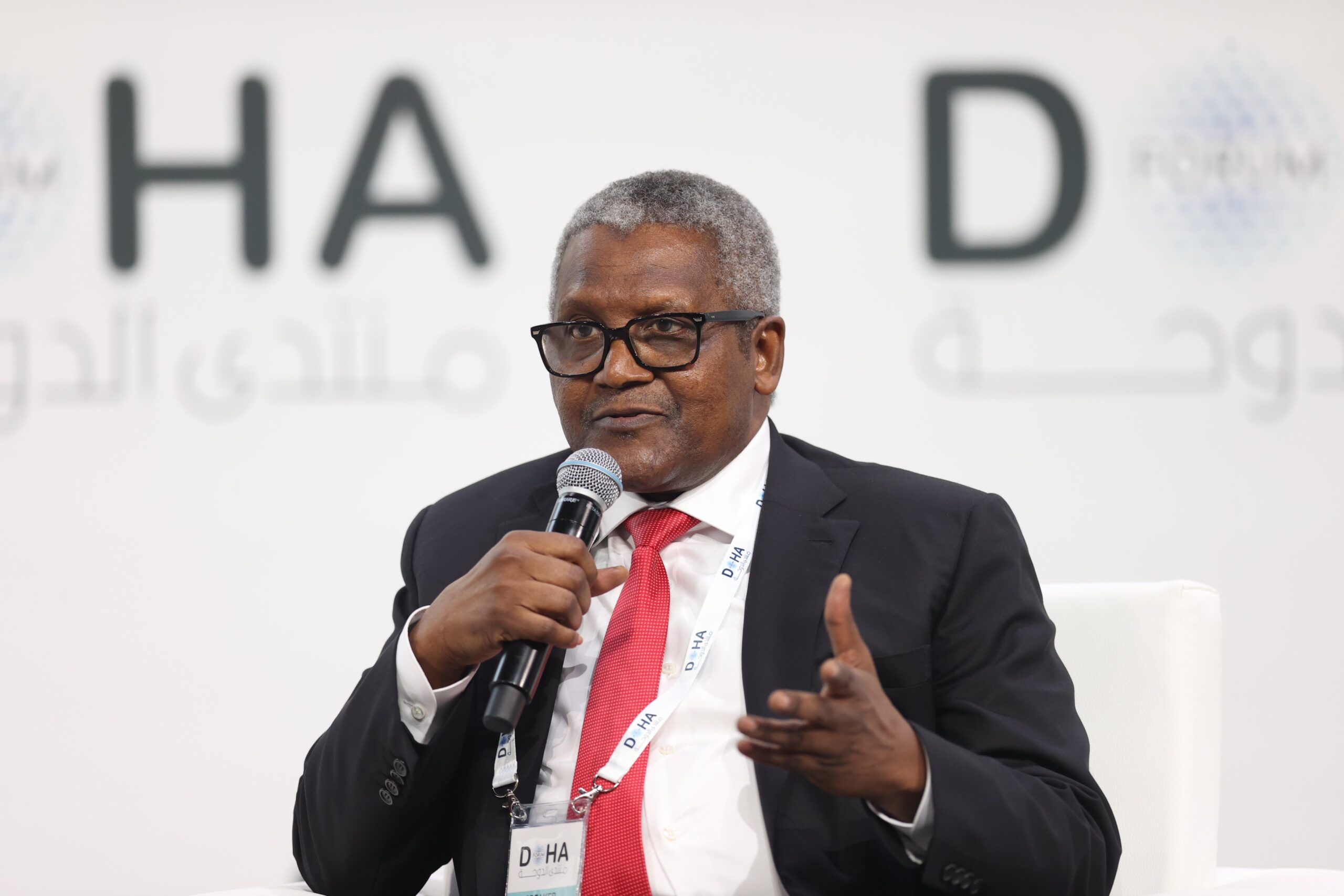
Africa’s drive to become a global industrial powerhouse will depend on its capacity to raise long-term financing, provide dependable electricity and adopt policies that convert its abundant natural resources into manufactured goods, the President and Chief Executive of Dangote Industries Limited, Aliko Dangote, has said.
Dangote, who has laid out a $50 billion investment programme covering 2026 to 2030, said the continent must develop stronger financial institutions able to fund large-scale industrial projects, expand its electricity infrastructure and put in place policies that promote domestic manufacturing, value addition and economic diversification.
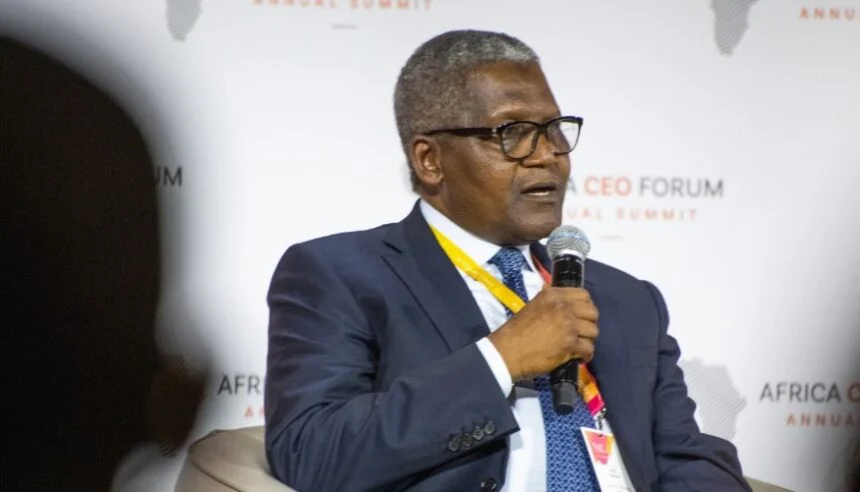
He spoke in London at the 2026 Financial Times Africa Summit, in a conversation with David Pilling, the newspaper’s Africa Editor. The industrialist insisted that Africa has the natural resources, population and investment opportunities to become a global manufacturing hub, but requires stronger institutions and infrastructure to turn those advantages into lasting economic prosperity.
Asked why Africa has produced relatively few industrial enterprises of global scale despite its enormous economic potential, Dangote emphasised the need for deliberate policies and institutions that can support long-term industrial investment.
Dangote said: “I think the number one thing that the continent has to concentrate on doing is having very strong financial institutions, their own financial institutions, and also to have very strong agricultural policy, and also industrial policy”.
He argued that infrastructure development is equally important, but pointed to electricity as perhaps the most pressing requirement for unlocking Africa’s industrial potential, adding; “For Africa, what we need the most today is actually power”.
According to Dangote, inadequate electricity supply continues to weaken Africa’s ability to process its minerals locally. As a result, countries export raw materials instead of capturing the higher economic value that comes with manufacturing and processing.
He cited the mining industry as a particularly telling example, observing that companies often name unreliable electricity supply as a major reason they cannot set up processing facilities close to extraction sites.
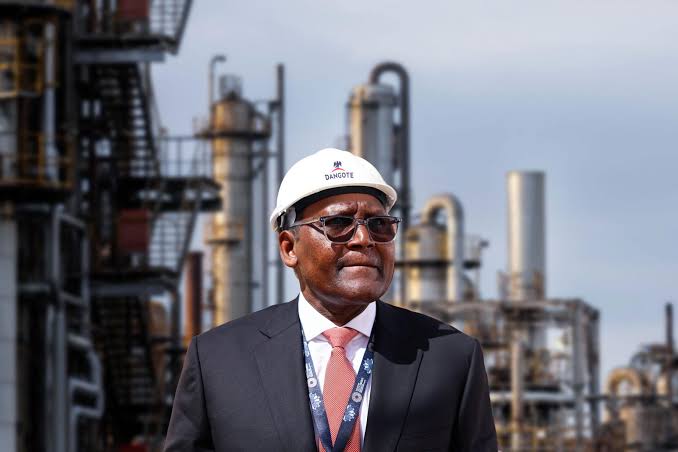
The industrialist also drew on his experience building the Dangote Petroleum Refinery in Lagos to show how Africa’s financing environment can frustrate even commercially promising projects.
He revealed that the Group was forced to fund the refinery from its own balance sheet instead of relying on conventional project financing, which he described as extremely difficult to obtain for major African industrial investments.
He explained that protracted financing negotiations can threaten the viability of industrial projects by delaying execution, raising costs and leaving investors exposed to shifting economic conditions.
For the Dangote Group, going ahead with the refinery without conventional project finance carried extraordinary financial risks, made worse by severe currency depreciation and the huge cost of building supporting infrastructure. Dangote said the exchange rate moved from roughly ₦136 to the dollar to as high as ₦1,800 during the refinery’s development, while about 90 per cent of the Group’s revenue was denominated in naira.
Dangote said the Group’s proposed $50 billion investment programme was designed partly to encourage other Africans to recognise the opportunities available across the continent.
“The legacy we are trying to set up is how do we industrialise our continent?” he said.