






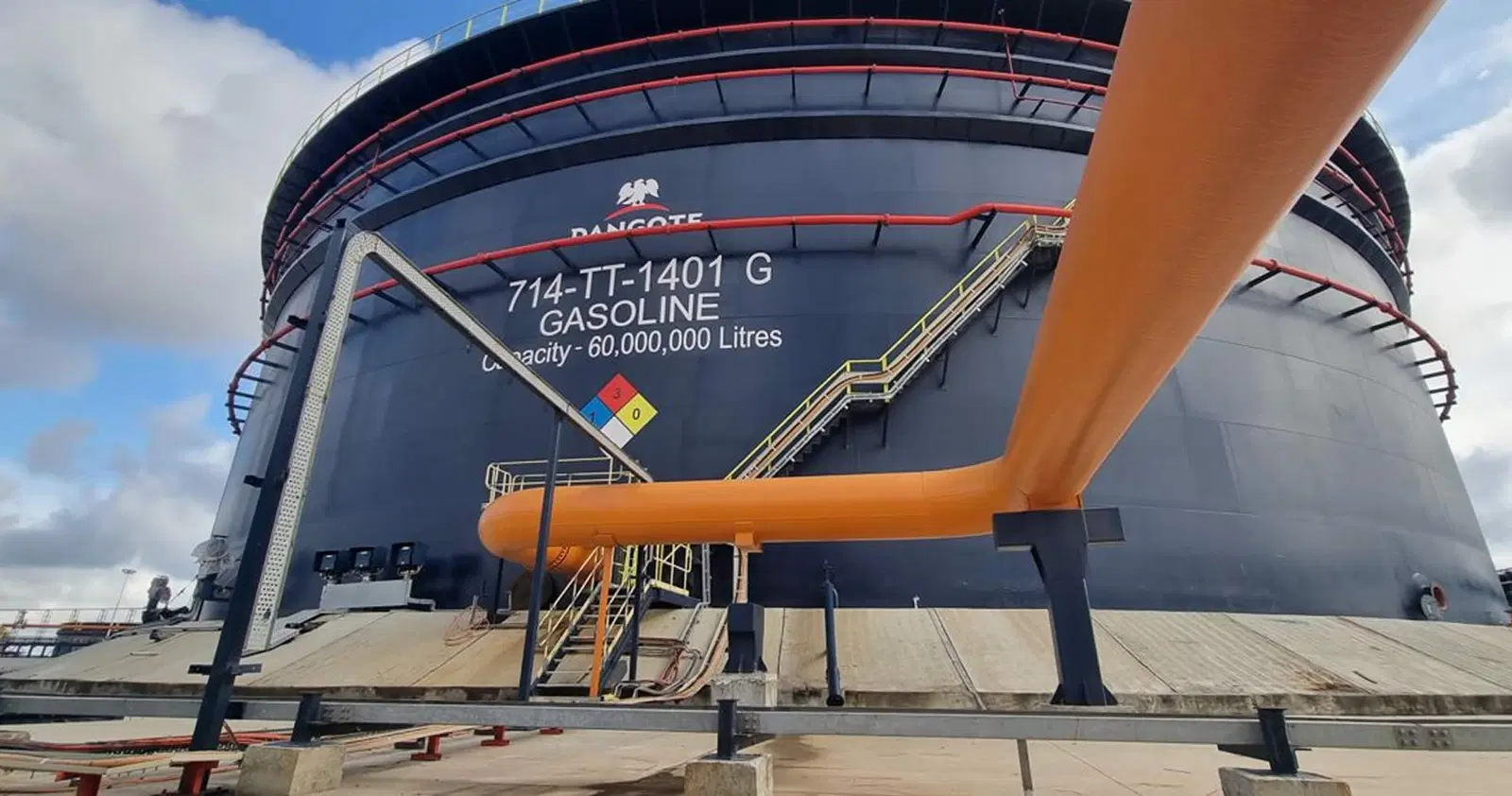
The Chief Executive of the Nigerian Midstream and Downstream Petroleum Regulatory Authority, Farouk Ahmed, has announced that the 650,000-barrel-per-day Dangote Refinery is already reshaping Nigeria’s petroleum supply landscape, delivering an average of 20 million litres of fuel daily to the local market.
Speaking in Lagos on Thursday at the Annual Conference of the Association of Energy Correspondents of Nigeria, Ahmed highlighted key regulatory interventions aimed at strengthening energy security, attracting investment, and ensuring stable petroleum supply nationwide.
Represented by the Authority’s spokesperson, George Ene-Ita, he described the refinery’s operations as a significant milestone in Nigeria’s pursuit of domestic refining capacity and energy self-sufficiency.
“Without a shadow of a doubt, the operation of the 650,000-barrel-per-day Dangote refinery has changed the supply dynamics, with an average daily contribution of up to 20 million litres, undoubtedly, with potential for a future ramp-up,” Ahmed said.
He added that the refinery is steadily ramping up production to meet Nigeria’s daily fuel consumption, estimated at about 50 million litres.
The Dangote Refinery, which has consistently maintained that it can meet domestic demand and still export to international markets, has already shipped over 1 billion litres of petrol to the United States and other countries between June and September.
Ahmed further noted that the NMDPRA considers the refinery’s progress a clear sign of Nigeria’s growing refining capacity and its ability to sustainably meet domestic fuel demand.
He emphasised that securing Nigeria’s energy future requires addressing persistent challenges in infrastructure, supply, and distribution.
He added that the regulator is implementing targeted measures to strengthen recent progress in the downstream sector.
While acknowledging that the Dangote Refinery has brought much-needed relief to the market, Ahmed stressed the need for government to maintain adequate product availability and safeguard against external disruptions through the creation of a National Strategic Stock.
“To further strengthen our energy security, we must operationalise the National Strategic (petroleum products) Stock, in line with the provisions of the PIA 2021, to provide a buffer against major supply disruptions,” he said.
Ahmed explained that the National Strategic Stock initiative is designed to provide a safety buffer in the event of supply disruptions, adding that the Authority is working closely with stakeholders to ensure its full implementation.
He noted that the sustainability of Nigeria’s refining future depends not only on private sector capacity but also on developing robust national storage and distribution systems to secure a steady fuel supply.
“We are accelerating licensing, standards for storage and depot operations, and stricter surveillance of product movement to reduce adulteration, arbitrage, hoarding and truck-in-transit road accidents,” he stated.