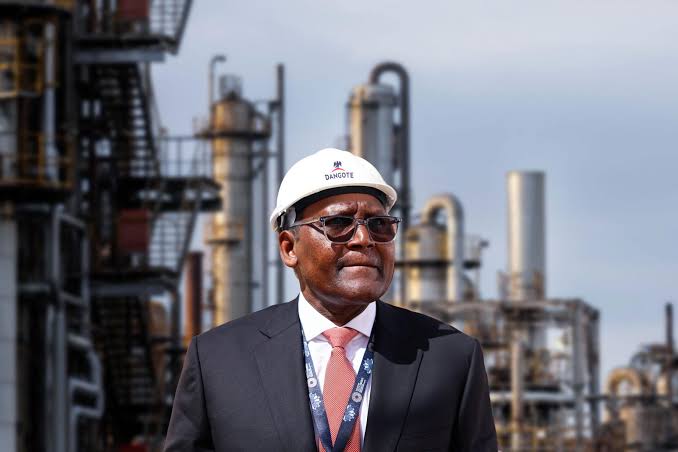


The Nigerian National Petroleum Company Limited has said that Dangote Petroleum Refinery cannot yet prove it can meet the country’s total fuel needs or guarantee uninterrupted nationwide supply, according to court documents seen by Reuters.
In a draft defence filed at the Federal High Court in Lagos, in response to a suit by Dangote, NNPC said the refinery had not provided “credible, independent or verifiable evidence” showing it can satisfy Nigeria’s entire petrol demand.
The state firm warned that accepting Dangote’s challenge to stop issuance of import licences could risk fuel supply disruptions, price volatility and threats to energy security of the country.
NNPC said Dangote’s challenge to import permits issued to rival marketers and NNPC itself, if upheld, would risk fuel shortages, price volatility and broader threats to energy security.
Dangote brought the suit in April against the Attorney General and the Nigerian Midstream and Downstream Petroleum Regulatory Authority (NMDPRA).
The refinery argued some licences issued or renewed to marketers undermine local refining and breach parts of the Petroleum Industry Act.
NNPC rejected that view, saying the law permits import licences for companies with local refining licences or proven experience in international crude and product trading, and that regulators may use discretion to manage imports under Nigeria’s backward-integration policy.
NNPC said there is no blanket ban on imports except where domestic supply is insufficient.
The state firm also said Dangote had not shown “credible, independent or verifiable evidence” that its refinery can meet Nigeria’s entire fuel demand or guarantee uninterrupted nationwide supply.
NNPC denied claims it had sabotaged Dangote’s operations, saying crude allocations are driven by operational, commercial, security and logistical factors.
The NMDPRA has applied to join the case, broadening the dispute over import policy and market rules.
Several fuel marketers have opposed Dangote’s suit, warning it could reduce competition and weaken supply security.
A court hearing is expected in the coming weeks. The legal battle comes months before Dangote’s planned September IPO for the refinery business, a factor investors may weigh when assessing the plant’s future revenue prospects, Reuters noted.