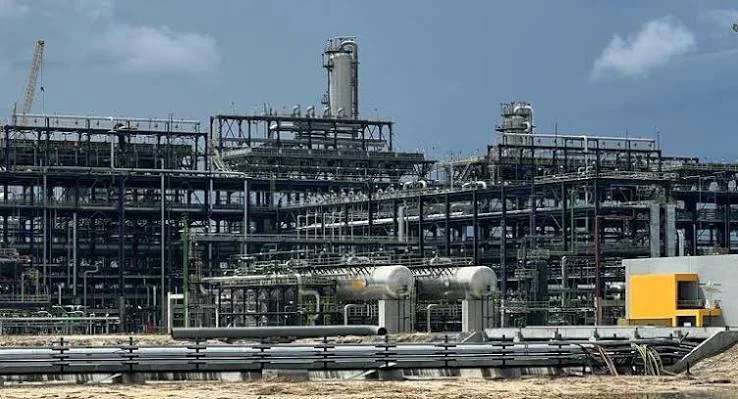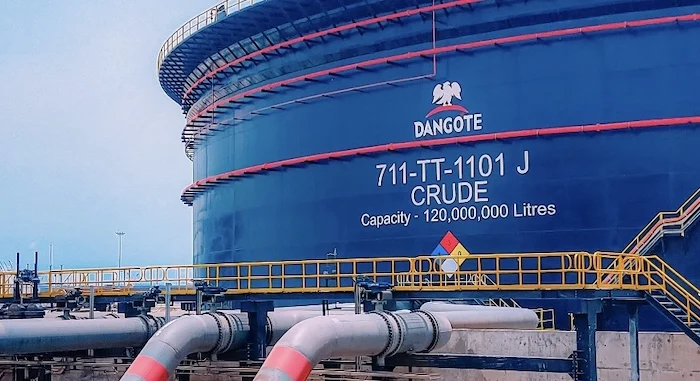

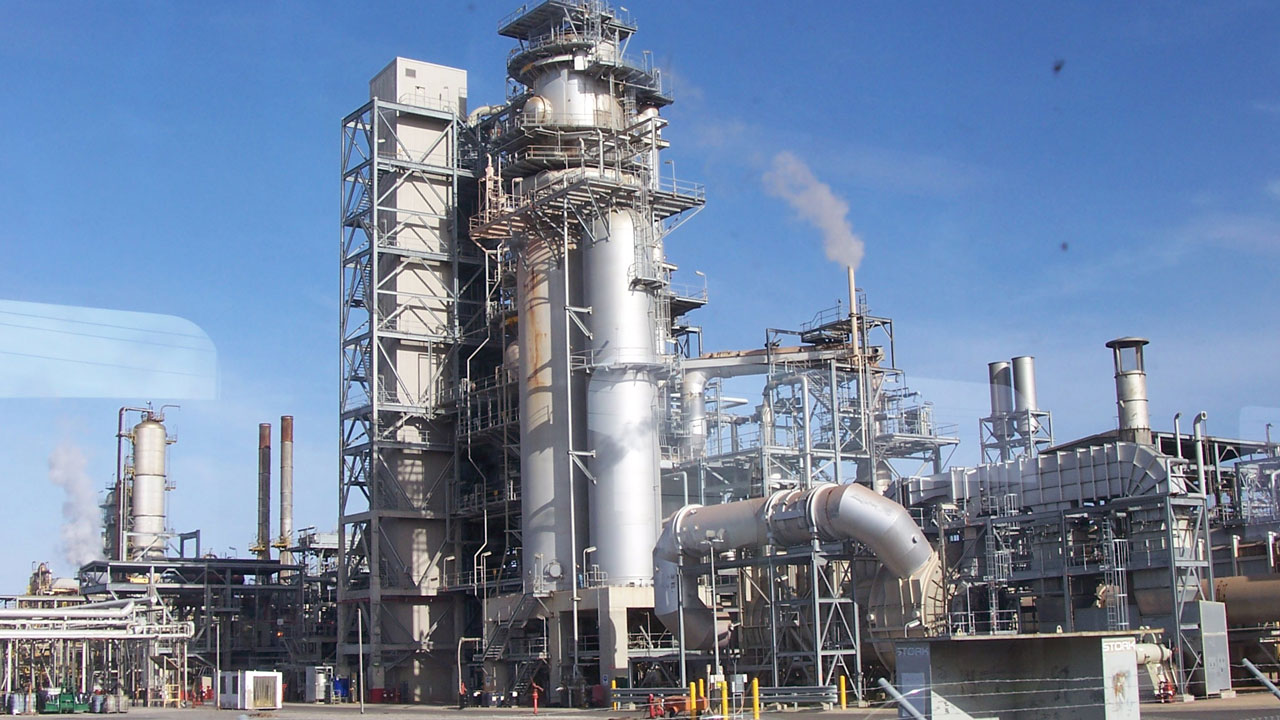
The expansion of the Dangote Petroleum Refinery has led to a sharp reduction in clean petroleum product imports into West Africa, significantly altering regional tanker traffic and shipping patterns, according to a report by S&P Global.
Data from S&P Global Commodities at Sea showed that West Africa’s imports of clean refined products fell by 23 per cent to 765,000 barrels per day in May, down from 997,000 barrels per day in April.
Shipping association BIMCO said the decline reflects the growing impact of Nigeria’s 650,000-barrel-per-day Dangote refinery, which is increasingly meeting regional fuel demand and reducing dependence on imported petroleum products.
Analysts at BIMCO said imports of clean refined products into West Africa fell by 44 per cent during the period, while overall tonne-mile demand dropped significantly as regional trade flows adapted to changing fuel supply dynamics driven by increased local refining capacity.
“LR1 and LR2 product tankers recorded the largest declines, down 88 per cent and 78 per cent respectively, and together accounted for 55 per cent of the total tonne-mile loss,” S&P quoted BIMCO as saying.
The association further noted that MR product tanker tonne-miles recorded only a slight decline despite a significant reduction in imports from key exporting regions, as changes in supply routes helped cushion the overall impact on shipping demand.
“MR product tanker tonne-miles fell only 4 per cent year over year during April to May, despite a sharp drop in imports from all major loading regions. A 34-fold increase in volumes from the Americas largely offset the decline, limiting the overall loss,” BIMCO said.
Historically, the Rotterdam-to-Lagos fuel route was one of the most important trade corridors for MR tankers, but analysts said its significance has diminished considerably as Nigeria’s growing domestic refining capacity reduces reliance on imported fuel.
Commissioned in 2024, the Dangote refinery reached its full processing capacity of 650,000 barrels per day in February 2026 and now meets most of Nigeria’s fuel requirements. Government data showed the refinery supplied about 80 per cent of the country’s gasoline demand in April.
Analysts said the refinery’s expansion is not only curbing fuel imports but also transforming Nigeria into a major exporter of refined petroleum products, with cargoes increasingly being shipped to neighbouring West African markets and other destinations.
The changing trade landscape has also affected traditional storage and distribution hubs, including Lomé in Togo.
Analysts noted that such centres may find it difficult to recover previous import volumes as regional supply chains adjust to Nigeria’s growing refining output.