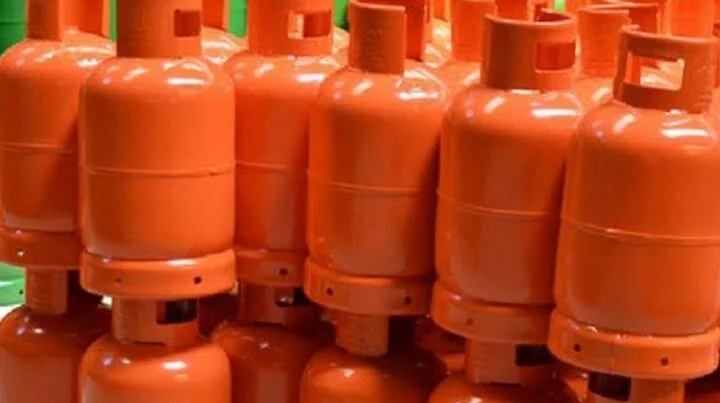

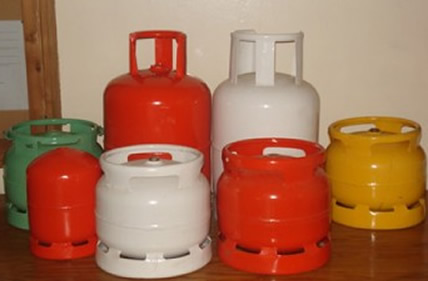
The price of Liquefied Petroleum Gas, commonly known as cooking gas, has continued to increase across Nigeria despite a significant rise in domestic production and a sharp decline in imports, according to The PUNCH.
Data obtained from the Nigerian Midstream and Downstream Petroleum Regulatory Authority indicated that local production from refineries and gas processing plants supplied the bulk of Nigeria’s LPG requirements between April 2025 and April 2026, significantly reducing the nation’s reliance on imported products.
Despite the increase in locally produced LPG, consumers have not enjoyed lower prices, as the cost of cooking gas has climbed to as much as N2,000 per kilogramme in some parts of the country.
According to NMDPRA data, average daily domestic LPG supply ranged from 3,300 tonnes to 4,500 tonnes throughout the review period. In March and April 2026, local supply reached 4,500 tonnes per day, accounting for the majority of LPG available in the country.
At the same time, imports by oil marketing companies dropped significantly. Imported volumes declined to 200 tonnes per day in March 2026, compared to 1,600 tonnes per day in November 2025 and 1,500 tonnes per day in December 2025.
The report further showed that total average daily LPG supply ranged between 4,200 tonnes and 5,200 tonnes during the period. Supply peaked at 5,200 tonnes per day in December 2025 before declining to 4,500 tonnes by April 2026.
The sustained domestic contribution has been linked to improved output from gas processing facilities and increased refining capacity, including supplies associated with the Dangote Petroleum Refinery.
However, despite the improved availability of locally produced LPG, consumers continue to face rising prices and periodic shortages in different parts of the country.
The PUNCH reported that cooking gas, which sold for less than N1,000 per kilogramme in many areas just a few months ago, now sells for around N2,000 per kilogramme depending on location.
Marketers attributed the increase to supply chain difficulties and product scarcity in some areas, noting that cooking gas has become increasingly difficult to source in certain neighbourhood markets.
The persistent increase in LPG prices has compelled many households to return to alternative cooking fuels such as charcoal and firewood, raising concerns about the implications for clean energy adoption and environmental sustainability.
Meanwhile, data from the NMDPRA revealed that several major gas infrastructure projects aimed at improving gas transportation across Nigeria are approaching completion.
Information obtained from the Nigerian Gas Infrastructure Company (NGIC) showed that the Ajaokuta-Kaduna-Kano (AKK) Gas Pipeline Project has attained 93.40 per cent completion.
The OB3 River Niger Crossing project has reached 93.88 per cent completion.
The ELPS Midline Compressor Project has achieved 94.45 per cent completion.
The Odidi-Warri Expansion Project has progressed to 70.28 per cent completion.
The Escravos-Odidi project remains at an early stage, with completion standing at 17.49 per cent.
NGIC described the AKK, OB3 and ELPS projects as “almost complete”, indicating that the facilities could soon significantly enhance gas transportation capacity across the country.
Industry stakeholders expressed optimism that the completion of these projects, coupled with rising domestic LPG production, could further reduce Nigeria’s dependence on imports and improve the availability of cooking gas.
However, they cautioned that unless distribution bottlenecks and other market challenges are addressed, increased local production alone may not be sufficient to bring down cooking gas prices or provide meaningful relief to consumers.
The development comes as the Federal Government intensifies efforts to promote domestic gas utilisation and strengthen energy security nationwide.
Recently, the Nigerian Association of Liquefied Petroleum Gas Marketers (NALPGAM) raised concerns over erratic supply and rising LPG prices, warning that the trend could trigger scarcity and worsen economic hardship for millions of Nigerians.
The association disclosed that marketers currently pay between N25.2 million and N26.2 million for 20 metric tonnes of cooking gas.
In a statement jointly signed by the National President of NALPGAM, Edu Inyang, and the Executive Secretary, Mr Bassey Essien, the association described the situation as “sad and rather very pathetic”.
“The citizens of Nigeria have woken up to buy cooking gas, which should be a social item, at a prohibitive cost of over N1,500 per kg, while the marketers are made to pay as much as N25,200,000 or, depending on the location, N26,200,000 for 20 metric tonnes of cooking gas.
“We feel that if the situation is not immediately checked, the citizens may rise against the owners of gas filling stations,” the marketers warned.
The association stated that the rising cost of LPG has imposed severe hardship on millions of households, small-scale businesses, food vendors and low-income families that depend on cooking gas for their daily activities and livelihoods.
NALPGAM further warned that the current crisis threatens to reverse years of progress achieved through Federal Government policies and investments aimed at expanding LPG penetration and promoting cleaner cooking energy across Nigeria.