

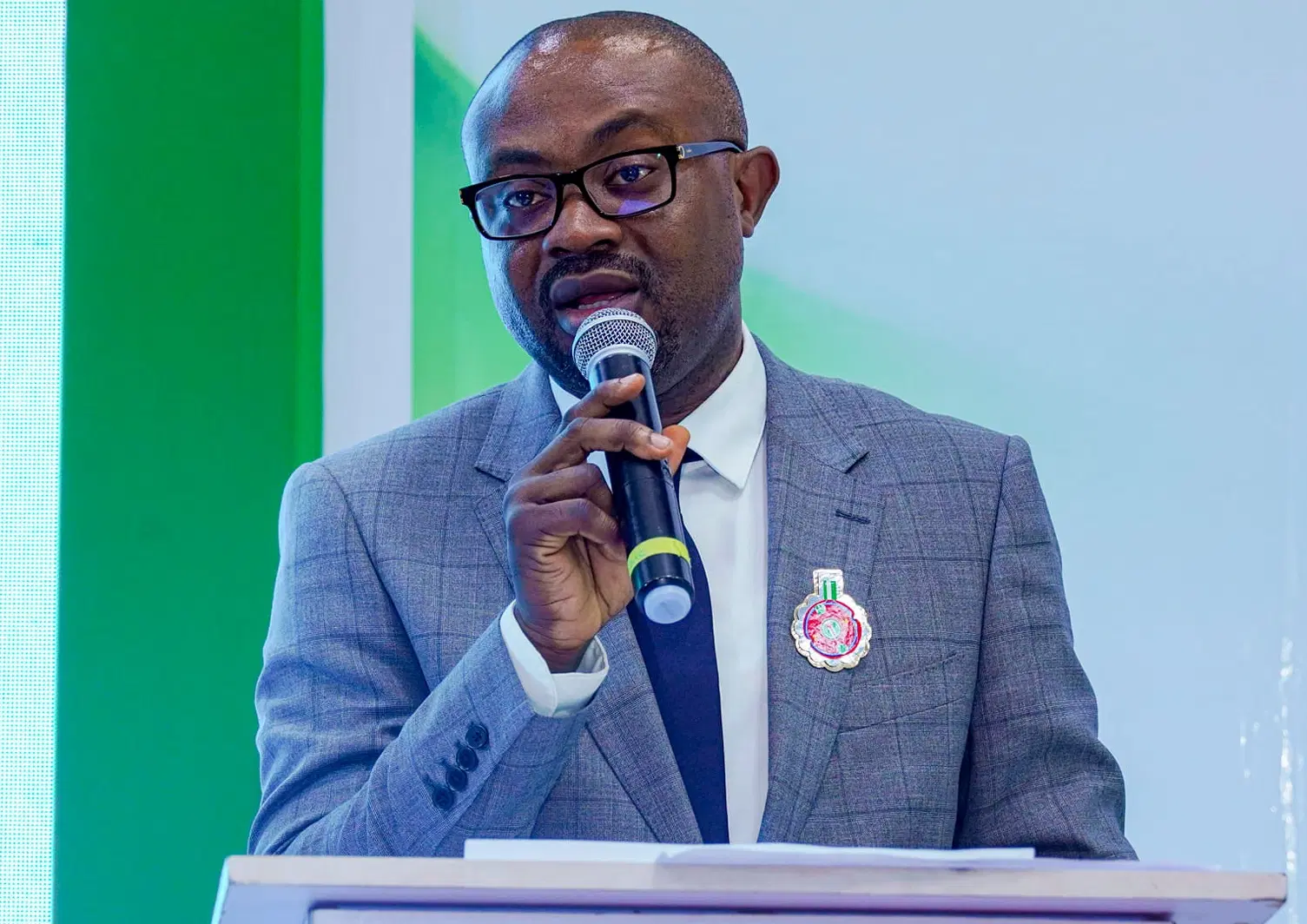



The Group Chief Economist and Managing Director of Research and Trade Intelligence at African Export-Import Bank, Dr Yemi Kale, has said the ongoing bank recapitalisation exercise is a crucial catalyst for closing Africa’s estimated $80 billion to $120 billion annual trade finance gap.
Kale spoke on Tuesday at the Ecobank Customer Forum.
Kale, who previously served as Statistician-General of Nigeria, noted that the country’s path to a $1 trillion economy depends on shifting from a raw material exporter to a competitive industrial hub.
He stressed that such a transition demands far greater financial sector capacity, which he said currently falls short of the scale needed to match the continent’s ambitions.
He said, “Recapitalisation of the banks is important.” You cannot lend to businesses to grow, expand or import machinery if you do not have enough capital to do so. How do Nigerian banks support deepening intra-African trade if they do not have enough capital?
“By increasing recapitalisation, you increase the ability of banks to lend more to domestic businesses and exporters. There are significant benefits for the Nigerian economy, especially in improving intra-African trade.”
To reverse the trend of exporting raw inputs while importing finished products, Kale referenced the Dangote Refinery as a practical demonstration of what coordinated policy, substantial capital, and scale can achieve.
He urged that this model be replicated across sectors — from transforming cotton and cocoa into higher-value garments and chocolate, to processing lithium and cobalt locally, and deepening capabilities in digital and automotive component manufacturing.
Kale said: “Nigeria is a very large economy.” Not only do we have a big domestic market, but we also have a potentially large market that can benefit the entire continent. The policies being introduced to stabilise the macroeconomic environment are helpful, and I would advise that those policies be retained. We have to keep faith with the reforms.”
Stressing that enhanced competitiveness and improved production efficiency will be central to reaching the $1 trillion economy goal, Kale said, “There are two ways to grow: you produce goods and services and sell them to consumers within Nigeria, across the continent, and preferably outside the continent.But the only way you can sell goods outside Nigeria is if they are competitive.
“If you fix the ease of doing business, you reduce the cost of production. Goods become cheaper, inflation comes down, and purchasing power improves. Higher demand leads to higher production, more jobs and more income. That is how you significantly grow the economy and move towards a $1tn target.”
Speaking earlier, the Managing Director of Ecobank Nigeria, Mr Bolaji Lawal, said the forum was convened to examine practical strategies for accelerating trade and strengthening Nigeria’s integration across the continent.
“Our second customer forum in the series focuses on strengthening Nigeria’s economic transformation. We would like to explore how we can drive exports, promote regional integration, and, most importantly, support Nigeria’s economic transformation, as we all work together towards the shared objective of building a $1 tn economy,” he said.
Lawal noted that Ecobank’s pan-African footprint places the bank in a unique position to support and facilitate cross-border trade across the continent.
“At Ecobank, we pride ourselves on being the bank with a footprint in 33 African countries, and trade is at the heart of everything we do. We are keen to share knowledge and discuss how our platform can better support trade across Africa and beyond,” he noted.
Meanwhile, the Treasurer of Ecobank Nigeria Limited, Olumide Adebayo stated, It is a pre-election year, and looking at how far we have come as a country over the last two and a half years of this administration, there are still some concerns. Normally, in the pre-election year, people have jitters. So, we just felt the need to look out for our customers who may feel a bit jittery about what will happen in this pre-election year. Let’s come together; let’s have a conversation about the very important areas: trade, FX and interest rates. So those are conversations that I think will help them to plan this year as they engage in various areas of their business.”