

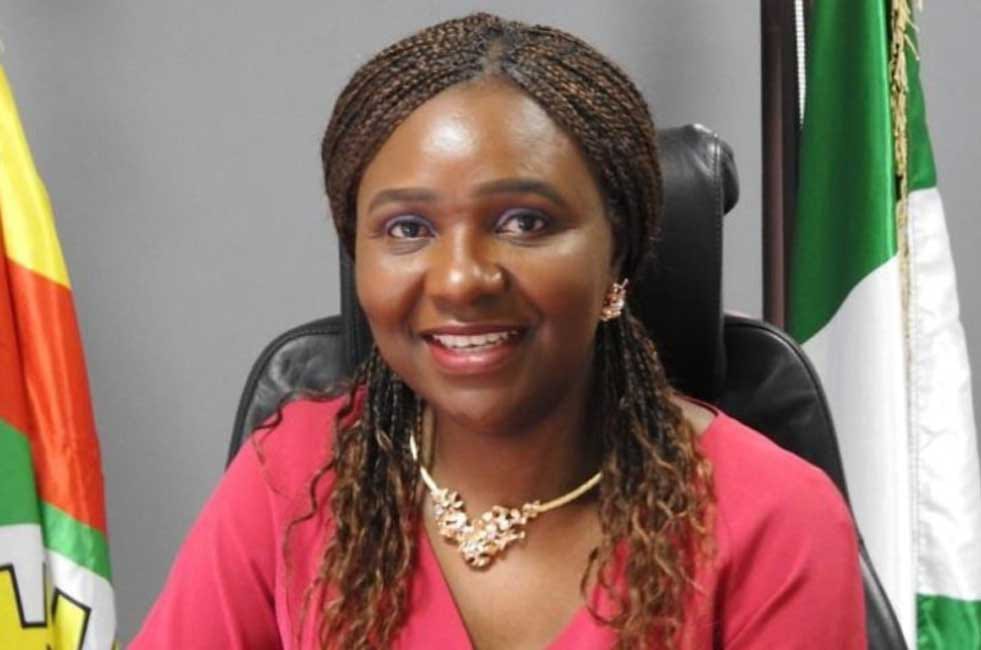



The African Development Bank has committed $1.2 million in grants to fund a feasibility study on Battery Energy Storage Systems in Nigeria.
According to the Bank, the project will explore how BESS can be integrated into Nigeria’s power grid, identify viable business and regulatory models to attract private investment, and develop the institutional capacity necessary for long-term sustainability.
AfDB’s Director-General for the Nigeria Country Department, Abdul Kamara, made this known at the inaugural workshop for the BESS feasibility study in Abuja.
The event was organised in collaboration with the Transmission Company of Nigeria and the Sustainable Energy Fund for Africa.
The workshop brought together experts from government agencies and regulatory institutions to examine ways to improve the stability and resilience of Nigeria’s electricity grid.
Kamara, represented by Chigoziri Egeruoh of the AfDB Nigeria Country Office, said the grant is part of the Bank’s Africa Energy Transition Catalyst Programme, which supports sustainable energy initiatives across the continent.
He noted that while Africa possesses nearly 60% of the world’s highest-quality solar resources, it contributes just 2% of global energy storage capacity—a shortfall that represents both a major challenge and a strategic opportunity.
“Africa holds almost sixty per cent (60 per cent) of the world’s best solar resources, yet accounts for only two per cent (two per cent) of global energy storage capacity.
“That gap presents a challenge, but more importantly, an opportunity.
“Battery storage is central to unlocking the full potential of our renewable energy resources and delivering stable, reliable power across the continent. We are already seeing inspiring progress. In South Africa, a 1,400 megawatt-hour battery storage project is supporting grid stability and solar integration.
“In Kenya, the Olkaria geothermal-battery hybrid is delivering reliable energy to millions. Now, Nigeria is poised to take a bold step in that same direction. This is why the bank has committed a $1.2m grant under the Africa energy transition catalyst programme to support this feasibility study,” Mr Kamara said.
He said the project, which will be implemented through the Transmission Company of Nigeria (TCN), aims to evaluate grid integration, develop sustainable business and regulatory models to attract investment, and strengthen local capacity for long-term ownership and sustainability.
He added that the initiative is fully aligned with Nigeria’s Energy Transition Plan, the SE4ALL Action Agenda, and the Renewable Energy Master Plan—highlighting policy coherence across the energy, climate, and innovation sectors. Battery storage, he noted, is no longer a luxury but a critical necessity.
“As Nigeria’s grid evolves, storage offers real solutions: frequency stabilisation, reserve capacity, and peak load management, among others. But as we all know, technology alone will not carry the day. Regulatory frameworks and investment environments must evolve in step to scale these innovations sustainably.
“The AfDB is a committed partner in this journey. Through our $1bn economic governance and energy transition support programme, we are helping Nigeria advance critical power sector reforms. $500m has already been disbursed, with the second phase on track,” he said.
In addition, he noted that under AfDB’s $1 million grant through the Africa Energy Sector Technical Assistance Programme, the Bank is supporting the implementation of Nigeria’s Electricity Act, facilitating the development of state-level electricity markets, and enhancing governance across the power sector.
“Battery storage is no longer a luxury; it is a necessity. As Nigeria’s grid evolves, storage offers real solutions: frequency stabilisation, reserve capacity, and peak load management, among others. But as we all know, technology alone will not carry the day. Regulatory frameworks and investment environments must evolve in step to scale these innovations sustainably.
“And of course, we continue to invest directly in energy infrastructure: from the $200m Nigeria Electrification Project expanding mini grids and off-grid access, to the $250m Nigeria Transmission Expansion Project reinforcing the national grid.
“Nigeria is also a key country under our flagship $20bn desert to power initiative, which aims to generate 10,000 megawatts of solar across the Sahel and provide power to 250 million people. This holds immense promise for Nigeria’s clean energy future. As we launch this important feasibility study, let us ensure it produces real, actionable outcomes that reflect Nigeria’s priorities and realities,” he said.
Kamara affirmed that the AfDB remains fully committed to supporting Nigeria’s energy transition through sustained financing, technical expertise, and long-term strategic partnerships.

