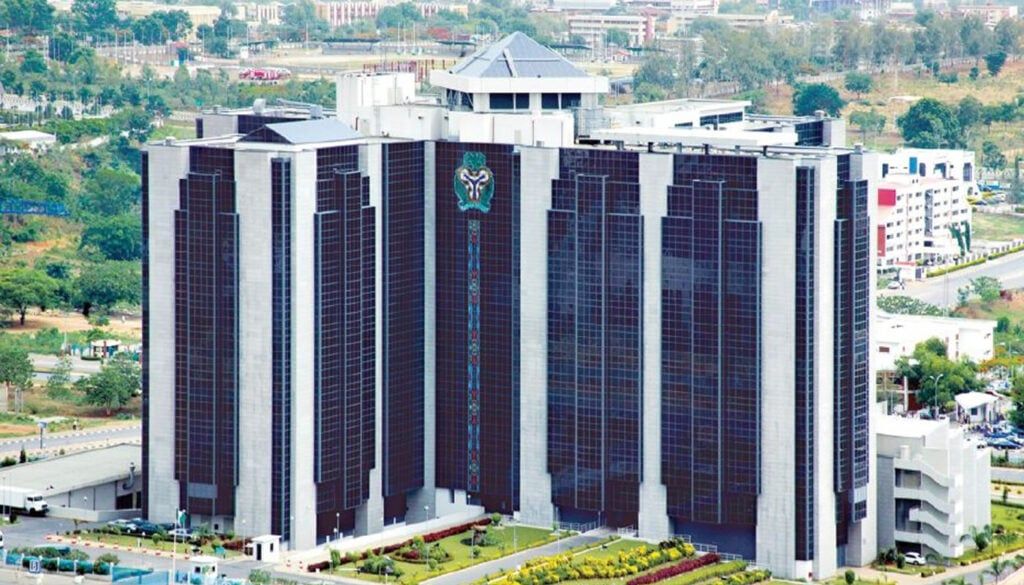


Financial market analysts have cautioned that a weakening naira, shrinking foreign exchange reserves and climbing global interest rates may stop the Central Bank of Nigeria from easing monetary policy any further, even as inflation keeps falling.
In separate reports ahead of the Monetary Policy Committee meeting, which The PUNCH obtained on Monday, the analysts forecast that the apex bank would leave its Monetary Policy Rate unchanged at 23 per cent when the committee holds its 308th meeting on 23 and 24 November, 2026.
The forthcoming 2027 general elections and the Christmas season have been piling more pressure on the naira, which slipped to ₦1,394/$ at the official market on Friday and ₦1,460/$ at the parallel market on Sunday.
The local currency shed ₦6 at the official market on Friday, prolonging its losing run after it lost ₦8.01 on Thursday to close at ₦1,388/$, from ₦1,379.99/$ recorded on Wednesday.
In a report titled ‘MPC to Hold Rates as Naira Pressure Builds’, Cordros Securities warned that further cuts in interest rates could trigger capital outflows and put more strain on the domestic currency.
The PUNCH reported that the investment firm said, “In our view, the naira has become the binding constraint on the MPC’s policy rate decision.”
It added, “With the parallel market premium exceeding NGN100.00/USD, gross FX reserves declining and the carry on short-dated naira instruments narrowing towards estimated breakeven levels, a further rate cut could weaken the attractiveness of naira assets and increase the risk of foreign portfolio investment outflows.”
In its November 2026 pre-MPC analysis, the Financial Markets Dealers Association likewise gave a 60 per cent probability that the committee would retain the benchmark interest rate.
The association put the chance of a reduction of not more than 50 basis points at 40 per cent.
The association explained, “Monthly inflation rose in October, the naira is weaker, reserves are off their peak and the Fed is expected to hike in December.”
The projections came after the MPC’s September decision to cut the benchmark rate by 350 basis points, from 26.5 per cent to 23 per cent.
Data from Cordros showed that the naira weakened from ₦1,329.16 per dollar at the end of September to ₦1,346.26 on 31 October.
The currency fell further to ₦1,389.73 on 20 November, according to the firm.
That amounted to a 2.5 per cent depreciation since September, although the naira was still 4.7 per cent stronger than at the start of the year.
The firm reported that the spread between the official and parallel market exchange rates had widened to roughly ₦107 per dollar.
Foreign exchange reserves dropped from $55.26bn on 27 October to $54.65bn on 19 November, a fall of $610m.
Cordros disclosed that the CBN reportedly supplied $6.66bn to the FX market after the September MPC meeting.
Of that amount, $3.38bn was released between 1 and 20 November.
Despite the interventions, conditions in the market worsened, as the Nigerian Foreign Exchange Market recorded net outflows of $1.41bn in October, against net inflows of $1.03bn in September.
The firm also reported that foreign portfolio inflows grew by only 3.4 per cent month-on-month.
Domestic foreign exchange inflows, on the other hand, rose by 148.1 per cent to $5.11bn.
Separately, the FMDA observed that weekly FX inflows fell to $808m from $2.48bn, which raised concerns about dollar availability.
Both institutions named global monetary conditions as another constraint, especially the shrinking interest rate gap between Nigeria and the United States.
The FMDA reported that the difference between Nigeria’s benchmark rate and the upper limit of the US Federal Reserve’s policy rate had narrowed from 22.5 percentage points to 19 percentage points.
Meanwhile, annual headline inflation slowed for the fifth straight month, to 14.06 per cent in October from 14.63 per cent in September.
Cordros projected that annual inflation could ease further to between 13.30 and 13.90 per cent by December.
The firm, however, cautioned that rising input costs and stubborn food inflation justified keeping the current monetary policy stance.
The FMDA conceded that falling inflation gave room for more easing, pointing out that the real policy rate stood at about 8.9 percentage points.
It explained, “The case for a cut is real, inflation is down from 18.97 per cent a year ago to 14.06 per cent, and the real policy rate is about 8.9 points.”
On domestic liquidity, Cordros reported that banking system liquidity averaged ₦5.43tn between 1 and 20 November.
Banks’ deposits with the CBN’s Standing Deposit Facility averaged ₦5.46tn over the same period, the firm said.
Cordros suggested that the CBN could consider lowering the deposit facility rate instead of cutting the benchmark rate.
An Abuja-based economist, Chukwunonse Iheoma, said: “This captures the policy dilemma: the CBN may be moving towards lower interest rates to support economic activity, but renewed pressure on the naira could limit its ability to ease monetary policy without risking exchange-rate stability and inflationary pressures.”