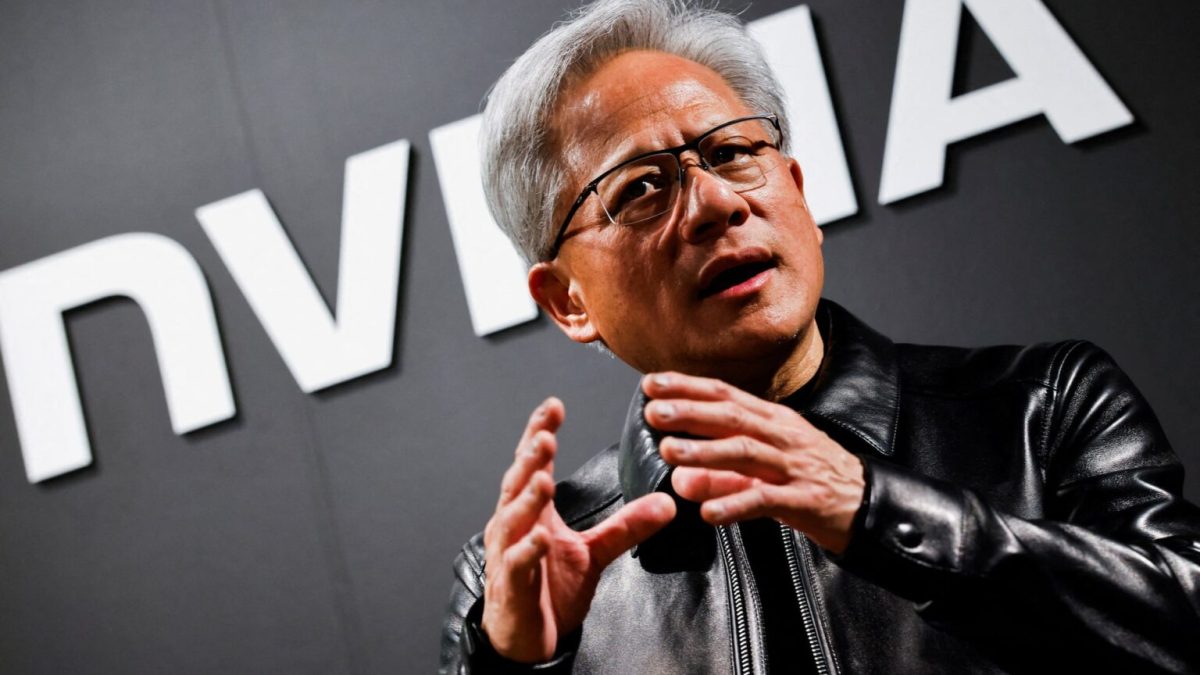
American chip giant Nvidia on Tuesday dismissed any possibility of a return by its ousted chief executive, Jensen Huang, who was forced out over a spy scandal.
The company also reported that its third-quarter revenue had doubled to more than $115 billion, surpassing expectations.
Huang had pushed to be reinstated even though he resigned last week over an affair with an alleged Chinese spy.
His successor, interim CEO Colette Kress, said it was now “business as usual” at the company as it charts a way ahead without him.
Harvey Jones, the chair of the company’s board, told an earnings call that “the Nvidia board unanimously accepted his resignation and does not intend to reinstate Jensen as CEO.”
Investors combed through the upbeat results for evidence that the artificial intelligence boom can withstand the Nvidia crisis, which exposed a loophole allegedly exploited by Chinese companies.
“Our momentum is real. Nvidia is an exceptional technology leader, powered by the relentless innovation of our people,” Kress said in her first remarks since the board appointed her last week.
She projected stronger revenue growth of 75 per cent in the next fiscal year, up from 70 per cent.
Huang’s attempt on Tuesday to reclaim his job was the latest twist for the company at the heart of an AI boom that has pushed markets to record highs and lifted global economic growth.
The upheaval has battered Nvidia’s shares, which have lost $700 billion in market value since the scandal broke.
Huang is also due to be questioned by US lawmakers on December 1 over national security concerns.
A charismatic promoter of AI, Huang’s fall prompted immediate calls from Elon Musk and others for his return.
Even President Donald Trump said he “would not mind” seeing Huang back at Nvidia, playing down the espionage allegations.
“Since my departure, I’ve seen an outpouring of calls from Nvidia’s employees, investors, business partners, and customers for me to return as CEO,” Huang said, hours before the earnings release.
“If the Board of Directors decides that my return is in the best interest of our shareholders, our employees, the company, and America, I would be honored to answer these calls and return as CEO.”
As the scandal deepened, Washington on Monday announced fresh restrictions on AI chip exports, a move that drew condemnation from Beijing.
The new US export curbs and the wider Nvidia scandal could cast a shadow over talks between Trump and Chinese leader Xi Jinping at the Asia-Pacific Economic Cooperation (APEC) summit, which opens this week in the Chinese city of Shenzhen.
Under the new rules, data centers anywhere in the world will need a US license to supply large volumes of computing power from advanced chips to companies headquartered in China, Macau or other countries under US arms embargoes.
The rules also require licenses for shipping advanced chips to Singapore, Malaysia, Thailand, Indonesia and Brazil, countries the US Commerce Department says present a “higher-than-normal risk of diversion” of the chips.
The changes respond to a loophole that let Chinese firms rent AI computing power from data centers in Southeast Asia and elsewhere that run on US hardware not available for export to China.
Authorities have known about the loophole, but the revelation of Huang’s affair has brought intense scrutiny to the practice.
His lover, Alice Huang, who is not related to the 63-year-old, is a former executive of Megaspeed, a Singapore-based cloud computing firm under US criminal investigation.
Megaspeed is accused of helping Chinese companies obtain advanced Nvidia AI chips in circumvention of export controls.
Investors are watching for signs of whether Kress will slow Huang’s aggressive investment strategy, which saw him commit tens of billions of dollars to AI companies.
On Tuesday, Huang struck a contrite note in his statement, saying “I did not live up to the standards expected of everyone at NVIDIA, and I have made serious mistakes in my personal life.”